
SOILBIOMASS+ Project Consortium Holds Kick-off Meeting at the University of Reading
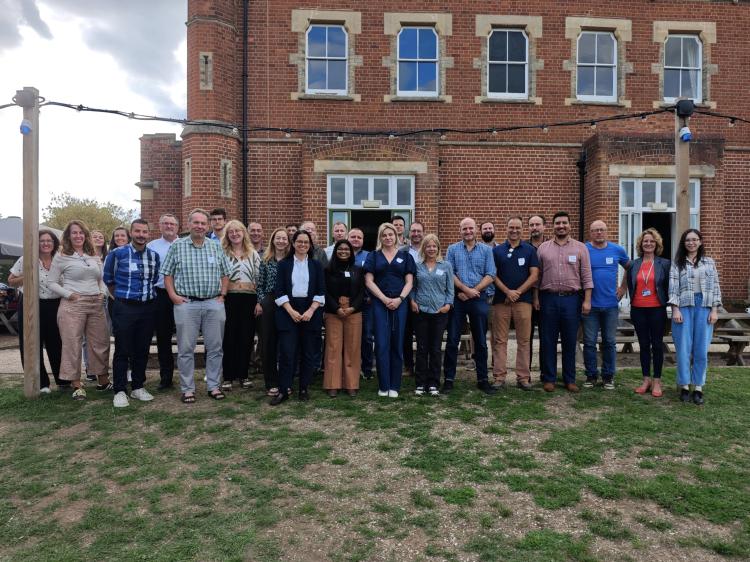
On 22–24 September 2026, the University of Reading (United Kingdom) hosted the kick-off meeting of the consortium of the international SOILBIOMASS+ project, “Co-creating Sustainable Biomass Production and Soil Health Restoration for Diverse European Landscapes.”
Europe is facing growing demand for biomass for food, feed, materials and energy production, while soils are under increasing pressure from degradation, biodiversity loss and climate change. Increasing biomass production does not, in itself, improve soil health and may even have negative effects on peatlands and other vulnerable landscapes. SOILBIOMASS+ aims to develop practical solutions that enable biomass production while contributing to soil health restoration and long-term food security.
The project covers arable land, peatlands, forests, agroforestry systems and marginal lands. Ten key annual and perennial crops and systems have been selected for the research: wheat, maize, potatoes, spruce, willow, sphagnum, birch, soybeans and legumes, olive trees, and perennial grasses.
Project partners will collect harmonised and comparable data on the effects of agricultural, forestry and agroforestry practices on soils across different regions of Europe. To achieve the project objectives, the research combines the Living Labs approach, field data, modelling, geospatial analysis and artificial intelligence methods. Based on field measurements, satellite data and farm records, the project will identify which landscapes are best suited to specific types of biomass production under current conditions and in the context of future climate change. The University of Reading leads the data-related work and is developing an open database covering yields, land-use practices, and soil and biomass condition indicators. The results will be translated into practical recommendations for farmers, foresters, land managers and decision-makers.
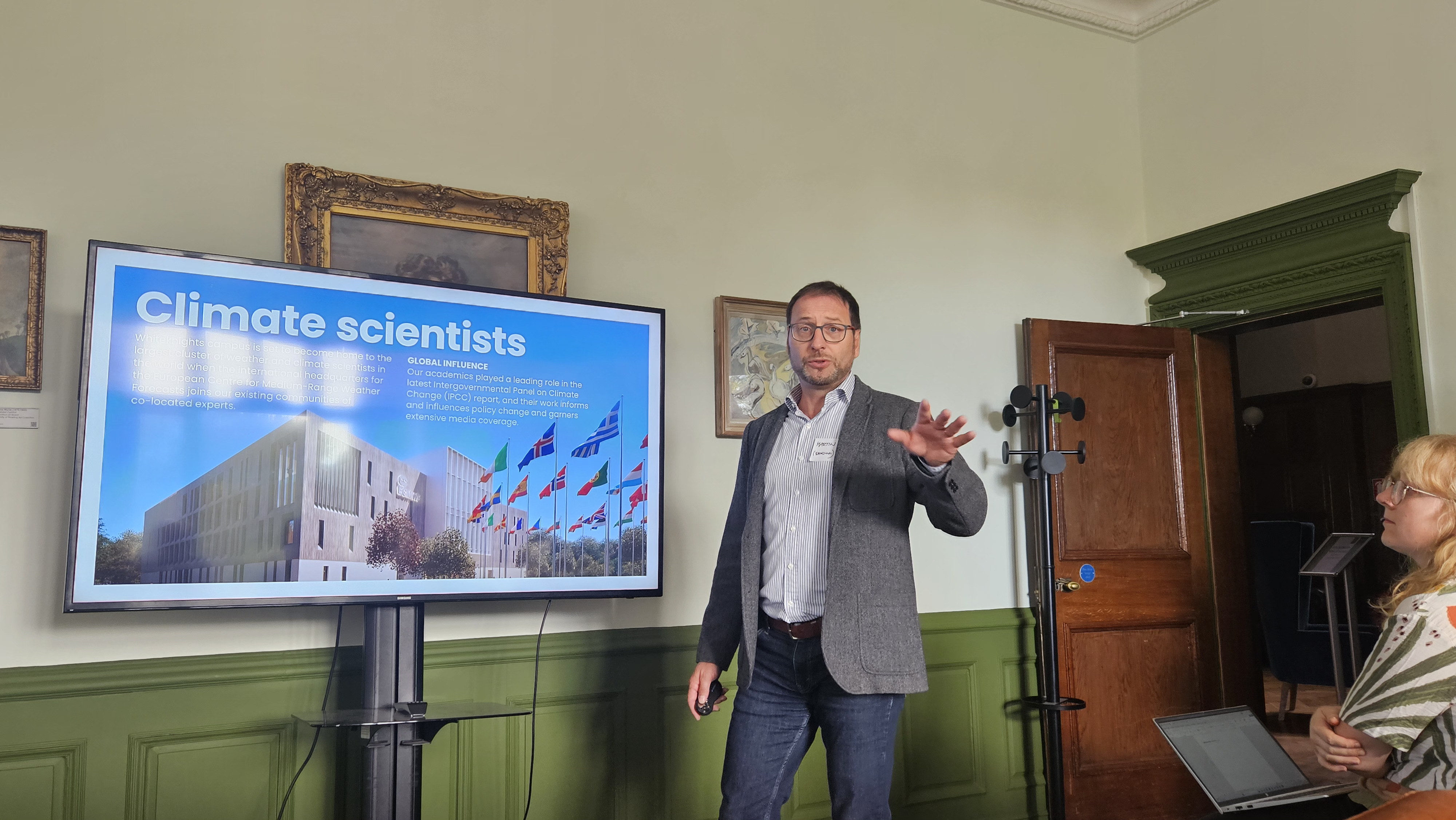
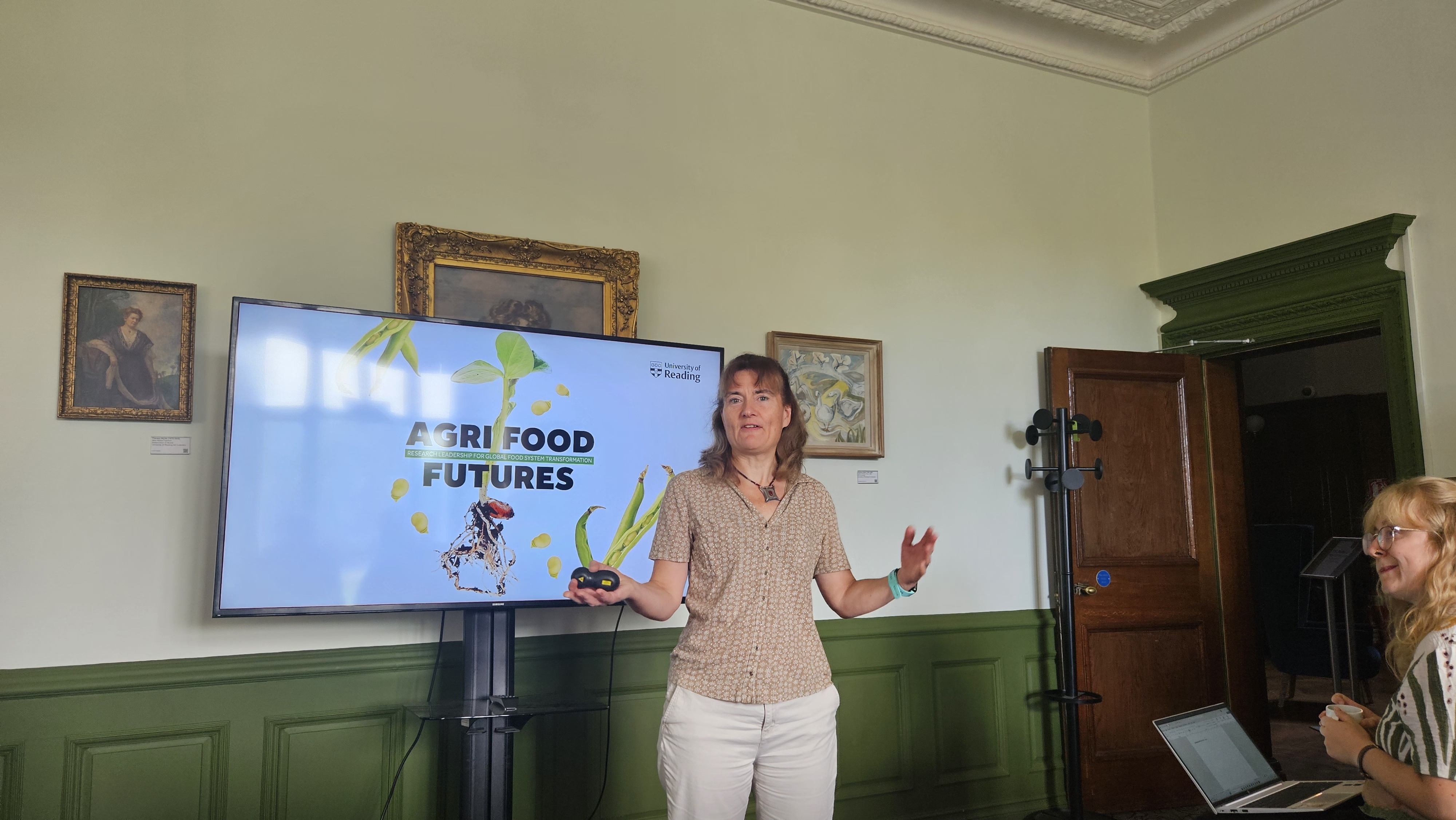
The meeting was opened by the project coordinator, Dr Jorge CAMPOS-GONZÁLEZ (University of Reading), who presented the vision, identity and working principles of SOILBIOMASS+. The coordinator’s team also includes Dr Laurence SMITH and Prof Martin LUKAC. The Project Officer provided an overview of the policy context, European Commission requirements and the expectations of the EU Mission “A Soil Deal for Europe.”
Work Package leaders presented the tasks, key outputs and priorities for the first year of the project. A separate session was devoted to Living Labs and demonstration sites and was led by EIT Food together with the partners responsible for these sites. Sessions on project management, risks and reporting were led by WP7, while WP6 focused on communication, dissemination and exploitation of project results. Organisational support was provided by project manager Elena KARP.
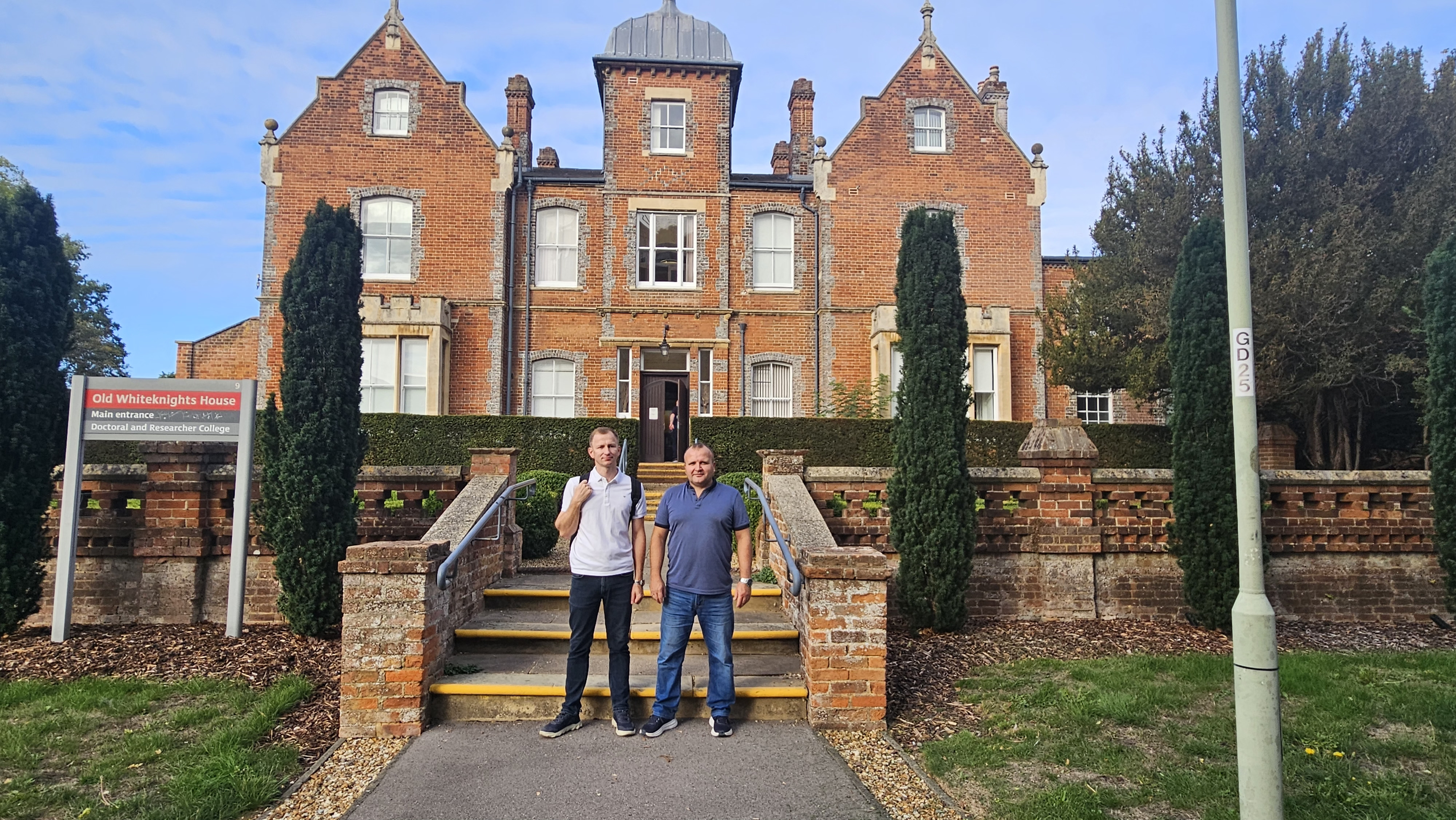
Representing NUBiP Ukraine, Oleksandr SOSHENSKYI and Viktor MYRONIUK took part in the meeting in Reading. Vasyl YUKHNOVSKYI, Olena PIKOVSKA, Yevhenii BEREZHNIAK and Oleksandr SOVAKOV joined the meeting online. The university representatives participated in thematic sessions, discussed Work Package tasks and considered the next steps for project implementation.
Over the three days, participants discussed the project implementation logic, the first-year work plan, key outputs and milestones. Particular attention was paid to project management, reporting, data exchange, ethics, communication, dissemination and exploitation of research results.
- The first day focused on the project vision, its participants and overall architecture. Following presentations by the coordinator, the Project Officer and Work Package leaders, participants reviewed the project roadmap for the first, second and third years, as well as the objectives to be achieved by the end of the project. In an interactive format, they discussed the links between Work Packages, task dependencies, data flows and data transfer points. Project management, reporting and principles of joint consortium work were also addressed.
- The second day focused on work planning, validation, risks and expected impact. Work Package teams developed first-year action plans and discussed the involvement of Living Labs and demonstration sites, data access and coordination of validation activities. Separate sessions addressed risk assessment and the feasibility of planned activities, communication, dissemination and exploitation of results, preparation of publications, and the identification of Key Exploitable Results. The day concluded with a visit to the Museum of English Rural Life.
- The third day focused on decision-making and defining commitments. Work Package leaders presented their action plans, while participants agreed on decisions, assigned responsibilities for specific tasks and outlined the next steps.
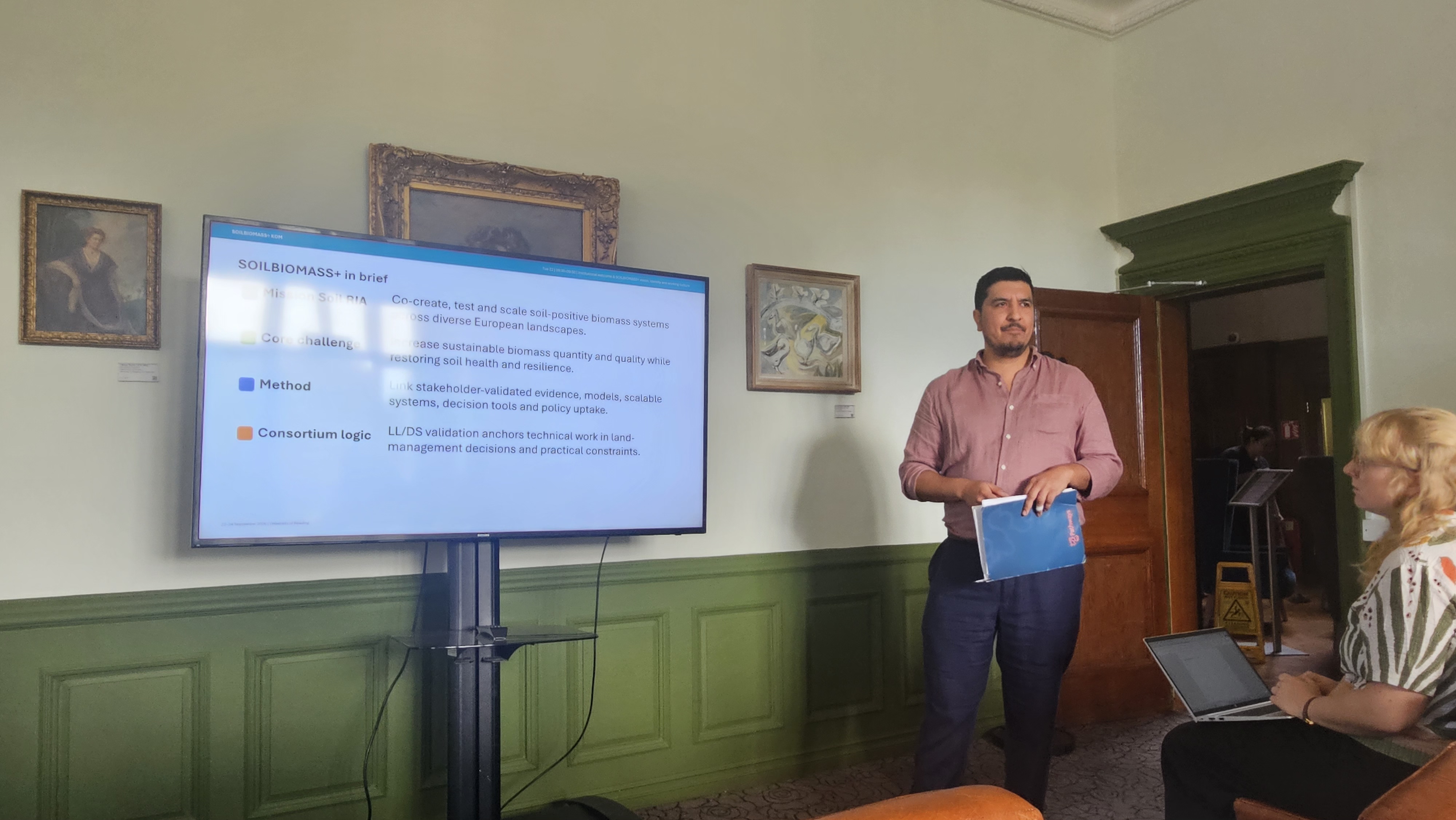
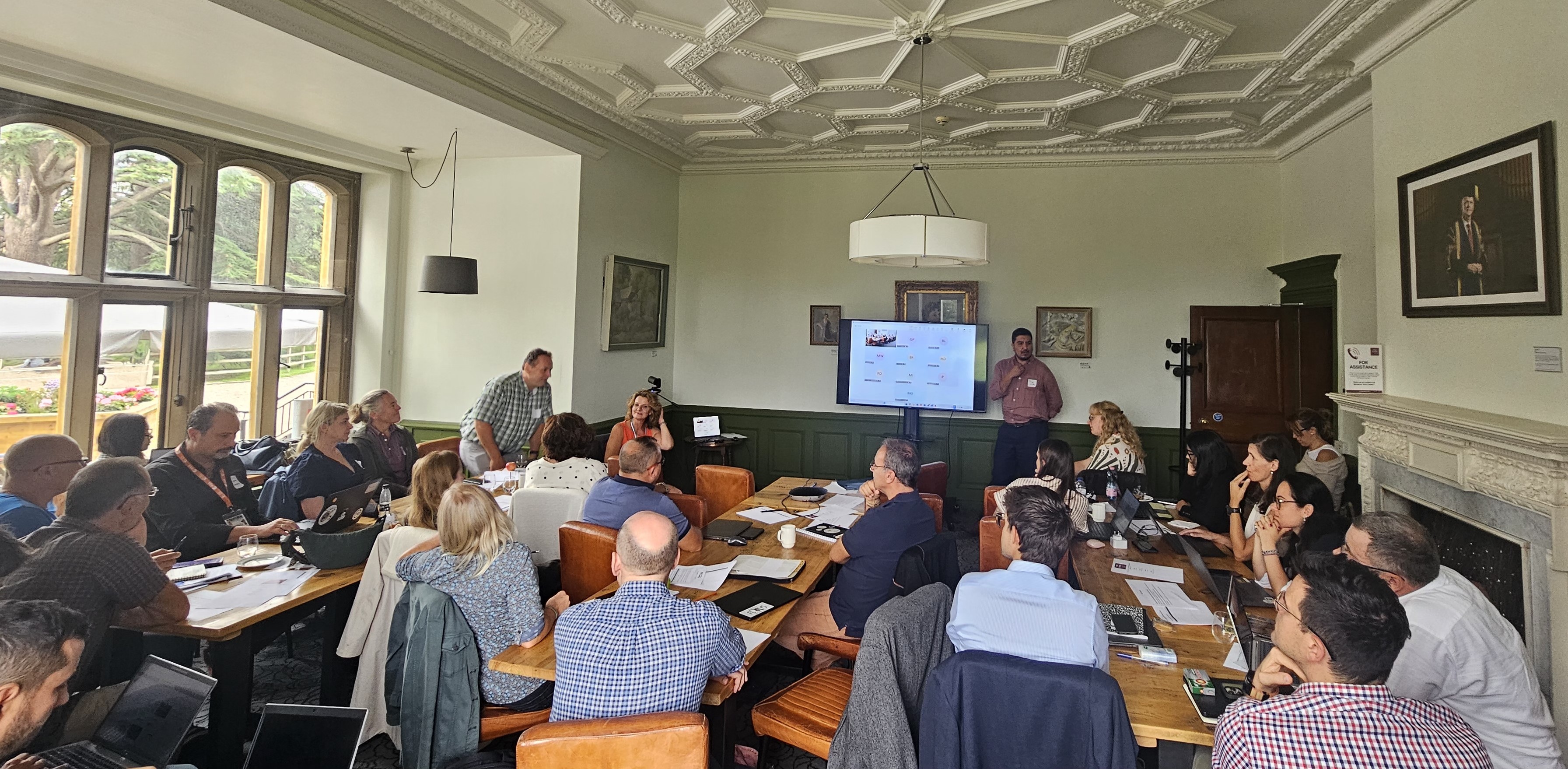
NUBiP Ukraine will contribute to several key areas, including the establishment of demonstration sites for arable farming and agroforestry, biomass mapping using Earth observation and machine learning, as well as expertise in woody biomass and shelterbelts.
Participation in SOILBIOMASS+ strengthens the university’s international research cooperation, provides opportunities to exchange experience with European partners, and brings Ukrainian scientific expertise into the development of modern approaches to sustainable land use, biomass production and soil health restoration.
More information about the project is available on the coordinator’s website: Healthier soils or more biomass? New project aims for both
The project is funded under the Horizon Europe programme and the EU Mission “A Soil Deal for Europe” and has a budget of €6 million. It will run from September 2026 to August 2030. The consortium brings together 18 organisations from 12 European countries and is coordinated by the University of Reading. The National University of Life and Environmental Sciences of Ukraine is one of the consortium partners.