
University at a Glance

NUBiP of Ukraine is a leading national research university specializing in life and environmental sciences. Founded in Kyiv in 1898, the University has grown into one of Ukraine's most comprehensive higher education institutions, bringing together over 30,000 students and more than 1,300 academic staff.
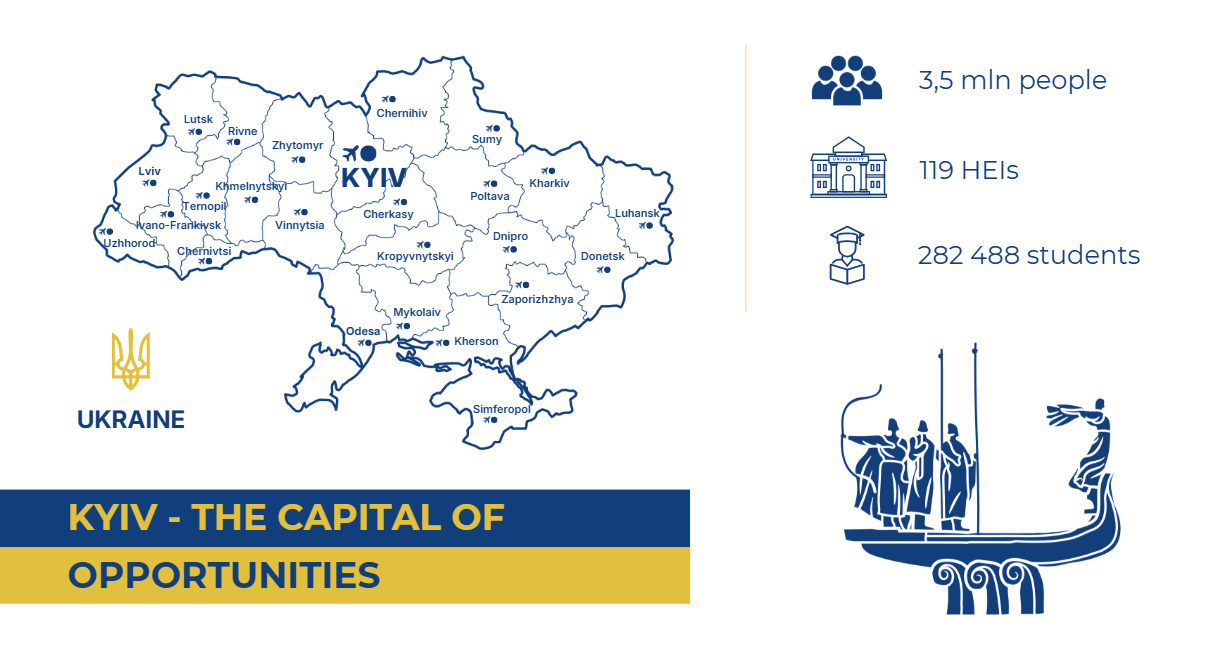
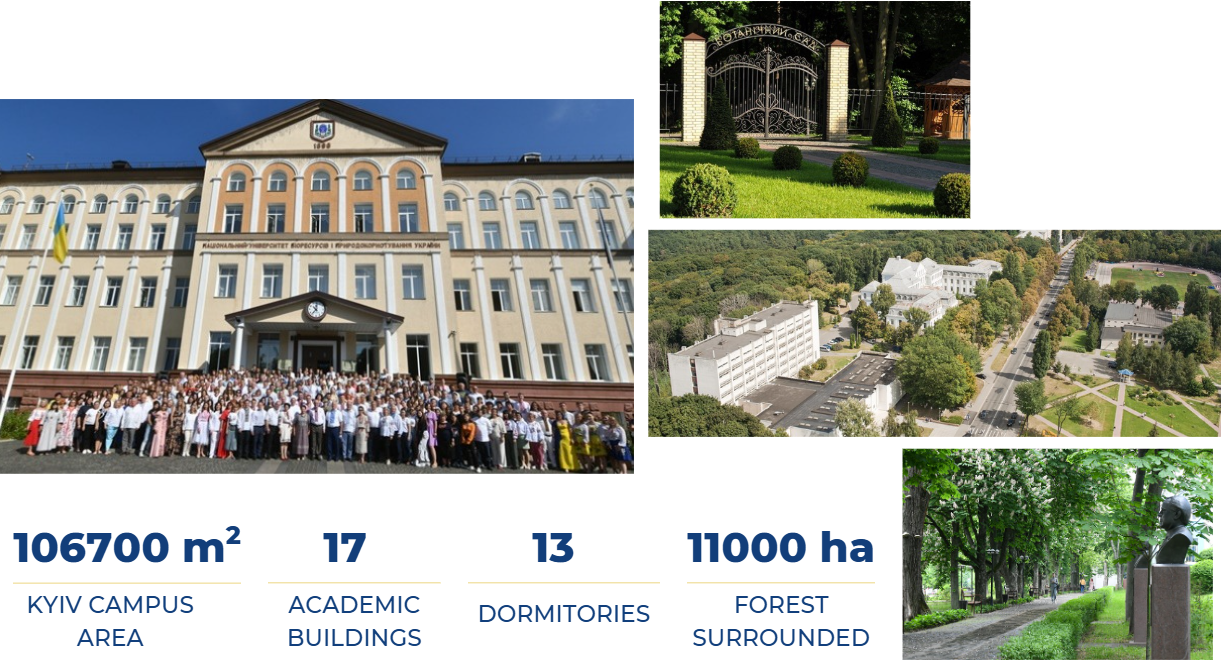
NUBiP's principal campus is one of the most distinctive and expansive university environments in Ukraine. Spanning 138 hectares in the heart of Kyiv, it is far more than a conventional academic setting, it is a living landscape that seamlessly integrates lecture halls, laboratories and administrative buildings with forests, experimental fields, botanical gardens and open green spaces. This unique blend of urban location and natural surroundings reflects the University's core identity: an institution where the study of life and environmental sciences is not merely theoretical, but deeply embedded in the environment itself. Students and researchers alike benefit from immediate access to working agricultural plots, ecological study areas and specialised research facilities - all within the boundaries of a single, cohesive campus. Beyond Kyiv, NUBiP extends its presence across 13 regional campuses throughout Ukraine, ensuring that the same quality of hands-on, environment-centred education is available to students from every corner of the country.
The University's mission is to generate, systematise, preserve and disseminate advanced scientific knowledge in order to enhance the quality of human life, and to cultivate highly qualified specialists in accordance with European and global standards of intellectual and personal excellence.
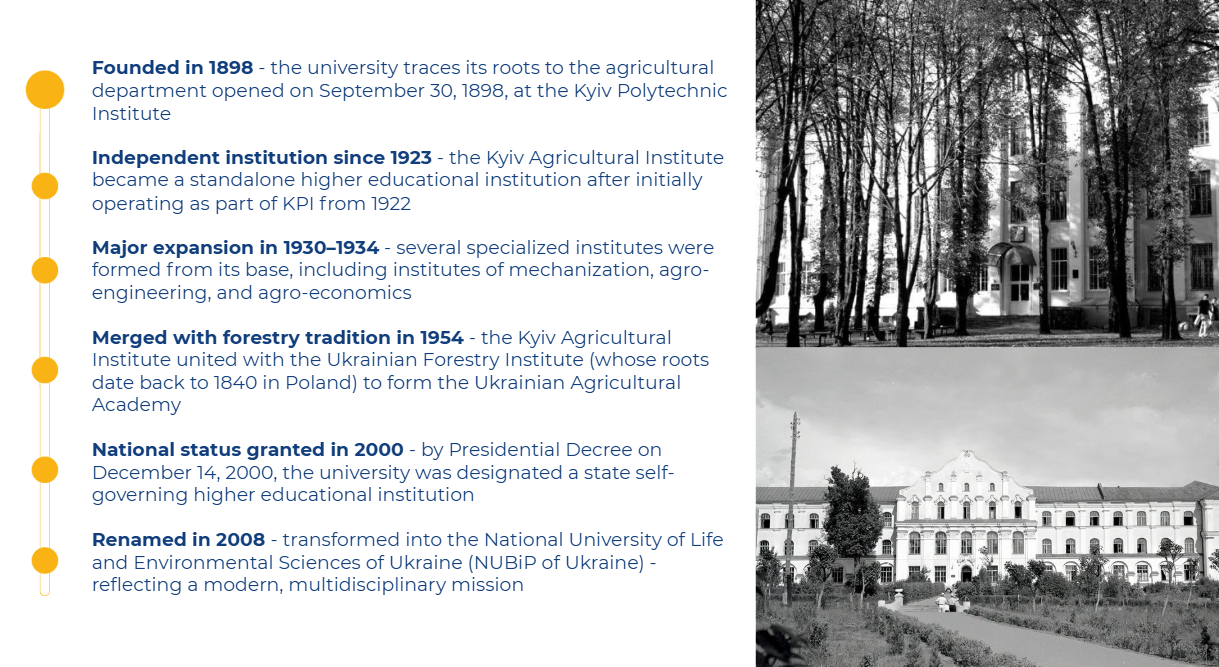
→→ Find out more about the HISTORY of NUBiP
NUBiP holds the highest (IV) level of accreditation in Ukraine and is recognized by leading international academic organizations, including EUA, FAO, and UNESCO. It conducts a broad spectrum of activities encompassing education, scientific research, innovation, production and information consulting. Our work is centred on the study of contemporary challenges in life and environmental sciences.
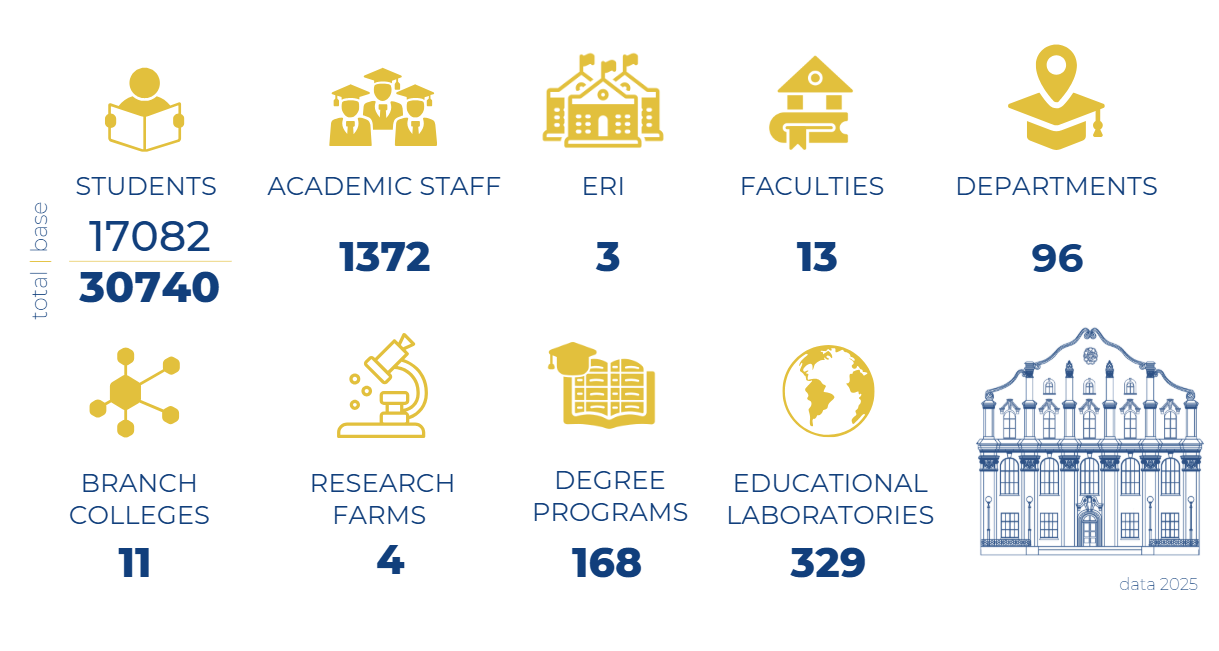
NUBiP's academic structure encompasses 13 faculties and 3 Educational and Research Institutes, offering an exceptionally wide range of disciplines, from agrobiology, agronomy, veterinary medicine and animal science to information technologies, law, economics, food science, land management, design and engineering, humanities and pedagogy. This breadth reflects the University's commitment to addressing the full spectrum of challenges at the intersection of life sciences, environmental sustainability and modern society.
▶ Educational and Research Institutes
ERI of Energetics, Automation and Energy Saving
ERI of Forestry and Landscape-Park Management
▶ Faculties
Faculty of Agricultural Management
Faculty of Animal Science and Water Bioresources
Faculty of Design and Engineering
Faculty of Humanities and Pedagogy
Faculty of Information Technologies
Faculty of Veterinary Medicine
Mechanical and Technological Faculty
Faculty of Plant Protection, Biotechnology and Ecology
Faculty of Food Science, Nutrition and Quality Management
▶ Educational and Research Farms
Agronomic Experimental Station
Boyarka Forest Research Station
Velykosnytynske Educational and Research Farm named after O.V. Muzychenko
Educational and Research Farm «Vorzel»
▶ Research Institutes
Research Institute of Animal Health
Research Institute of Crop Science and Soil Science
Research Institute of Forestry and Ornamental Horticulture
Research Institute of Technology and Quality of Animal Products
Research and Design Institute of Standardisation and Technologies of Eco-Safe and Organic Products
Ukrainian Laboratory of Quality and Safety of Agricultural Products
Ukrainian Research Institute of Agricultural Radiology
▶ Regional Colleges and Institutes
Bakhchysarai College of Construction, Architecture and Design
Berezhany Agrotechnical Institute
Berezhany Professional College
Bobrovytsia Professional College named after O. Mainova
Boyarka College of Ecology and Natural Resources
Crimean Agro-Industrial College
Crimean Technical College of Land Reclamation and Agricultural Mechanisation
Irpin Professional College
Mukachevo Professional College
Nemishaieve Professional College
Nizhyn Agrotechnical Institute
Nizhyn Professional College
Prybrezhne Agrarian College
Rivne Professional College
Zalishchyky Professional College named after Ye. Khraplivyi
NUBiP's standing in leading global university rankings reflects its sustained commitment to research excellence, academic quality and international engagement:
→ Times Higher Education (THE) World University Rankings
→ Times Higher Education (THE) Impact Rankings
→ Times Higher Education (THE) Interdisciplinary Science Rankings
→ QS World University Rankings
→ UI GreenMetric World University Ranking
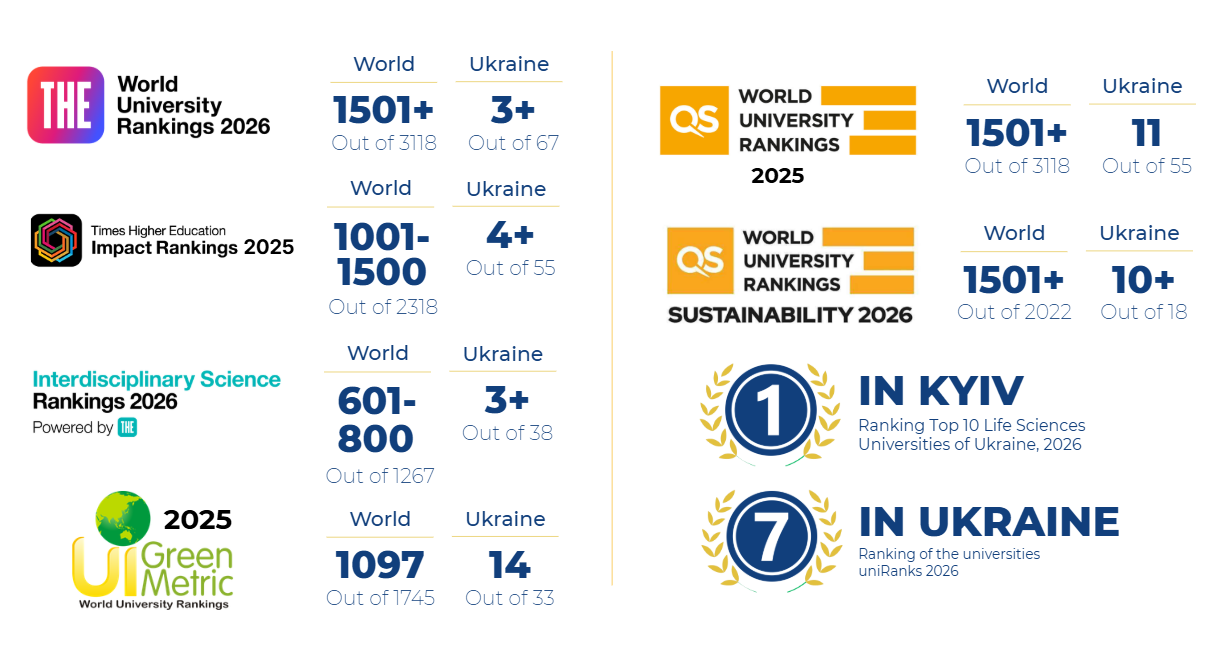
→→ Find out more about International Rankings of NUBiP
NUBiP has built a broad network of academic and research partnerships across the world with universities and companies.
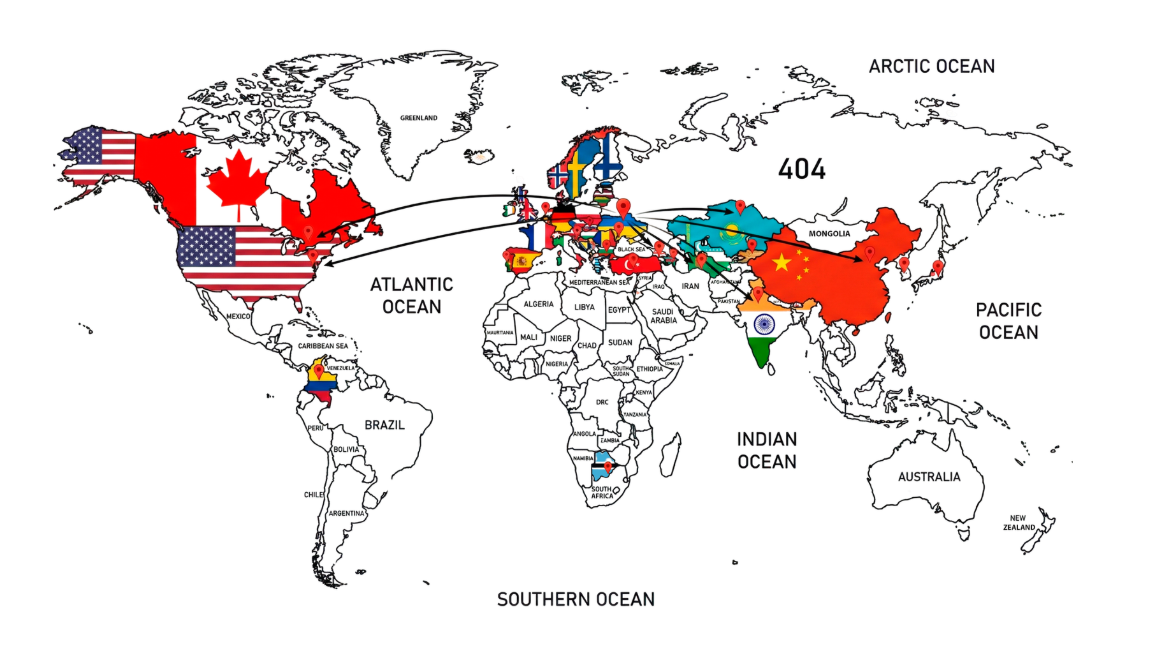
→→ Find out more about Global Partnerships with Universities
→→ Find out more about Global Partnerships with Companies
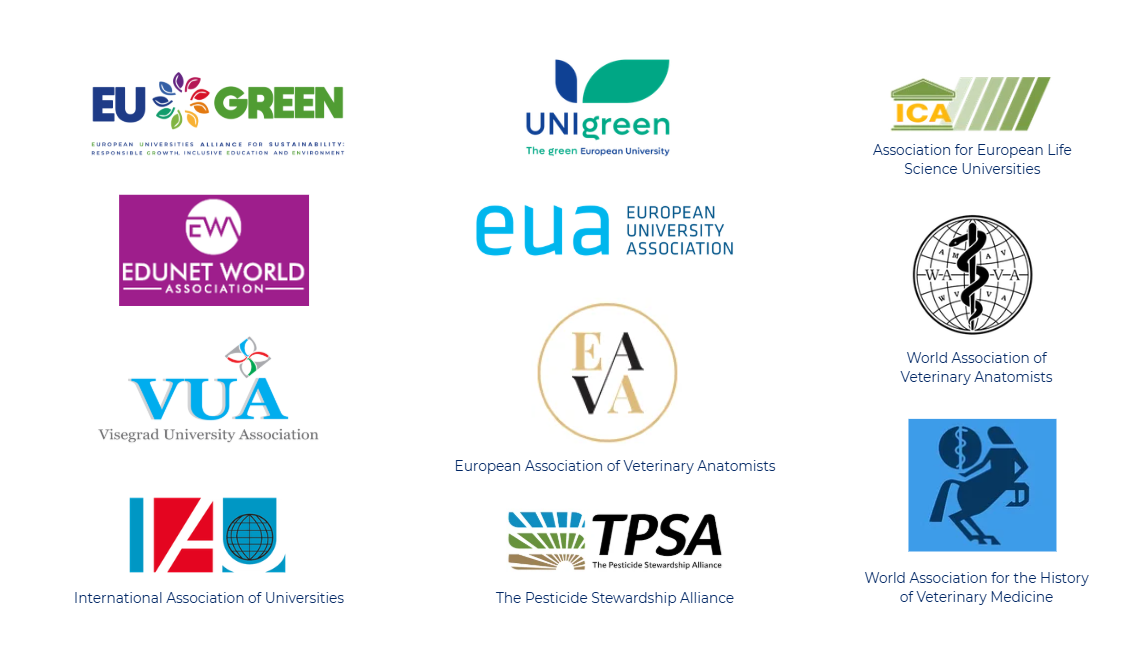
→→ Find out more about International Organizations
NUBiP maintains an extensive and dynamic portfolio of international projects, reflecting its deep integration into the global academic and research community. The University actively participates in a wide range of competitive funding programmes, including Erasmus+, Horizon Europe, DAAD, NATO Science for Peace and Security, the Visegrad Fund and Marie Curie Actions, among others.
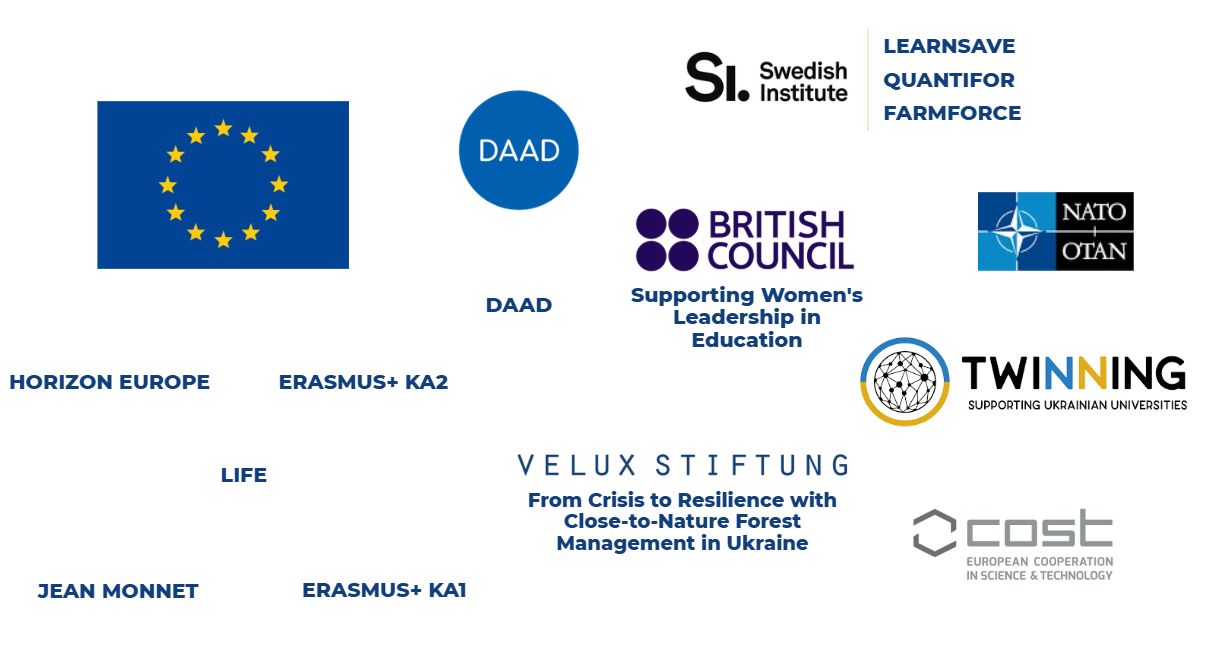
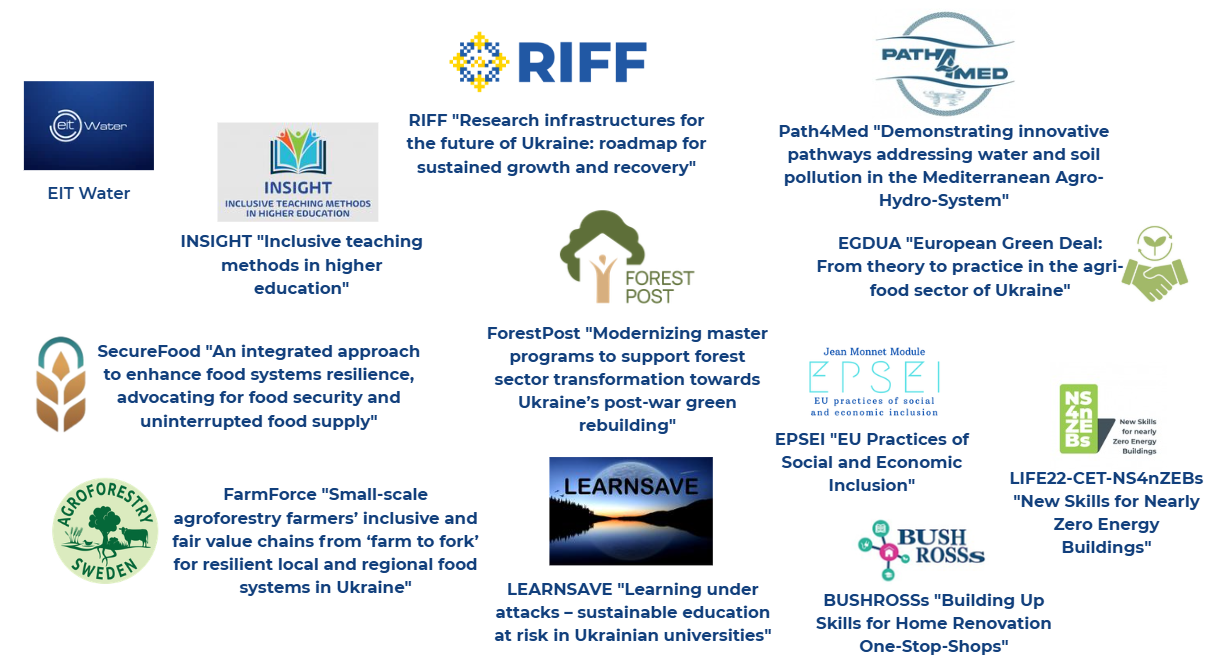
→→ Find out more about International Projects
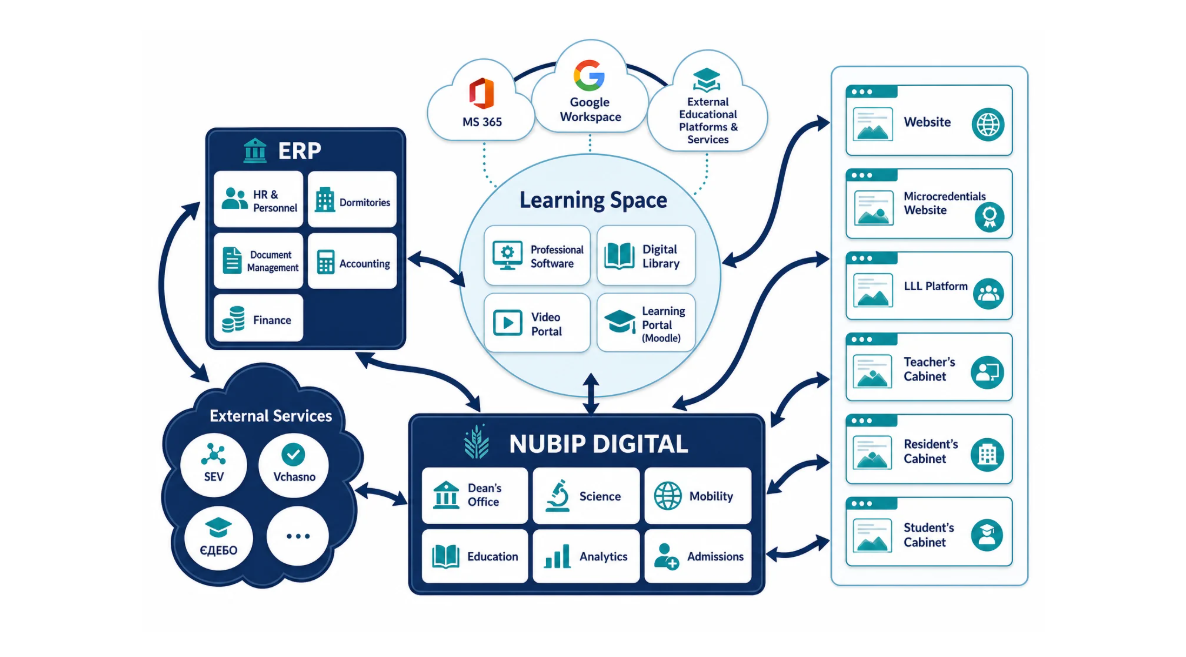
NUBiP of Ukraine has been actively building a multi-layered digital educational ecosystem designed to serve students, postgraduate researchers, and academic staff. At its core is the e-learning portal (elearn.nubip.edu.ua), a centralized Moodle-based platform where electronic courses are hosted and accessed using institutional corporate accounts (@nubip.edu.ua). Student accounts are created centrally and remain active throughout each study cycle, ensuring structured and secure access to hundreds of digital course materials across all faculties.
NUBiP Digital Platform
A significant milestone in the university's digital transformation was launching a new initiative called NUBIP Digital, a practical workshop-training dedicated to implementing a new platform for automating the educational environment. This platform represents a new level of process automation across academic administration and course delivery, signaling the university's commitment to moving beyond basic e-learning toward an integrated institutional digital infrastructure.
International Digital Partnerships
NUBiP has strategically expanded its digital learning resources through international cooperation. In late 2025, the university joined the University Twinning initiative and gained free access to FutureLearn, one of the world's largest distance learning platforms, enabling students and staff to enroll in certified courses in areas such as Digital Skills and Data Analysis, Sustainable Development, and Agricultural Technologies. Access is granted via institutional email, supporting a continuous, self-paced learning model that complements the formal curriculum
In accordance with its Charter, NUBiP of Ukraine fulfils its mission through five principal areas of activity.
→ Education and Cultural Development. The University delivers training at all levels of higher education, from incomplete and foundational degrees through to full postgraduate qualifications, serving the agricultural, environmental and life sciences sectors. It is committed to the continuous advancement of Ukrainian higher education in line with the Bologna Process and international standards of sustainable development. NUBiP also provides professional development and retraining of specialists across agriculture, forestry, fisheries, veterinary medicine and environmental management, alongside the preparation and certification of senior academic and research personnel. Equal attention is given to fostering civic consciousness among students and ensuring appropriate conditions for study, wellbeing and professional growth.
→ Scientific Research and Publishing. The University organises and executes research projects drawing on the experience of leading international research universities, hosts national and international conferences, symposia and congresses, and publishes a broad range of scientific, methodological and educational materials across its core disciplinary domains.
→ Innovation and Technology. NUBiP develops and implements advanced technologies, biotechnologies and quality systems in full compliance with intellectual property legislation. Its innovation activities encompass the development and standardisation of cutting-edge agricultural equipment and methodologies, the implementation of international bioethical and biosafety standards in animal and plant health, quality assurance and certification of agro-industrial and food products, and the monitoring and modelling of sustainable terrestrial and aquatic ecosystem management.
→ Research Institution Activities. As a designated research university, NUBiP integrates education, science and innovation to accelerate technological progress across the agricultural and environmental sectors. It establishes and develops research and innovation centres, collaborates closely with the National Academy of Sciences, the National Academy of Agricultural Sciences and leading foreign research institutions, and implements pilot projects for the development of competitive products and technologies. The University maintains active integration with world-leading universities through joint research projects, publications, conferences, grants and shared digital academic resources.
→ International Engagement. NUBiP pursues active international collaboration in both education and science, participates in international projects, programmes and scholarly events, and establishes joint educational and research institutions with foreign partners in order to deliver internationally recognised qualifications and advance its position within the global higher education and research area.
→ Institutional Autonomy. The University operates as a nationally designated, self-governing state higher education institution. Its autonomy encompasses independent decision-making across academic, scientific, financial and economic matters; self-determination of organisational structures and remuneration models; direct contractual relations with external partners; the formation and dissolution of structural subdivisions; and broad freedom to enter into cooperative agreements with other universities, enterprises and public institutions in accordance with Ukrainian legislation.