

Scientific achievements and accomplishments of the Faculty of Plant Protection, Biotechnology, and Ecology in 2025
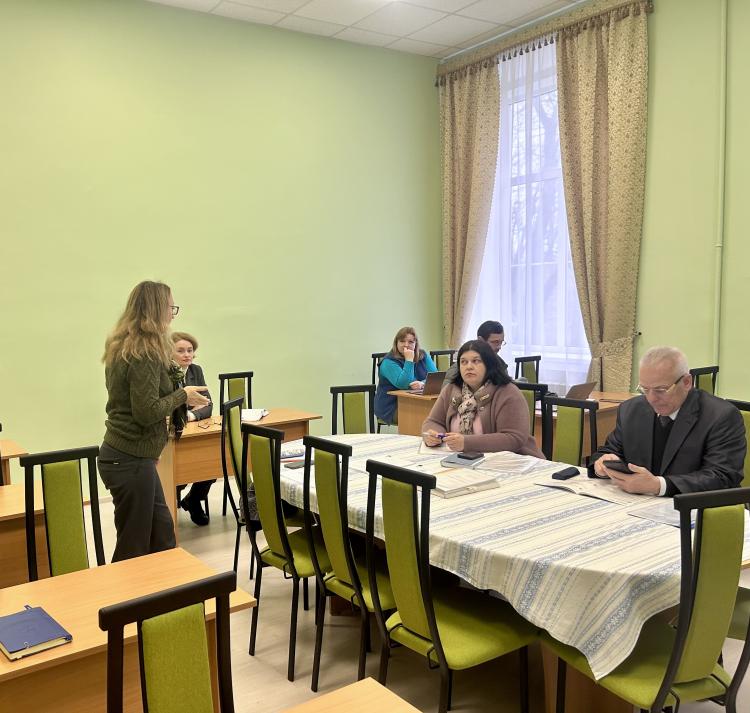
On December 10, 2025, the Faculty of Plant Protection, Biotechnology, and Ecology held hearings on research reports for the year. The reports were presented by the heads of research projects funded by the state budget, as well as those funded by commercial contracts and initiatives. The commission consisted of: Dean of the Faculty, Professor Yulia KOLOMIETS, Head of the Department of Physiology, Plant Biochemistry and Bioenergetics, Professor Svitlana PRYLUTSKA, Head of the Department of Entomology, Integrated Plant Protection and Quarantine, Professor Mykola DOLIA, Head of the Department of General Ecology, Radiobiology and Life Safety, Professor Alla KLEPKO, Associate Professor of the same department, Candidate of Agricultural Sciences Valeria BONDAR, Professor of the Department of Phytopathology named after Academician V.F. Peresypkin Myroslav PIKOVSKY.

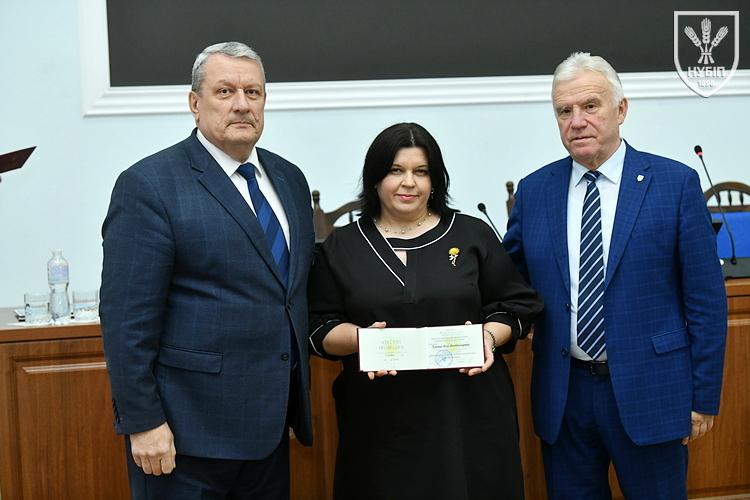
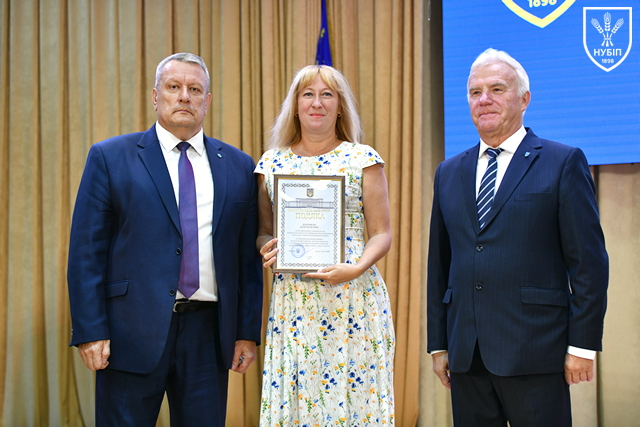
In 2025, Mykola DOLIA, Head of the Department of Entomology, Integrated Plant Protection and Quarantine, was elected Academician of the National Academy of Agrarian Sciences of Ukraine, Miroslav PIKOVSKY, Doctor of Agricultural Sciences, and Alla KLEPKO, Doctor of Biological Sciences, were awarded the academic title of professor, while Oleksandr BABICH and Oleksandr SUBI, Candidates of Biological Sciences, were awarded the academic title of associate professor. In addition, Associate Professor Nataliia NESTEROVA became a laureate of the Verkhovna Rada Award for Young Scientists for 2024 (Resolution No. 4583-IX of 21.08.2025), and Professors Svitlana PRYLUTSKA and Yulia KOLOMIETS were awarded the Letter of Thanks from the Ministry of Education and Science of Ukraine.
The faculty's researchers are working on two applied research topics, one fundamental topic, one basic funding project, one young scientists' project, one international project, and 20 initiative topics.
As part of the research project “Biotechnology for the identification and control of bacterial pathogens of solanaceous crops to address the food crisis in Ukraine” (scientific supervisor: Dr. Yulia Kolomiyets, Doctor of Agricultural Sciences). Phytopathogenic bacteria such as Pseudomonas syringae, Xanthomonas spp., Erwinia amylovora, and Clavibacter michiganensis cause a wide range of pathologies, from spots and rot to systemic lesions that lead to plant death. Bacterial diseases are found in key crops: potatoes, tomatoes, peppers, apples, cabbage, and grains. The economic losses from such diseases are estimated at billions of dollars annually. An integrated strategy is needed to curb the spread of bacterial plant diseases: monitoring of pathogens, adaptation of agricultural practices, development of biotechnologies, and international coordination in the field of phytosanitary control. During the reporting period (2023-2025), seven articles were prepared in professional publications in Ukraine, eight articles in foreign scientific publications included in the international scientometric database Scopus, two monographs, three abstracts, two methodological recommendations, two implementation acts, one participation in all-Ukrainian and regional scientific-technical/industrial exhibition events, two economic agreements, one patent for a utility model, and one master's thesis defended.
As part of the research project “Regulation of intracellular mechanisms of stress resistance in agricultural plants using carbon nanomaterials” (supervised by Dr. Svitlana PRYLUTSKA, Doctor of Biological Sciences). A search was conducted for new effective biotechnological approaches to increasing plant resistance to one of the most important abiotic stresses – drought. The influence of nanostructured water-soluble particles of fullerene C60 and graphene oxide on the physiological and biochemical state of agricultural crops under conditions of water deficiency was investigated. During the reporting period (2023-2025), 7 articles were published in the Scopus scientometric database, 10 articles in professional publications in Ukraine, 1 utility model for a Ukrainian invention was prepared, 2 author's certificates were obtained, 4 collective monographs (4.5 author's sheets) were published, 6 master's and 11 bachelor's theses were defended, 2 textbooks, 1 scientific and methodological recommendation, 1 methodological guide for practical classes, and 3 methodological recommendations for laboratory work were published, and 2 agreements on scientific and technical cooperation were concluded.

As part of the research project “Development of measures to restore terrestrial ecosystems affected by Russian military aggression” (scientific supervisor: Valeria Bondar, PhD in Agricultural Sciences). A study was conducted on the indirect impact of hostilities on the natural ecosystems of the Kyiv region affected by hostilities in February-April 2022, in particular, on soil microbiological indicators, changes in the hydrogeological regime, the impact of fortifications on landscape integrity, and the development of eutrophication processes as a result of characteristic disturbances in the life of aquatic biodiversity using remote sensing and GIS tools. Based on the results of the research, scientific and methodological recommendations were developed on methods for comprehensive assessment of the environmental consequences of Russian military aggression at the regional level.
As part of the research project “Assessment of soil condition in liberated territories and determination of their suitability for obtaining safe and high-quality plant products” (scientific supervisor: Volodymyr Illenko, PhD in Biology). Data analysis showed that, according to the radiological indicators of the studied territories within the Kyiv and Chernihiv regions, the density of soil contamination with 137Cs and 90Sr is within the values formed by global and Chernobyl fallout prior to the full-scale invasion. We did not find any areas of additional contamination with radionuclides. However, it was established that in areas around craters formed by falling aerial bombs, there are areas with low specific activity values of 137Cs. The possibility of using this fact to establish the boundaries of contamination of agricultural land as a result of hostilities is being considered.

Development of a model for the functioning of rural areas based on sustainable development (basic funding, scientific supervisor Dr. Alla KLEPKO, Doctor of Biological Sciences). Testing and analysis of the effectiveness of implementing additional assessment indicators for the Sustainable Development Goals indicator system, taking into account the environmental impact of military actions, in a comprehensive agroecological assessment of the state of territorial communities in the Kyiv region that have suffered from military aggression. The impact of military actions during the Russian Federation's aggression on the implementation of the Sustainable Development Goals was determined, and the possible dynamics of sustainable development of territorial communities in the Kyiv region in the context of further recovery were assessed. Recommendations have been developed for the practical implementation by territorial communities of measures aimed at adapting to and mitigating the effects of climate change and protecting and restoring terrestrial ecosystems for both the restoration of affected areas and the reconstruction of the country.
EU Horizon project – Path4Med “Demonstration of innovative ways to solve the problem of water and soil pollution in the Mediterranean agro-hydrosystem” (Grant Agreement No. 101156867 dated July 1, 2024), led by Associate Professor Vita STROKAL. As part of the international project, in accordance with the schedule for the implementation of work packages, the following was completed in 2025: (1) an analytical review of water quality indicators in the Dnipro basin was conducted, in particular, it was noted that only 55% of the water resources of the Pripyat River sub-basin are in good ecological condition and 2.9% of water resources are in good chemical condition; up to 50% of the water resources of the Desna River sub-basin are in good ecological condition and 11% are in good chemical condition; 11% of water resources in the Middle Dnieper sub-basin are in good ecological condition and 7% are in good chemical condition; 55% of water resources in the Lower Dnieper sub-basin are in good ecological condition, while only 21% are in good chemical condition; (2) For further monitoring studies, seasonal water samples were taken from the Desna River, Kaniv Reservoir, Kremenchuk Reservoir, and Kamyansky Reservoir, and soil samples were taken from local farmers “Rusichi” (Cherkasy region), Astra (Poltava region), TK ART-AGRO LLC (Kyiv region), and Kolos (Chernihiv region). (3) Mapping of stakeholders interested in participating in activities aimed at developing nature-based solutions to overcome the water and food crisis in the Dnipro Basin.

The faculty trains 68 postgraduate students in the educational and scientific programs “Biology,” “Ecology,” “Plant Protection and Quarantine,” and “Biotechnology of Biological Systems.” In 2025, 16 first-year postgraduate students were enrolled.
The faculty annually hosts national and international scientific and practical conferences for students, graduate students, and young scientists, round tables, a young researcher competition, and a student research competition. For example, the All-Ukrainian competition of scientific works for schoolchildren in grades 9-11 “Young Researcher”, the first stage of the All-Ukrainian competition of student scientific works, the VI All-Ukrainian scientific and practical conference of higher education seekers “Achievements and prospects in plant protection and quarantine” were held. the V All-Ukrainian Scientific and Practical Conference for Students, Postgraduates, and Young Scientists “Ecology – Challenges of Modernity,” and the XI International Scientific and Practical Conference for Students, Postgraduates, and Young Scientists “Ecology – Philosophy of Human Existence.”


In addition, the faculty held round tables such as scientific webinars for students majoring in Ecology (101), dedicated to World Wetlands Day , World Forest Day, International Day for the Protection of Marine Ecosystems, World Laboratory Animal Day, and World Earth Day, as well as scientific webinars dedicated to the Day of Remembrance for All Victims of Chemical Weapons and the International Day of Remembrance for Chernobyl.
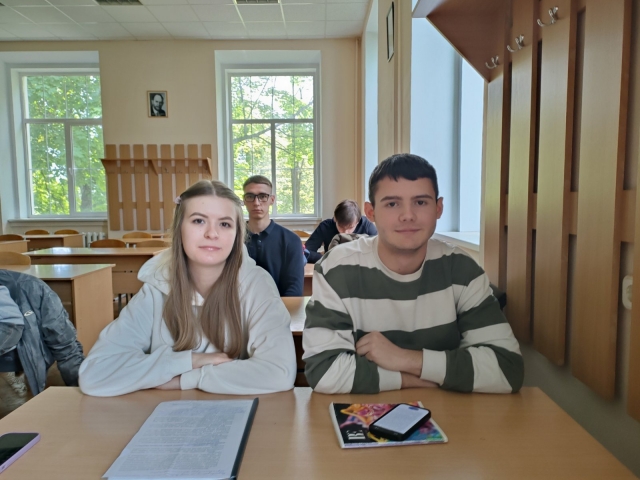

Students of the faculty are winners of national competitions:
- First place: Maria BEZOCHUK, Alina KACHANOVA, Yelizaveta DIDUR
- 2nd place Vladislav KRAMAR, Tetiana KUCHER, Maria SHYLO, Maria MALYSHEVA, Tetiana POMIN, Kateryna SUSHYTSKA (2nd place),
- Third place: Kateryna LEONTIYEVA, Daryna SAGAN, Olga VARVARCHUK, Volodymyr FRIEDRICH, Daryna TYMOSHEVSKA, Oleksandra NOVIKOVA, Yevheniia OVDIENKO, Stanislav FURMANETS.
In 2025, scientists from the Faculty of Plant Protection, Biotechnology, and Ecology contributed 3,902,253.48 UAH to the University's special fund. Research project leaders: Vita Strokal, Yulia Kolomiyets, Mykola Dolya, Dmytro Gentosh, Olena Naumovska, Volodymyr Hlymyaznyi, Antonina Vuyek.
Following the discussion of the research reports for the current year, their relevance, innovative focus, and alignment with the priority areas of scientific and technological development in Ukraine were confirmed. The entire commission emphasized that all reports deserve approval and continuation of research in the coming year.

The management of the Faculty of Plant Protection, Biotechnology, and Ecology would like to express its gratitude to the scientific and teaching staff and students for their active scientific work, determination, and desire to multiply achievements for the benefit of the faculty, the university, and Ukraine!