
NUBiP of Ukraine is Among Leaders in THE Interdisciplinary Science Rankings 2027
The National University of Life and Environmental Sciences of Ukraine has entered the global ranking of interdisciplinary research THE Interdisciplinary Science Rankings 2027, the results of which were published on November 18, 2026. The university ranked in the 801-1000 range among higher education institutions worldwide and took 6th place among Ukrainian universities.
This year, international competition in the ranking has significantly intensified, as the number of universities that received ranking positions increased by 16.1%. Ukraine's representation has also noticeably increased; while 15 Ukrainian universities received rankings in the previous edition, their number grew to 24 in 2027.

Against the backdrop of an expanding ranking and intensifying competition, NUBiP of Ukraine maintains its status as one of the leading Ukrainian higher education institutions represented in the global ranking. While in the 2026 edition the university ranked in the 601–800 range and held the seventh position in the national ranking, this year only five Ukrainian institutions appear in the higher ranking groups.
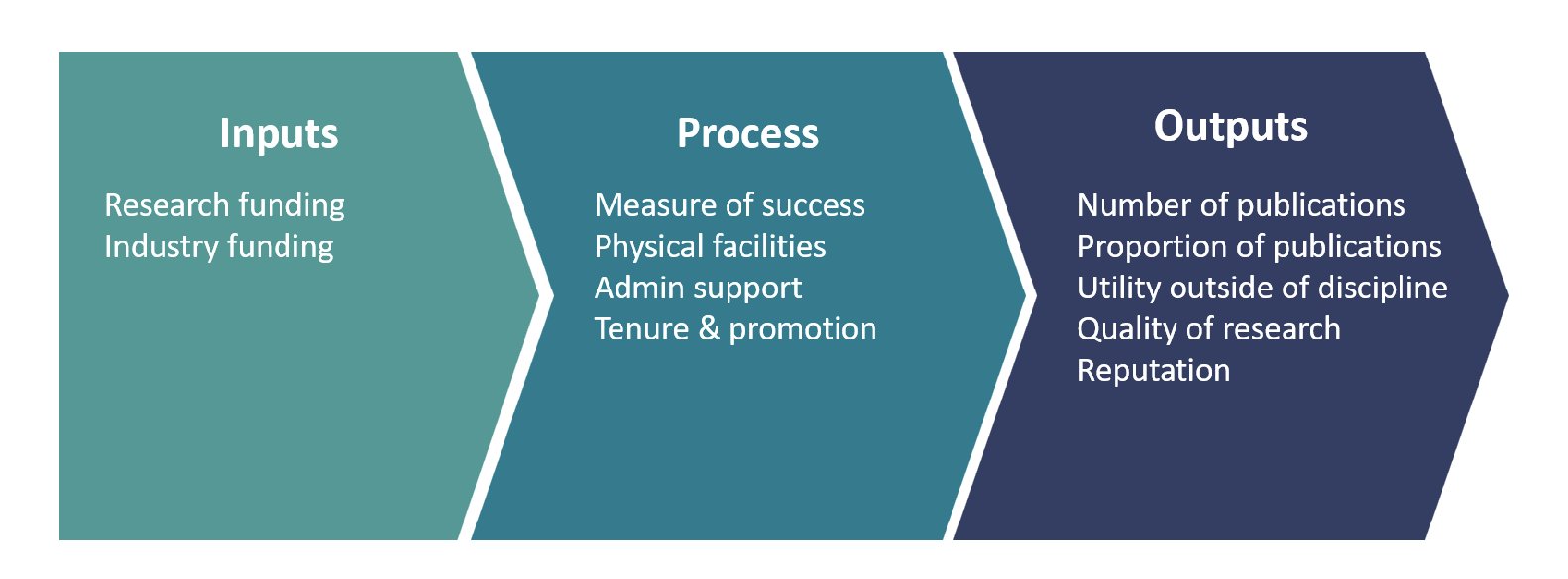
The strongest result for NUBiP of Ukraine was the Process category — 45.8 points, which assesses the organizational conditions for conducting interdisciplinary research. By this indicator, the university showed the same result as Sumy State University, which ranked 501-600 globally, and Sumy National Agrarian University, which ranked in the 601-800 group.
At the same time, NUBiP surpassed a number of other Ukrainian institutions in this component, including Taras Shevchenko Kyiv National University (16.7 points), National University «Lviv Polytechnic» (25.0 points), and Lutsk National Technical University (33.3 points). This result is particularly indicative, as the Process category considers not only the presence of research infrastructure but also administrative support for interdisciplinary teams, mechanisms for evaluating their performance, and recognition of interdisciplinary achievements in the professional development of scientists.
For the Outputs category, which characterizes scientific performance, the university received 24.8 points. This indicator exceeds the results of Sumy National Agrarian University (24.2 points), National Technical University «Kharkiv Polytechnic Institute» (19.6 points), and I. Franko Lviv National Institute University (15.0 points). The evaluation covers the quantity and proportion of interdisciplinary publications, their quality, citation outside the relevant scientific field, and the university's academic reputation.
In the Inputs category, which considers financial support for interdisciplinary science and attracting resources from industrial partners, NUBiP of Ukraine received 16.8 points. By this indicator, the university has surpassed the I. Sikorsky Kyiv Polytechnic Institute (13.8 points) and National University «Lviv Polytechnic» (11.9 points).
These results demonstrate that even with differences in overall ranking positions, NUBiP of Ukraine has competitive advantages in individual assessment components. The most notable among them are organizational support for interdisciplinary research and specific indicators of its effectiveness.
The Interdisciplinary Science Rankings, which Times Higher Education compiles in collaboration with Schmidt Science Fellows, assess universities' contributions to scientific development at the intersection of various disciplines. The methodology includes 11 indicators grouped into three categories: Inputs (19% of the total score), Process (16%), and Outputs (65%). The greatest weight is given to research results — their quality, scientific impact, and international recognition.
For NUBiP of Ukraine, participating in the ranking is an opportunity not only to evaluate its own results in the international arena but also to see which components of scientific activity already ensure the university's competitiveness and which require further strengthening. In particular, the high score for organizational processes relative to other components creates a foundation for the development of interdisciplinary research teams, expansion of cooperation with international partners, and an increase in the university's research impact.