
Scientists of NUBiP of Ukraine took part in the summer school on close-to-nature forestry in Switzerland
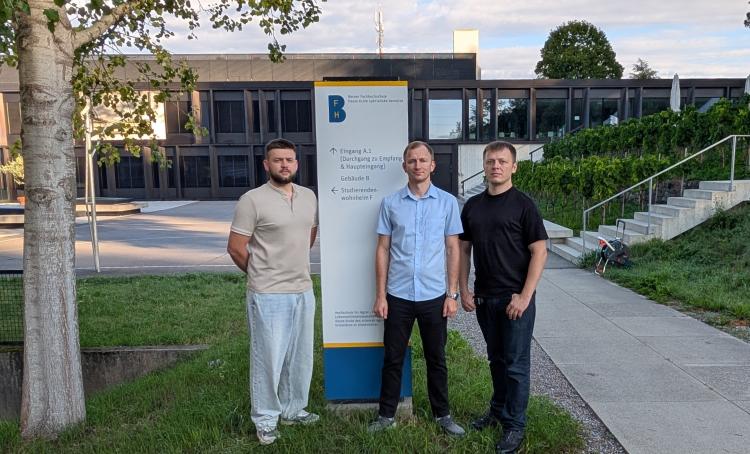
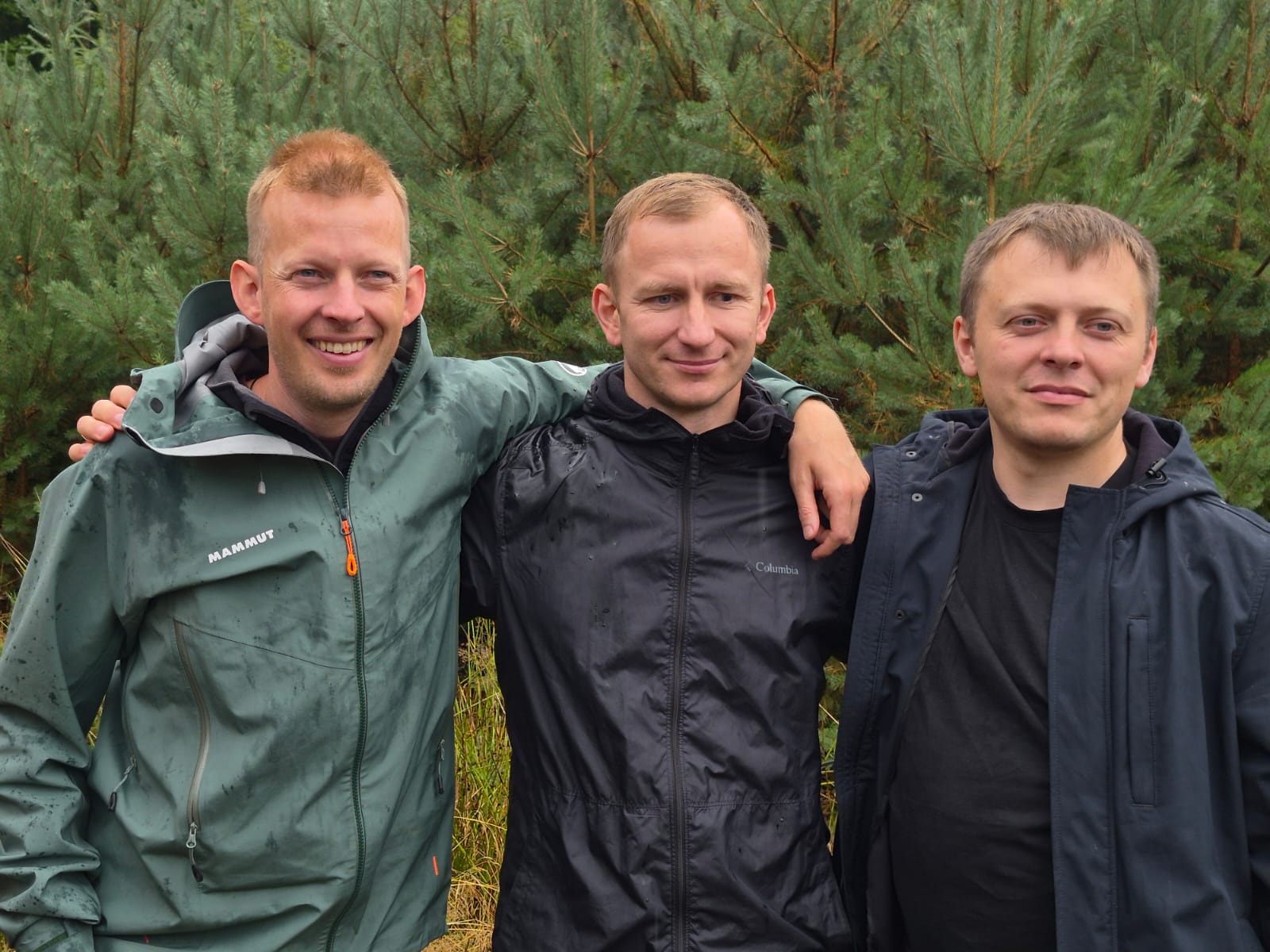
On August 24-29, 2026, senior lecturer of the department of forest taxation and forest management, researcher of the NUBiP of Ukraine IE «BOYARSKA FOREST EXPERIMENTAL STATION» Evhen KHAN, associate professor of the department of forestry Oleksandr SOSHENSKY and graduate student Evhen KALCHUK took part in the summer school «Close-to-nature forestry — closer to people: training with marteloscopes and tree selection.» The week-long field training program was held at the School of agricultural, forest and food sciences (BFH-HAFL) of the Bern University of Applied Sciences in the sity of Zollicofen and in the forests of the three cantons of Switzerland.
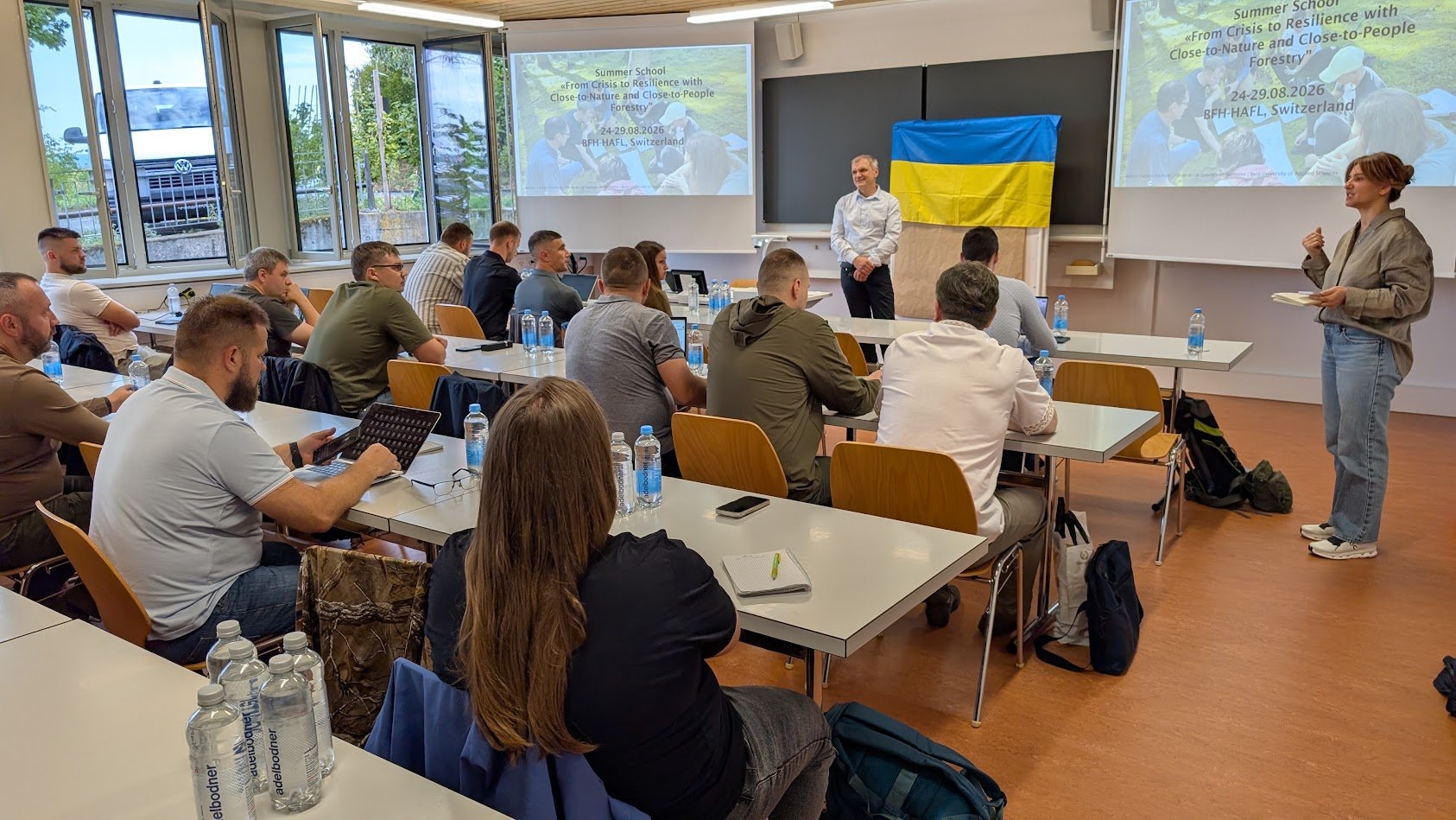
The summer school is organized within the framework of the project «From crisis to sustainability: close-to-nature forestry in Ukraine» (2025-2029), funded by the Swiss Velux Stiftung Foundation and coordinated by BFH-HAFL (supervisors — professor Christian ROSSET and Dr Mariana MELNYKOVYCH. The project partners are the National University of Life and Environmental Sciences of Ukraine, the National Forestry Engineering University of Ukraine, Polissky National University, WWF-Ukraine and the Agency for sustainable development of the Carpathian region FORZA. The project aims to strengthen the ability of Ukraine's forest sector to respond to the combined challenges of climate change and the consequences of war, drawing on the Swiss experience. Among its expected results are a practical guide to close-to-nature forestry, adapted to Ukrainian conditions, an open online course, and a Ukrainian-language version of the virtual tree selection platform martelage.sylvotheque.ch and a network of 36 new marteloscopes in Polissya and the Carpathians in addition to 14 already operating in Ukraine, in particular in the forests of the Boyarska forest experimental station.
The school is built on the principle of "training trainers": 16 participants from Ukraine — lecturers of partner universities, scientists, specialists of the state enterprise «Forests of Ukraine», forest managers and representatives of environmental organizations — will continue to pass on the acquired knowledge to students, colleagues and foresters-practitioners. The field week was preceded by an introductory webinar and a series of preparatory online classes in July-August. The key educational tool of the school is marteloscopes — training areas where each tree is numbered, measured and mapped. This allows to perform a training selection of trees for logging and immediately analyze its forest, economic and environmental consequences in the mobile application. In Switzerland, more than 200 such sites have been laid, united by the platform martelage.sylvotheque.ch developed by theteam of professor Christian ROSSET.
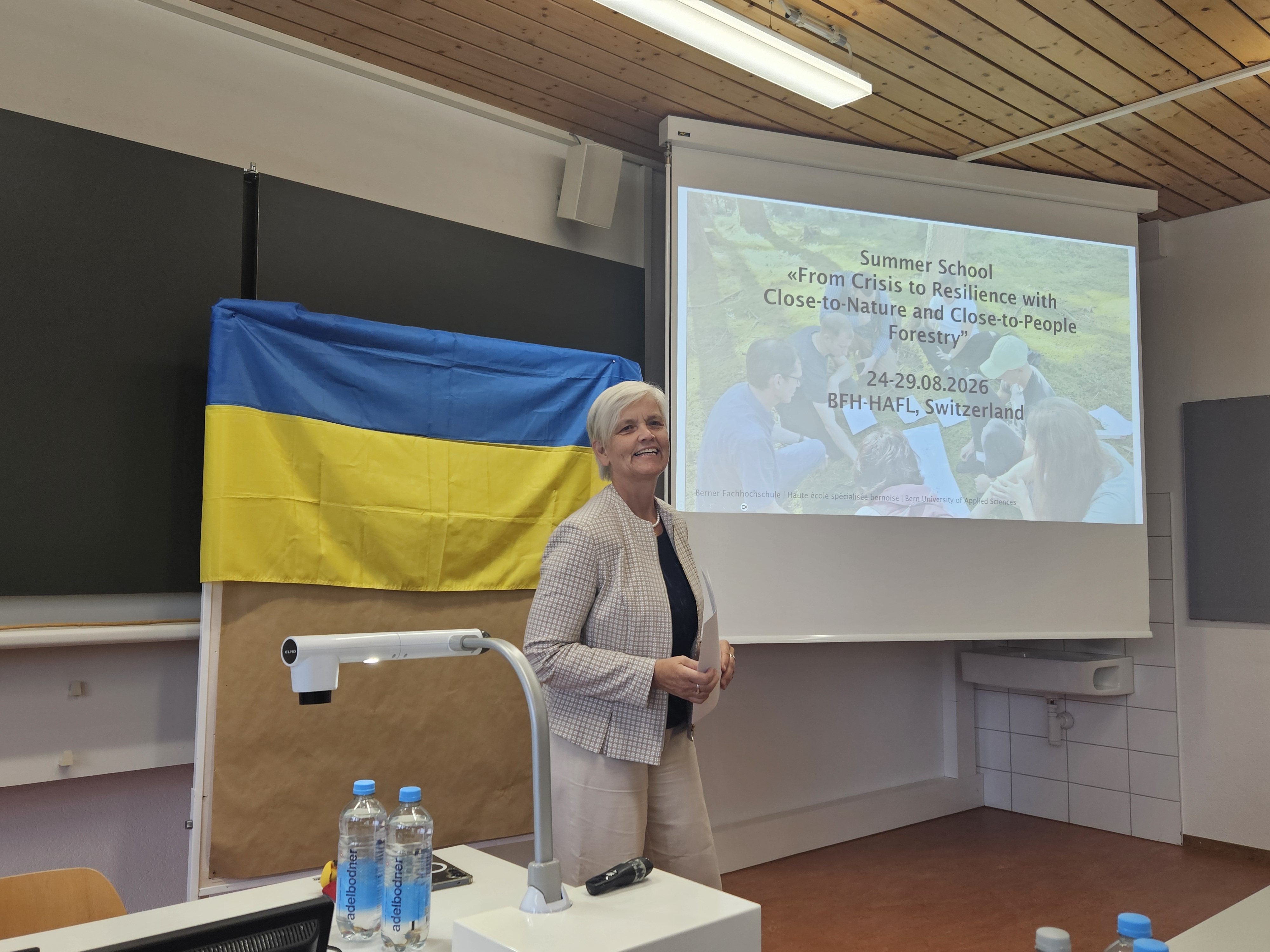
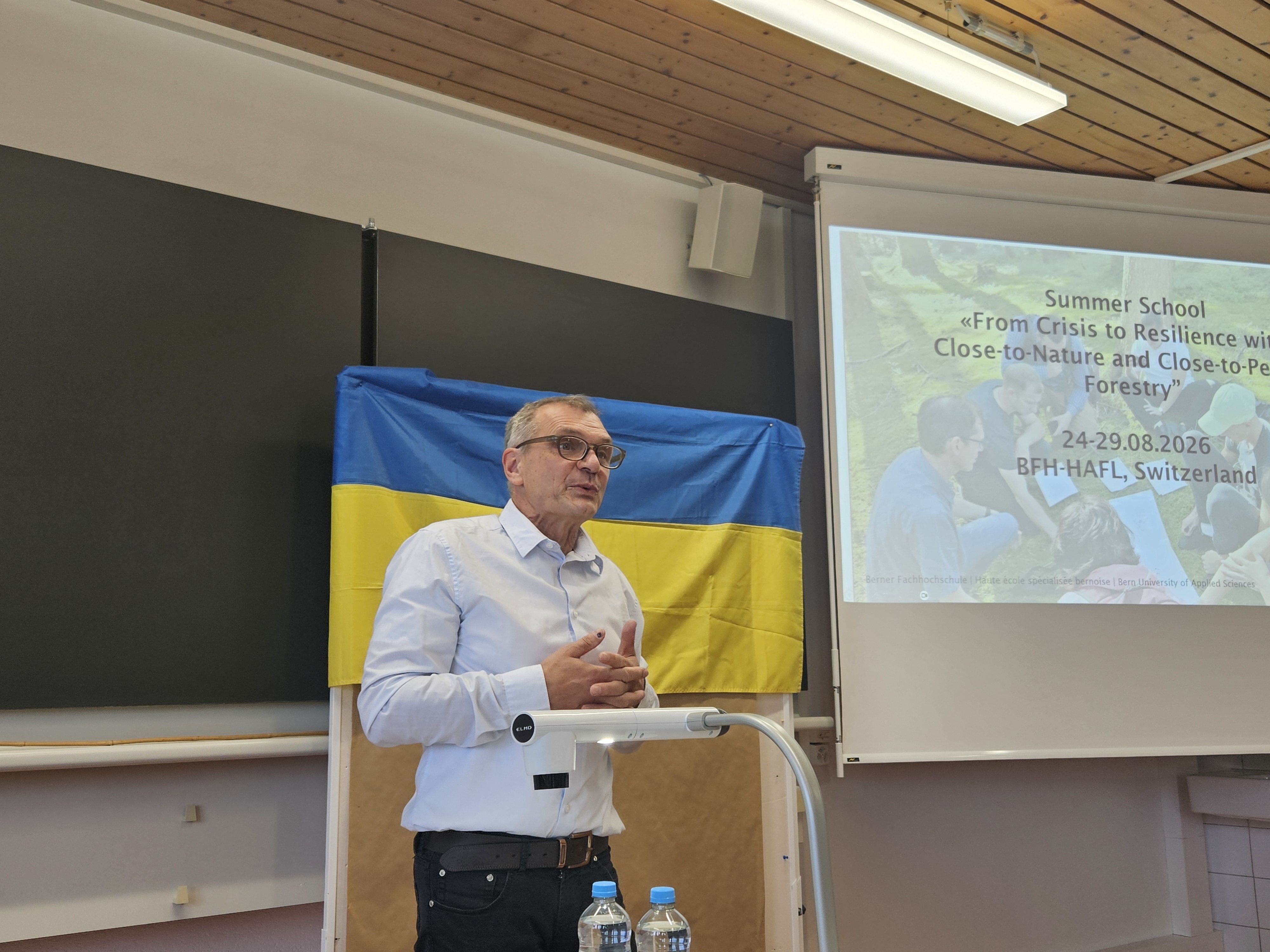
The opening of the school coincided with the Independence Day of Ukraine, with which the participants were congratulated by Swiss and Ukrainian colleagues. BFH-HAFL director, professor Ute Seeling noted the determination of Ukrainian partners who, despite the war, continue their educational and scientific work and are already thinking about the restoration and sustainability of Ukrainian forests, noting that the goal of the university is not one-time events, but a sustainable institutional partnership. Head of BFH-HAFL forest sciences, professor Bernhard PAULI recalled that cooperation with the Ukrainian forest sector started back in 2004 with the Swiss-Ukrainian forestry development program in Transcarpathia, a memorandum of cooperation with NUBiP of Ukraine was signed in 2023, and the first joint summer school in 2024 gave an impetus to the current project.
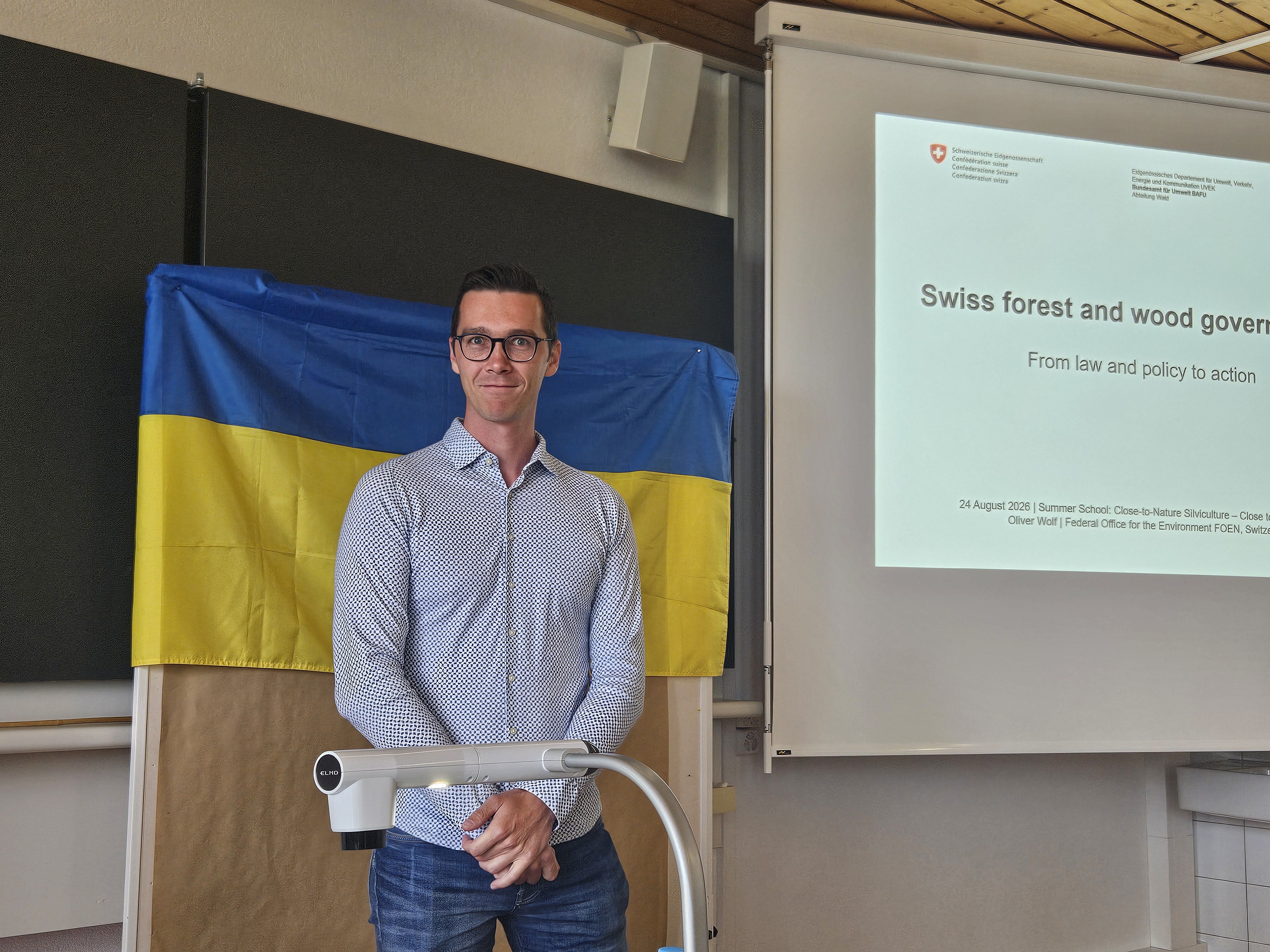
Forest policy advisor to the Swiss Federal Office for the environment (BAFU) Oliver Wolf talked about the forests of Switzerland. They cover about a third of the country's territory, almost 1.3 million hectares with a wood reserve of more than 400 million m³. Most of the forests (71%) belong to cantons and communities, the rest — about 250 thousand private owners. About 5 million m³ of wood is harvested annually in the country, which is less than the forest grows in a year, and in mountainous areas the growth is only partially used. More than 40% of forests perform a protective function: they cover settlements and roads from avalanches and rockfalls. At the same time, more than 90% of young trees grow on their own, without artificial plantings. This year Swiss forest legislation is celebrating its 150th anniversary: the first law of 1876 stopped deforestation, and the current law of 1991 prohibits continuous logging and establishes management methods close to nature. The speaker also cited data from the fifth national forest inventory: due to recent droughts, every eighth tree in Switzerland has been damaged or died. Therefore, the adaptation of forests to climate change has become one of the main priorities of the country's forest policy.
The economic dimension of close-to-nature forestry was revealed by the professor Bernhard PAULI: in forests of different ages, the target diameter takes the place of cutting turnover, and the trees are harvested when their further cultivation no longer covers capital costs and risks. According to calculations for the Swiss plateau, active reshaping the even-aged stands into mixed-age stands without state support is economically unattainable for the owner, so care logging in young forests is subsidized as "insurance investments" in the future stand.
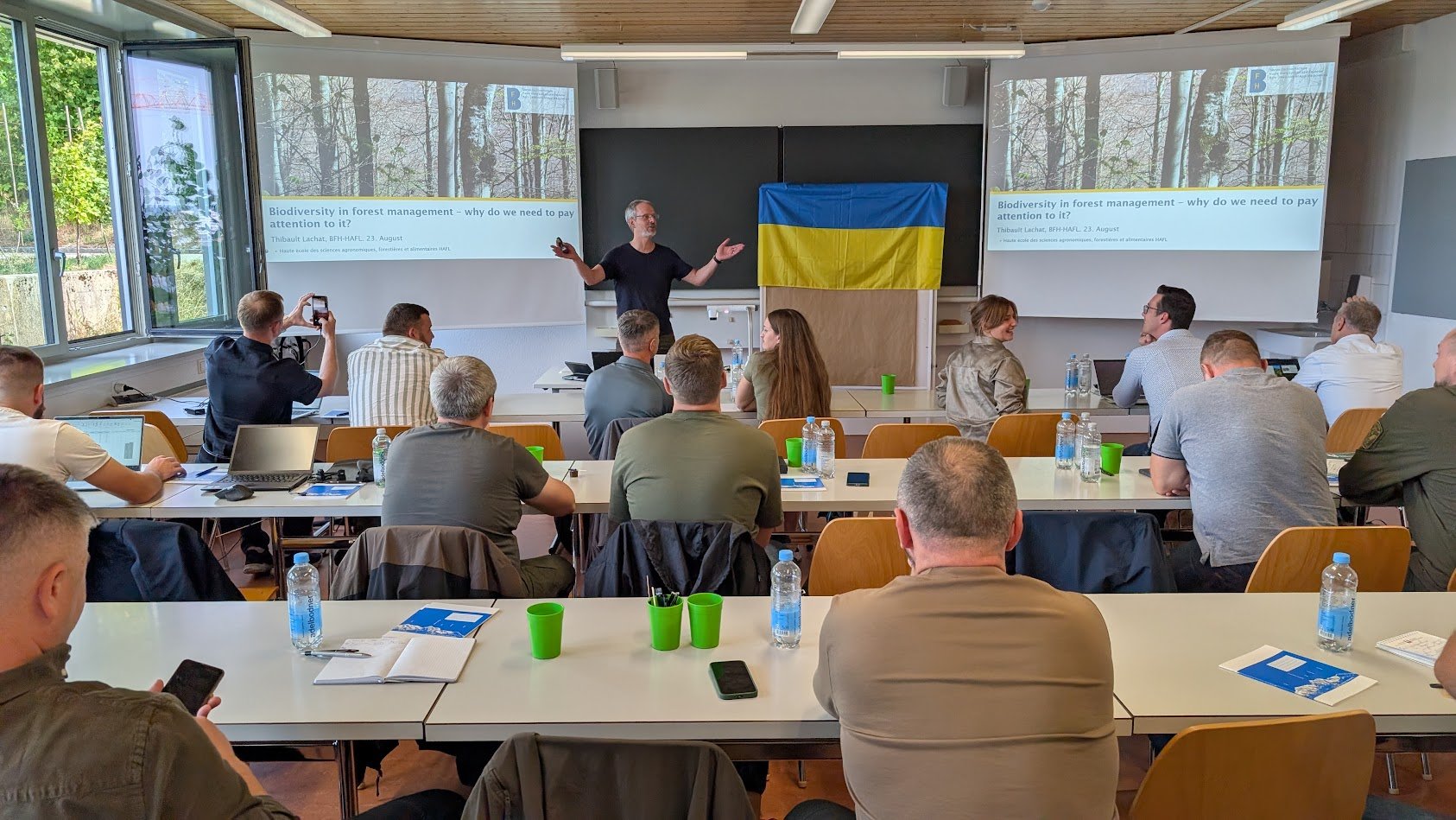
Professor of forest ecology Thibault LACHAT devoted a lecture to biodiversity: it is recommended to keep 20-50 m³/ha of dead wood in commercial forests and preserve trees with micro-settlements, the field determinant of which has 47 types and has already been translated into Ukrainian. Among the examples, the lecturer repeatedly referred to the Carpathian primeval forest of Uholka, where the stock of dead wood reaches 160 m³/ha, and in a single root hollow of an old tree in Ukraine, four relict primeval forest species of beetles were discovered at once.
Participants moved from theory to practice in the forest of the Burgergemeinde Bern community, one of Switzerland's largest forest owners. On the marteloscope, using working forms adapted in Ukrainian, the sequence of Forestry analysis was worked out: first, the description and assessment of the stand, then the formulation of goals and only finally, the decision on measures and the selection of specific trees.
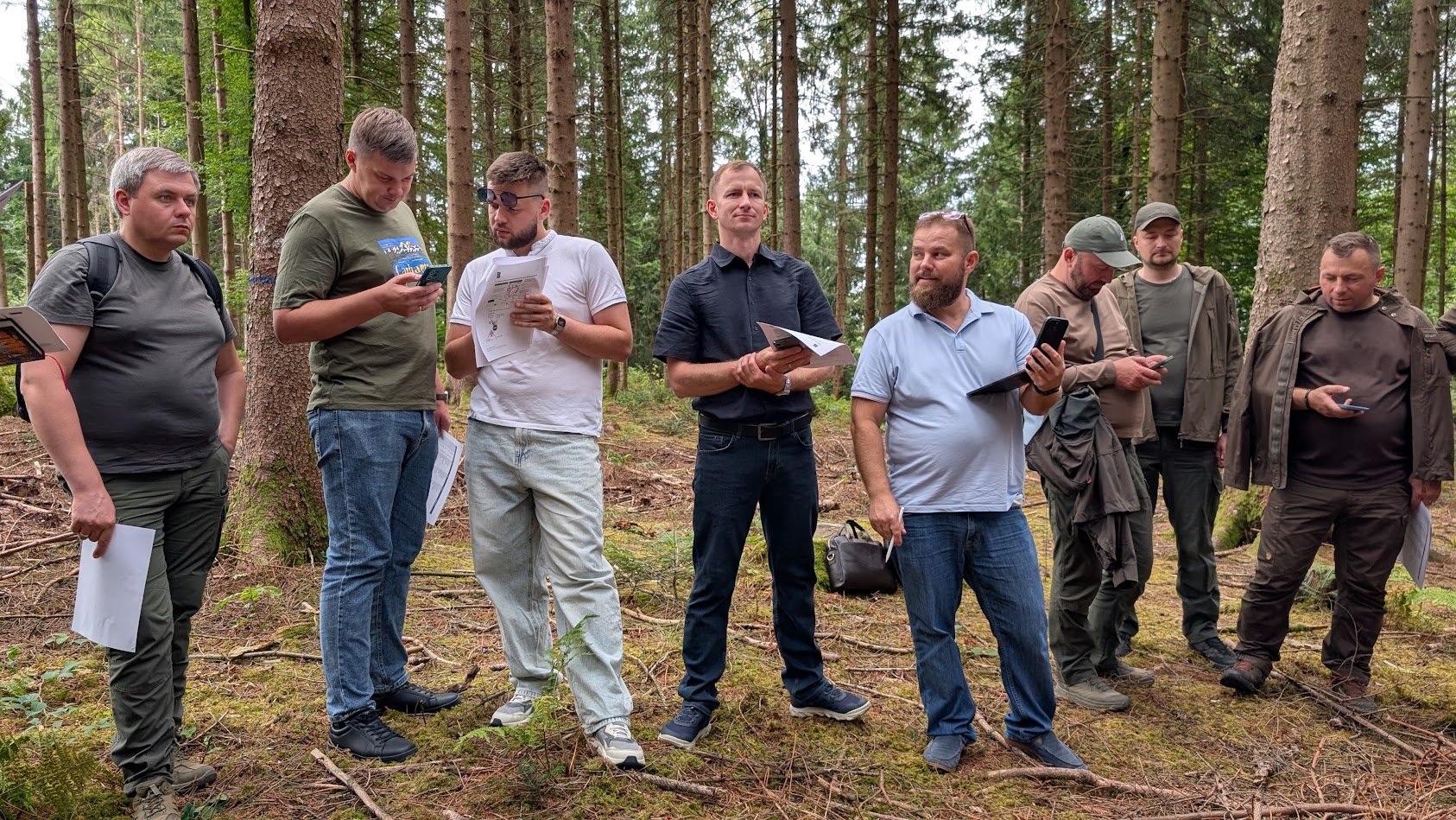
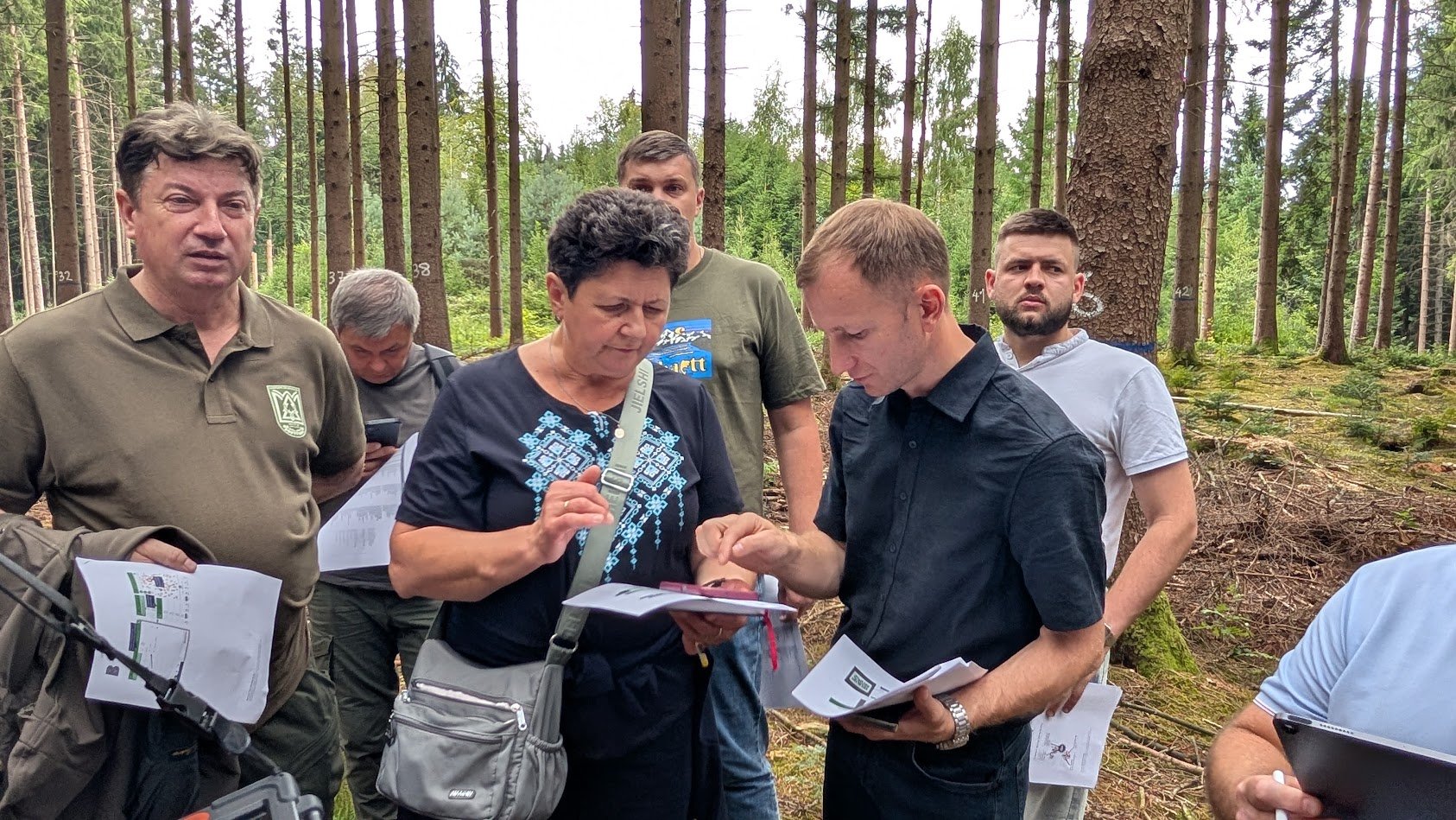
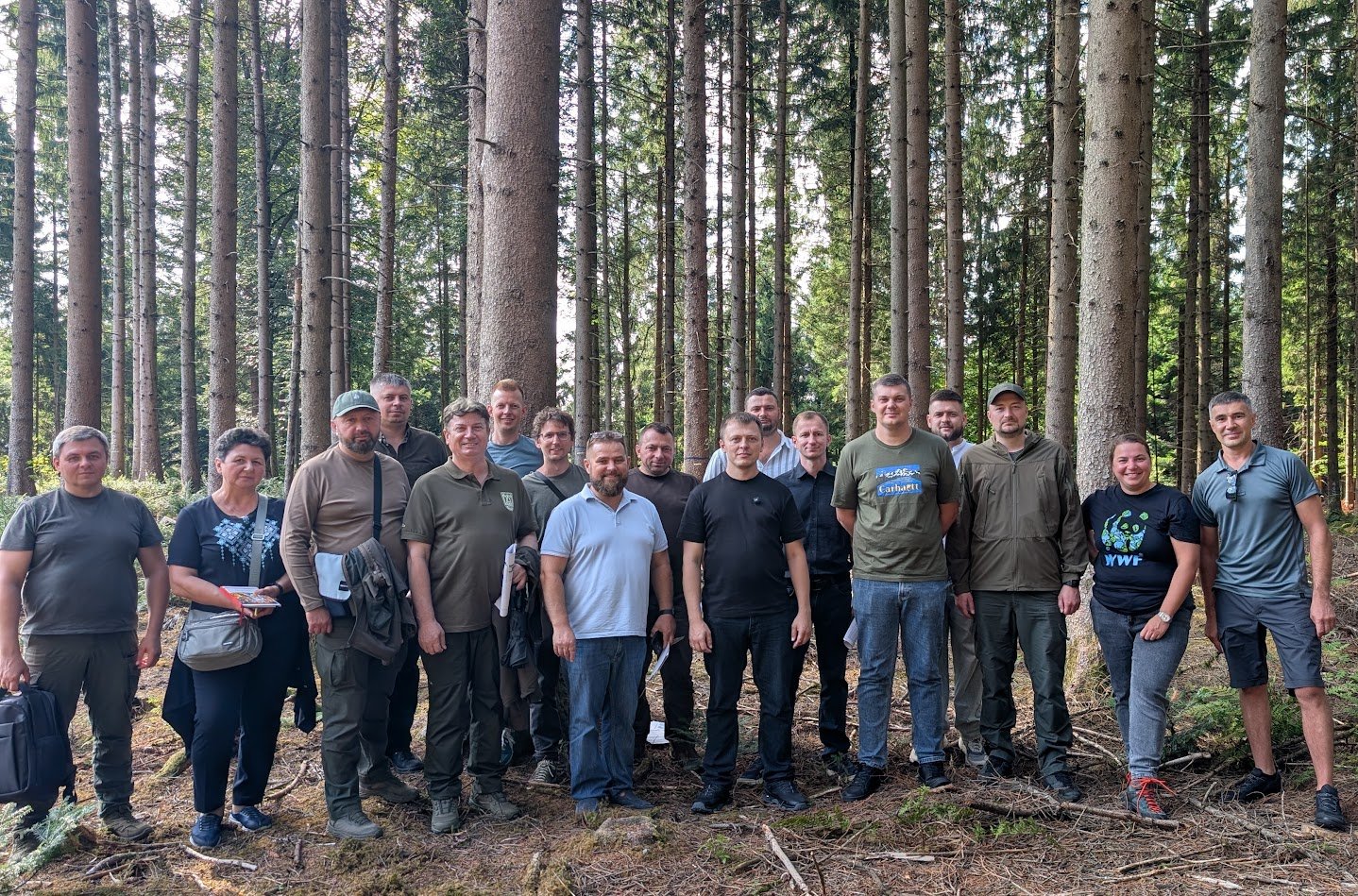
In the communal forest of the village of Couvet, canton of Neuchâtel, participants of the summer school had the opportunity to see how the Henri Biolle control method has been used in a mixed-age forest with a selective form of management (Plenterwald) for more than a hundred years. The forest engineer spoke about the peculiarities of farming, in particular, that once every eight years trees are selected and winter wood harvesting is carried out here. According to control measurements of one of the plots, in 2013-2021, 65 m³ of wood was harvested per hectare, and the stock increased from 446 to 481 m³ during the same period. Participants practiced independent selection of trees using this approach on the site-marteloscope.
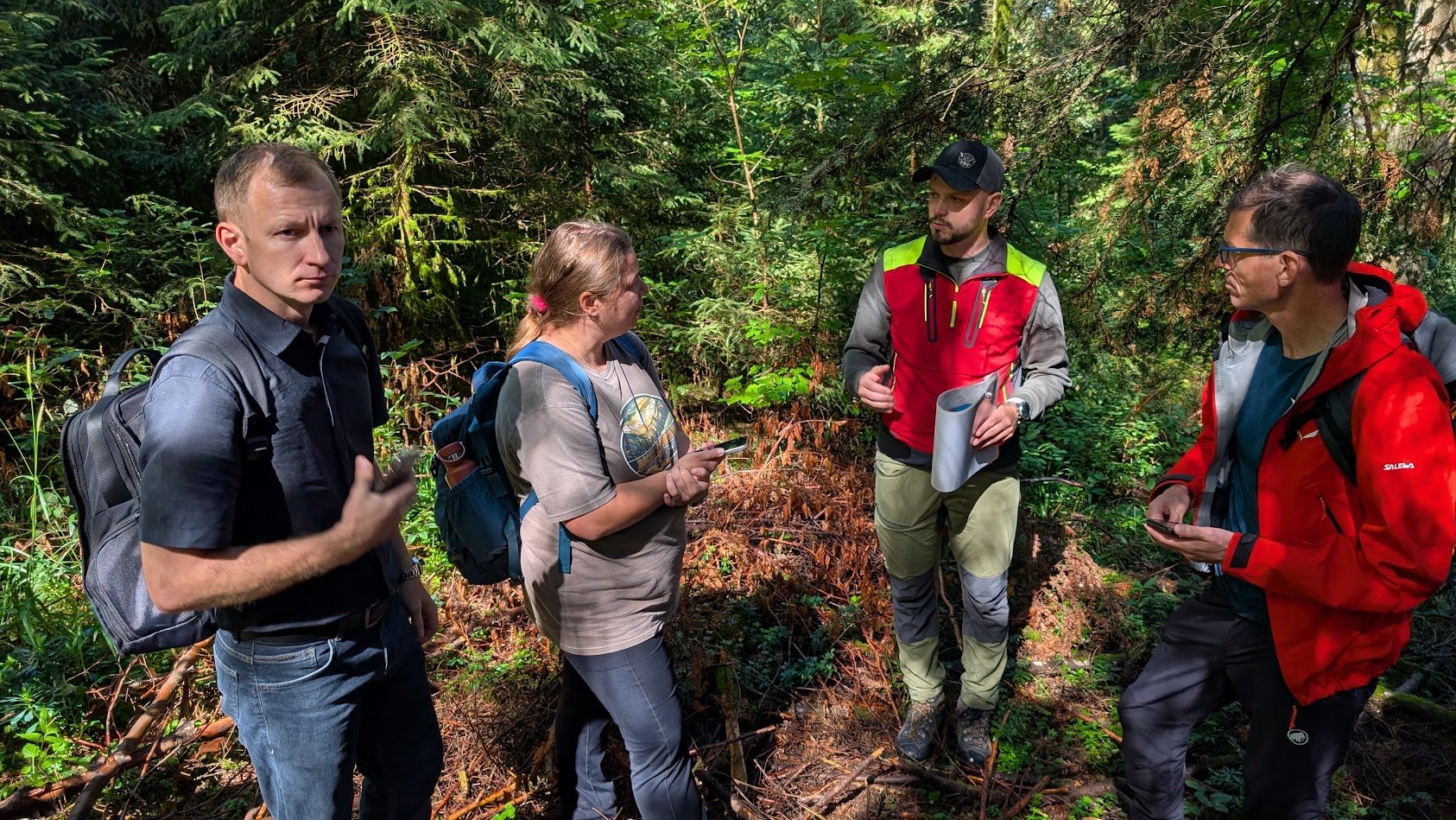
Participants of the summer school had the opportunity to get acquainted with the Plenterwald system of management in the Toppwald tract of the state forestry enterprise of the canton of Bern, where the oldest permanent test areas of the Swiss Federal Institute for Forest, Snow and Landscape Research (WSL) with continuous measurements from 1906 are located. According to the data provided, for 104 years of observations, 1,700 m³ of wood was harvested from each hectare, while the stock of stands was always kept at about 500 m³/ha, and the average annual growth even increased from 11.5 to 14.5 m³/ha. At the neighboring site, participants studied four phases of reshaping even-aged stands into mixed-age stands according to the methodology of professor Jean-Philippe SCHÜTZ (the process is designed for 70-80 years and several generations of foresters), and also performed another exercise on tree selection and tree stand formation. The participants were also reminded of the principle formulated by ETH Zürich professor Hans LEIBUNDGUT: «the forester must be "lazy and wise" — leave more to nature and direct processes, rather than compete with them.»
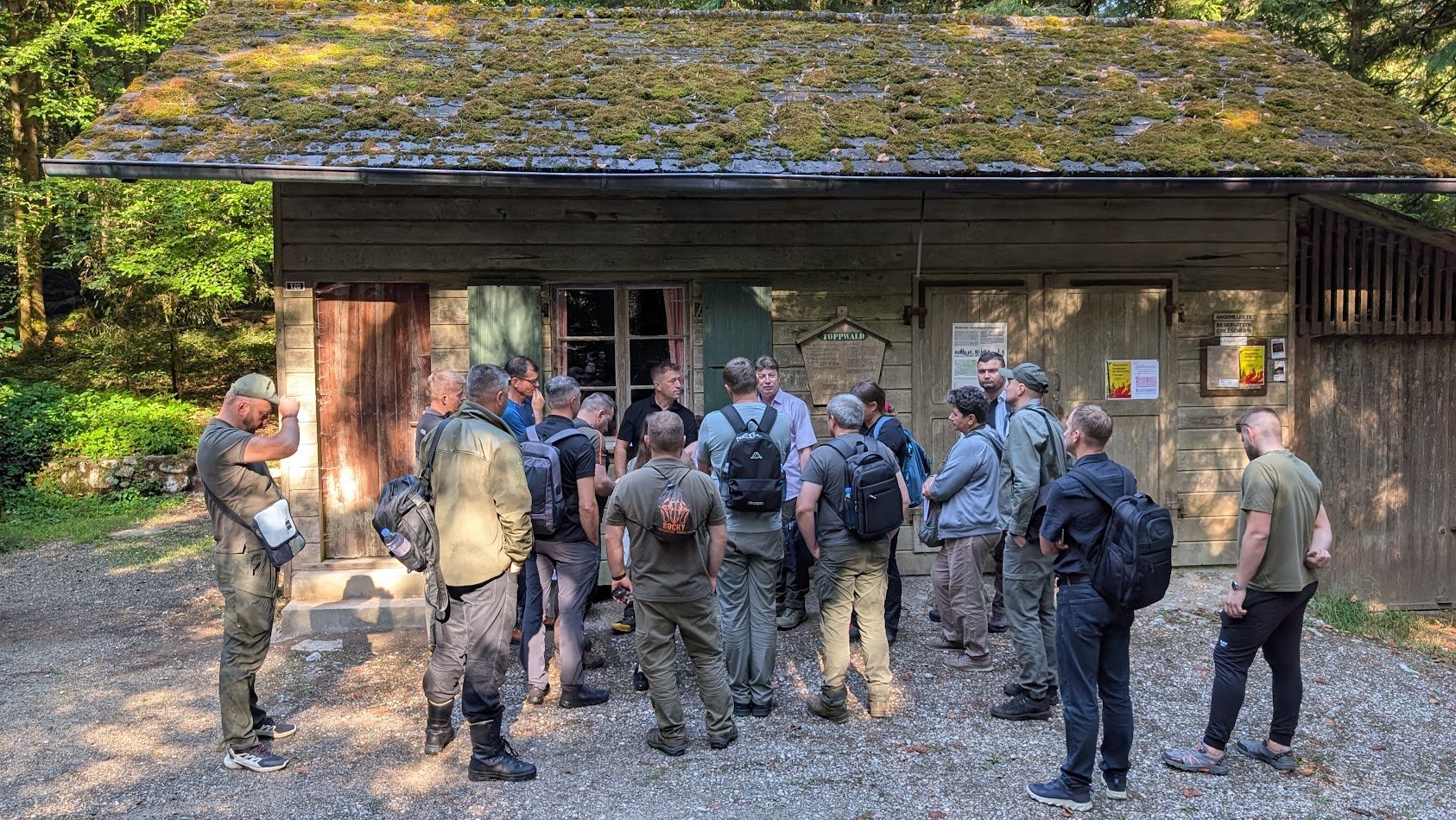
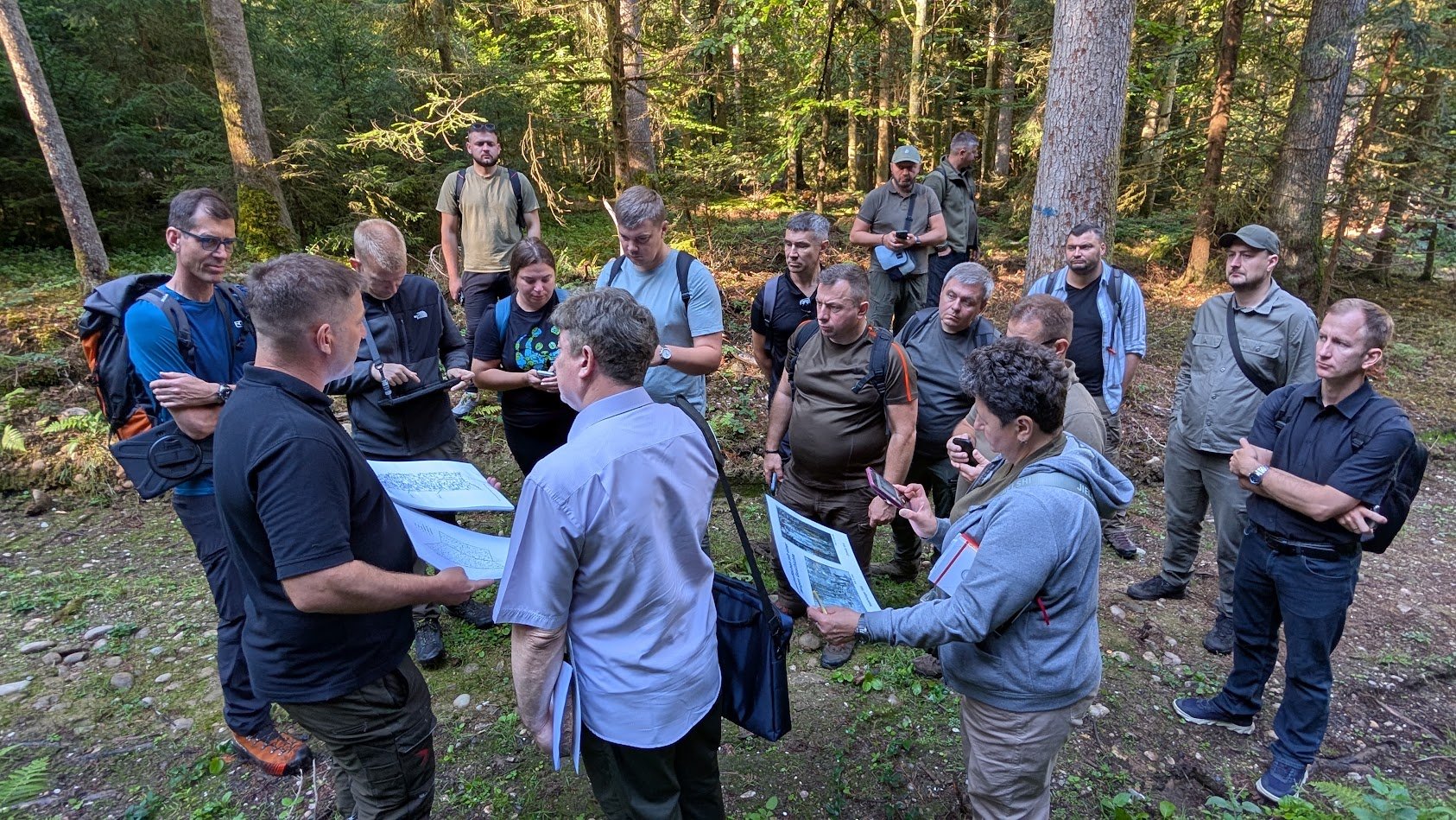
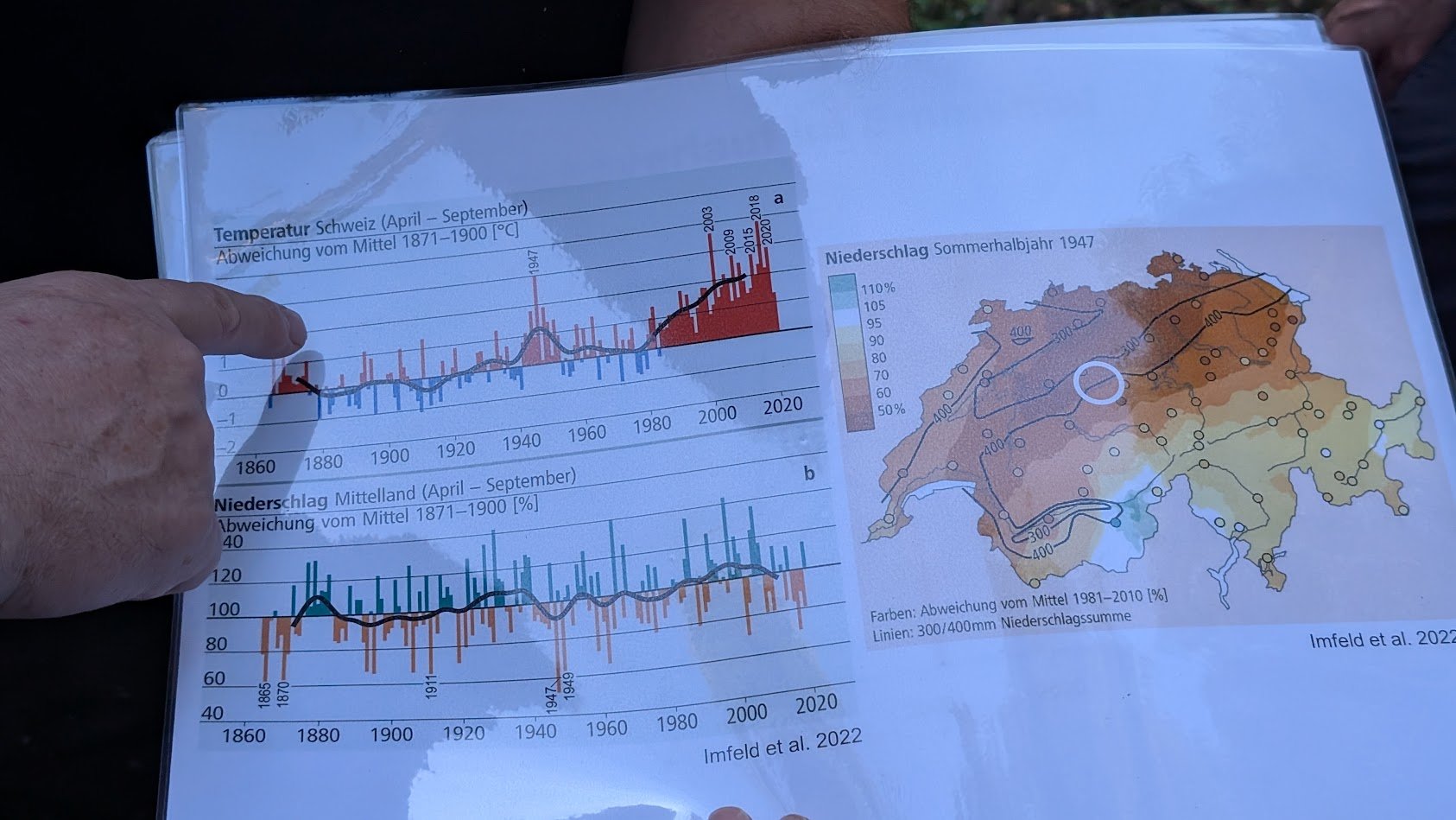
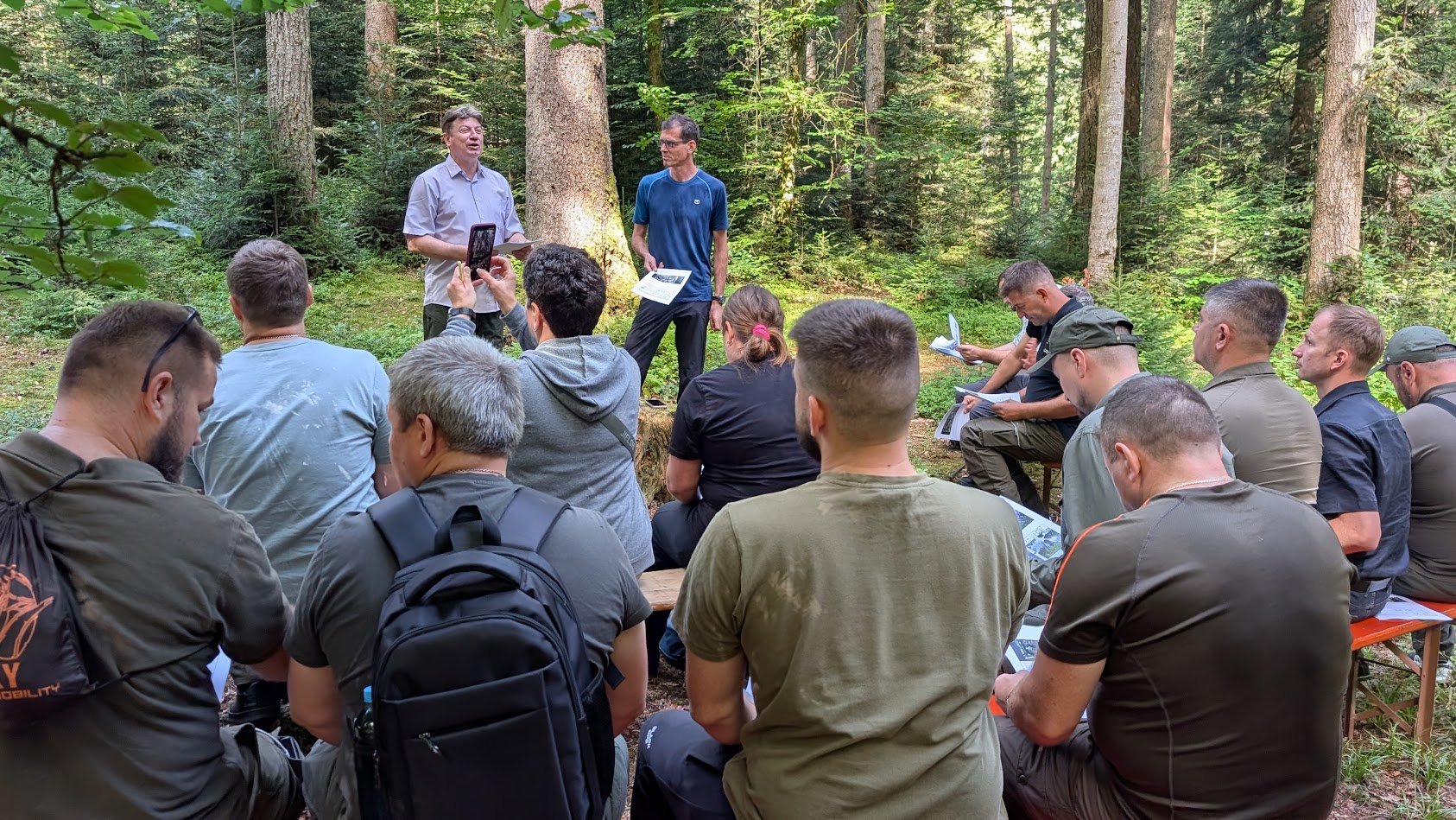
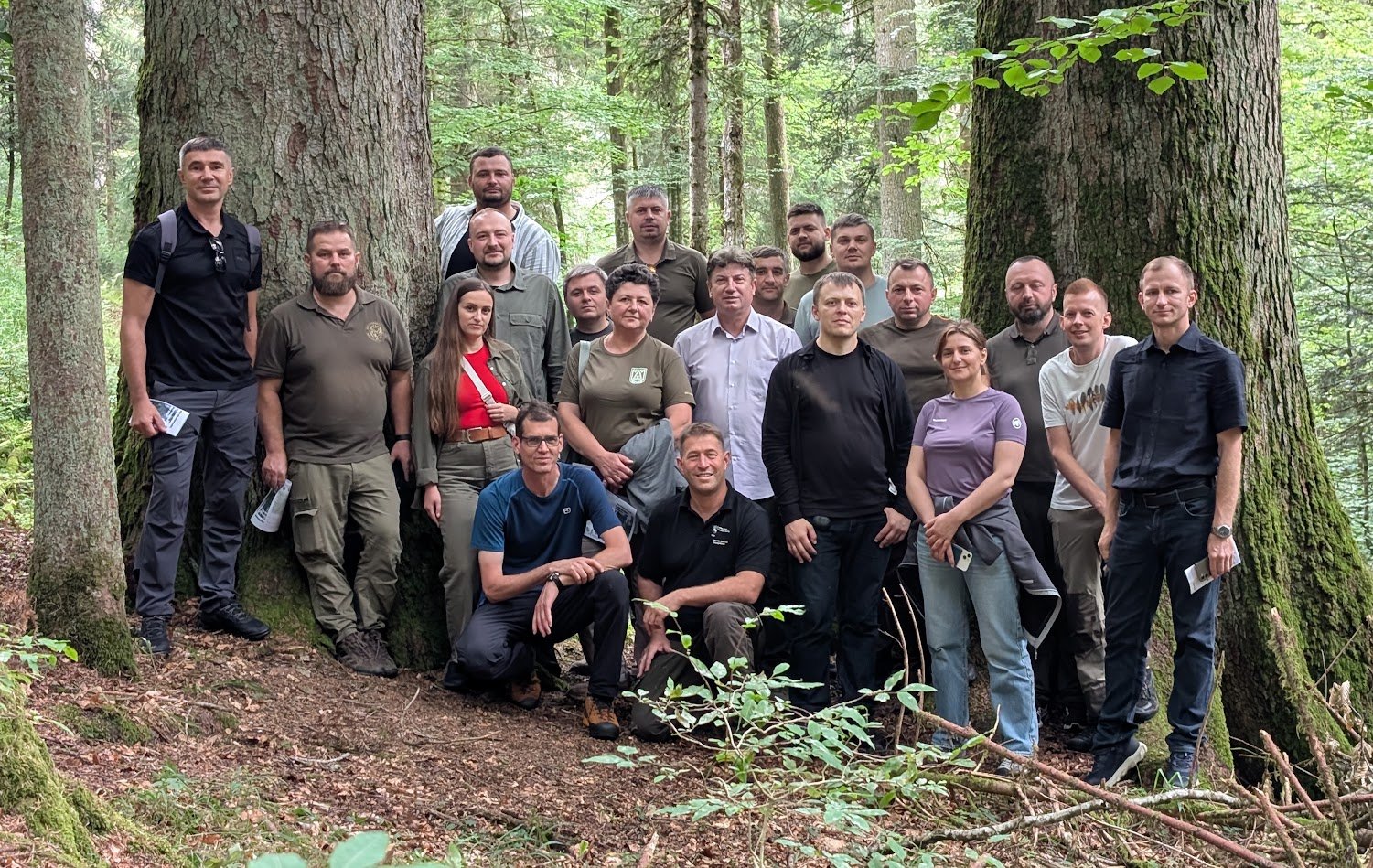
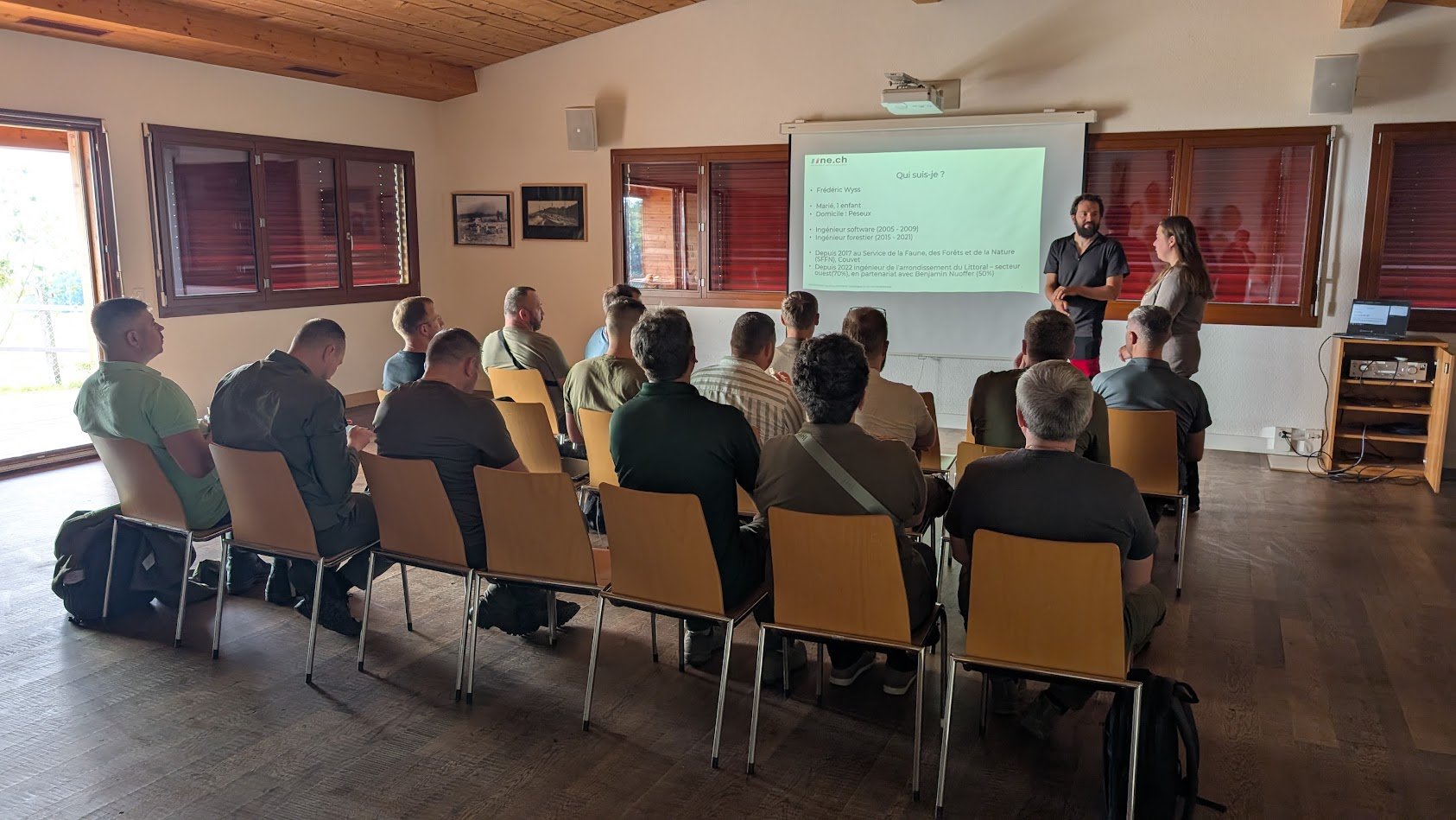
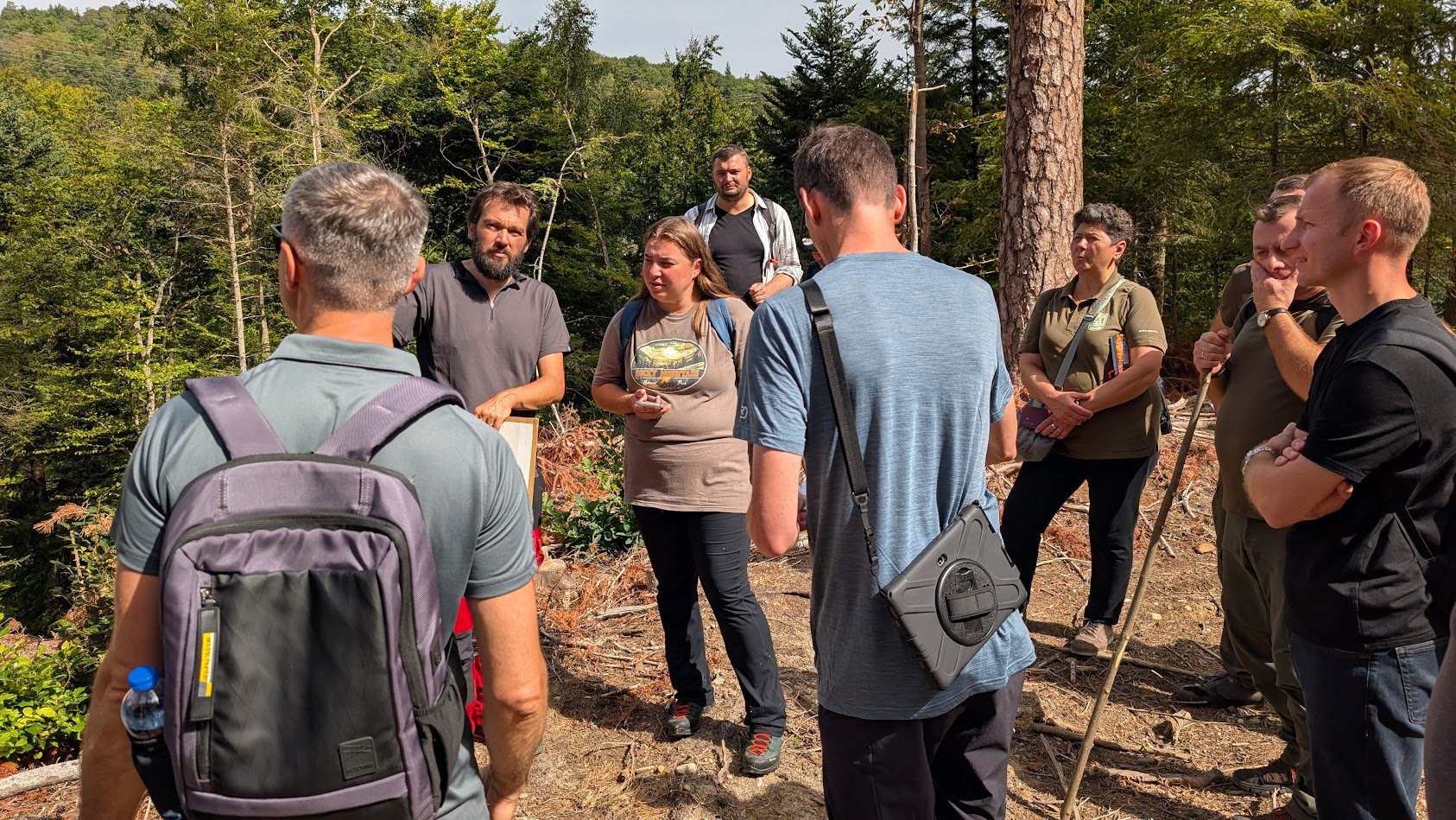
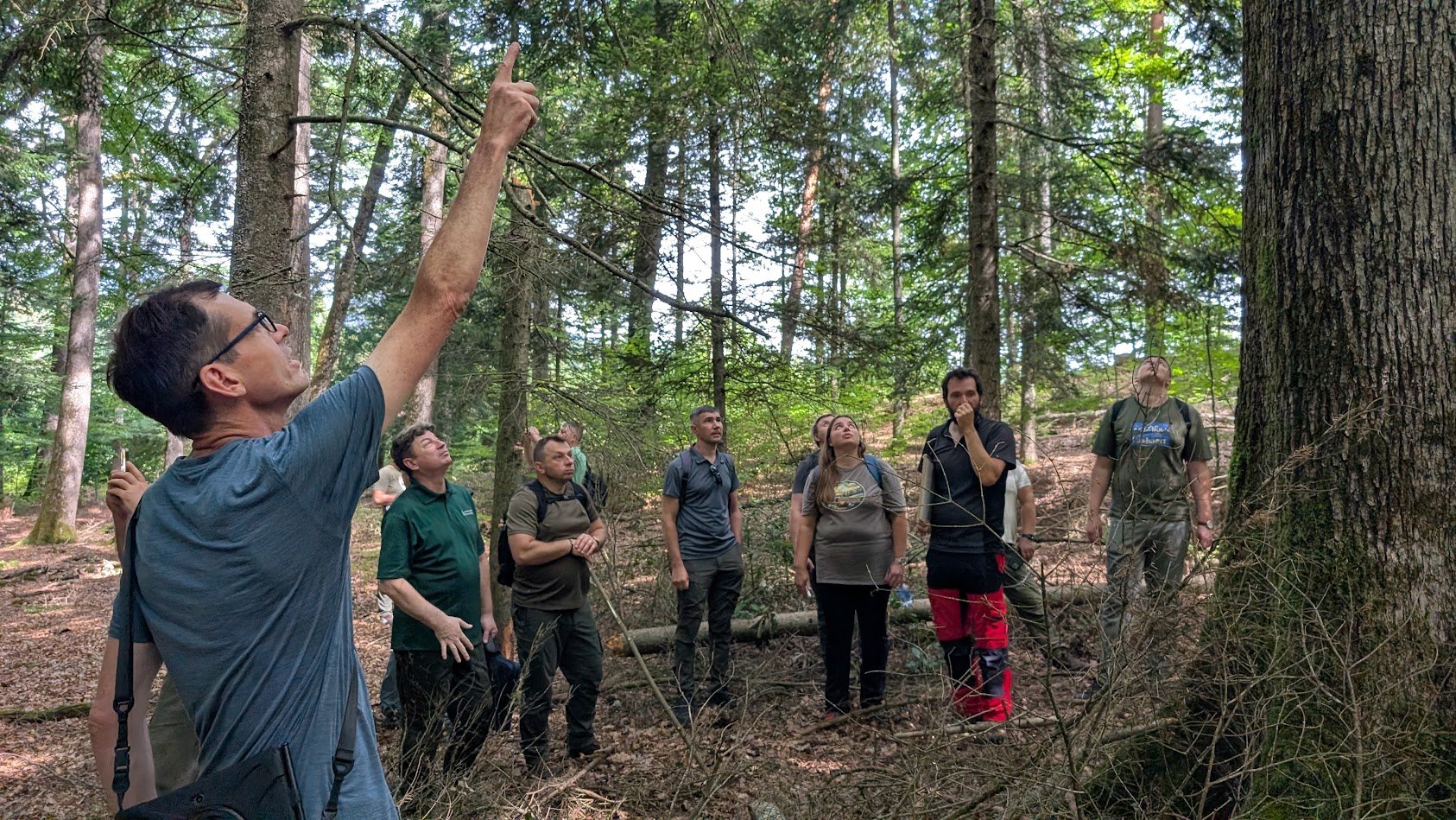
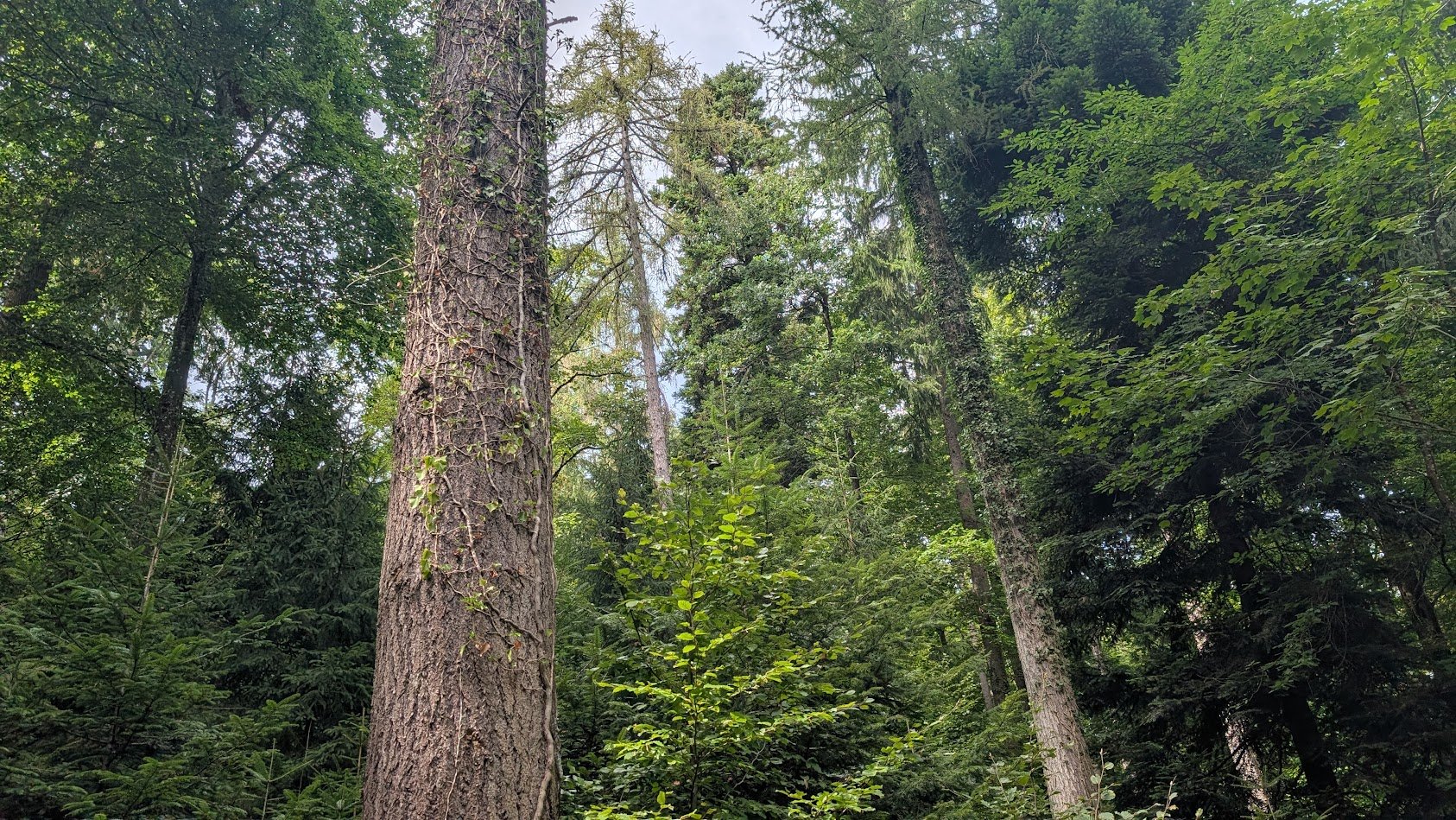
The group spent one day in the Litoral district of the Neuchâtel canton, where the forests are handled by district engineer Frederick Wyss. In a 250-year-old oak plantation, where the canton forestry department, together with WSL scientists, have been experimenting with logging for decades, participants saw how a second tier of fir "works" for the quality of oak and why its premature cutting permanently reduces the cost of wood due to the appearance of "water shoots". Participants conducted a training selection of trees on a marteloscope in a mixed stand with the participation of a century-old Douglas fir with a reserve of about 560 m³/ha.
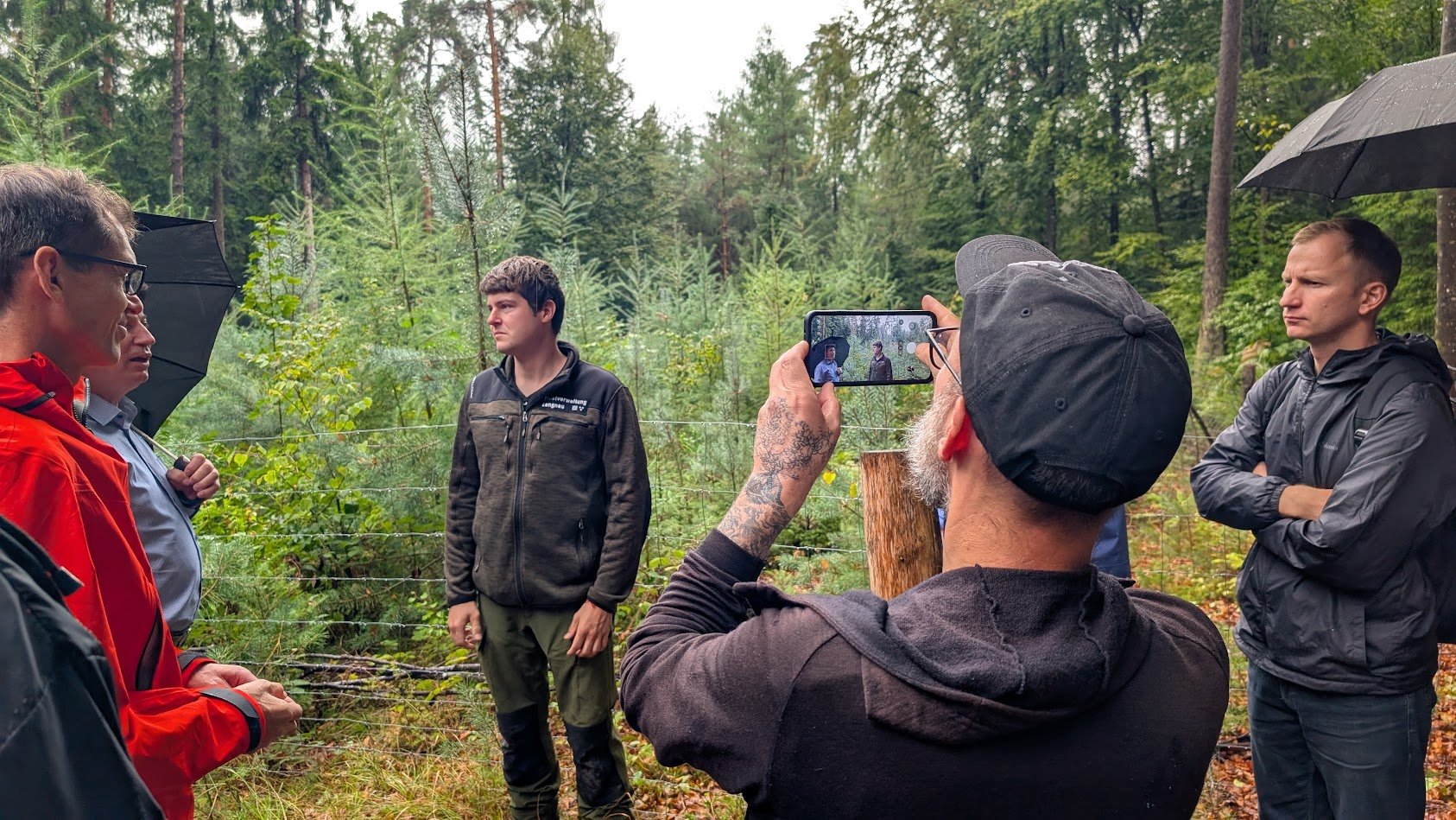
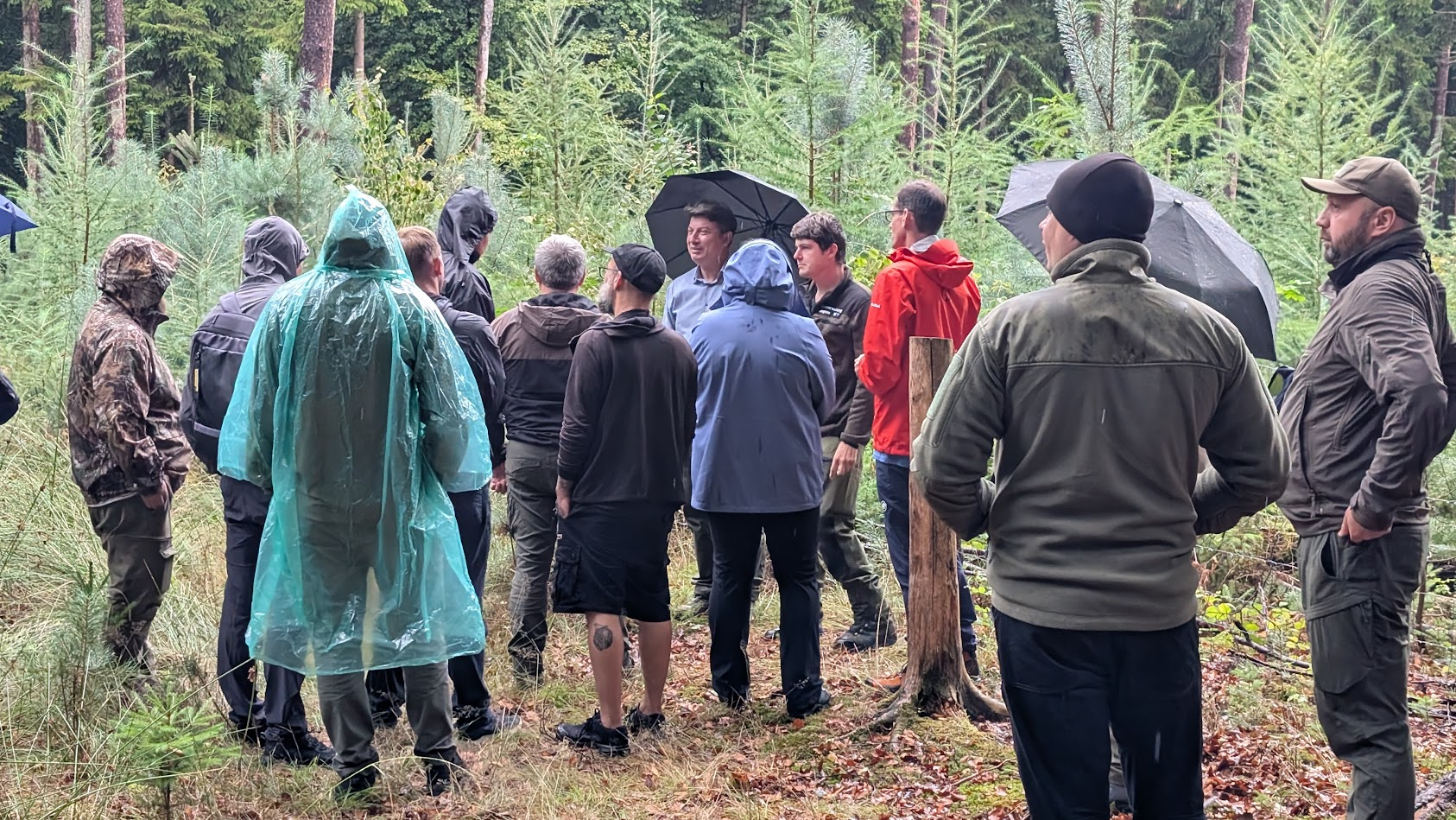
The final field day was held in the pine forests of the Lengnau, municipal forestry in the canton of Aargau. A local forester demonstrated group-step and strip-step logging, thanks to which Scots pine successfully regenerates naturally: according to him, the young forest on the site of the former forest clearings or clearing windows has regenerated naturally. The financial model of the farm reflects the priorities of the owner: the community focuses the forester not on profit, but on a balanced annual result, because the main values of the forest here are considered recreation, the quality of drinking water and the stability of plantings, and wood harvesting is a tool for maintaining the desired structure. On a former windbreak, participants compared established forest plantations with natural regeneration: natural regeneration had an advantage in terms of condition and growth.
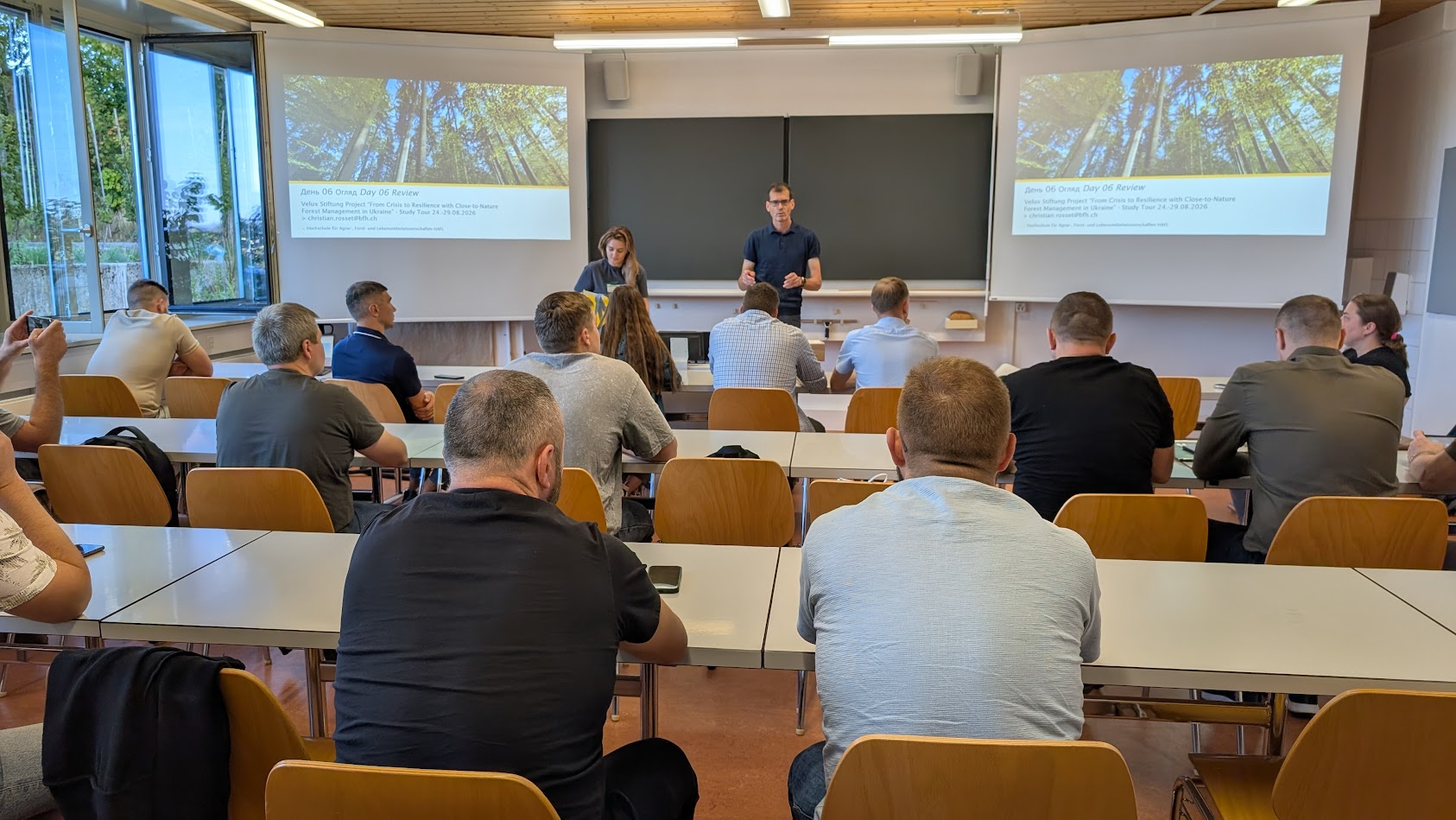
The last day began with a final meeting, at which the Swiss colleagues systematized what they had seen during the week: examples of reshaping even-aged stands into mixed-age stands, uniform and group-stepwise felling and work with target trees formed a holistic picture of close-to-nature forestry, which requires time and patience. Separately, they discussed the value of combining marteloscope data with long-term observations: repeated measurements and photospheres of the same site with a difference of several years clearly show how the selection of trees affected the structure of the stand, illumination and natural renewal, and a network of neighboring marteloscopes allows to compare different measures and stages of reshaping, and not analyze just one site.
The final discussion focused on what can be adapted from the Swiss experience in Ukraine. Among the priority steps, the participants named the deployment of a network of marteloscopes in all regions for training foresters, specialists in cutting areas and enterprise managers, systematic training of forest workers, the development of forest road infrastructure and the transition to a regulatory framework that leaves the specialist the right to make decisions and be responsible for them. The results of the week-long work will be included in the practical guide on close-to-nature forestry for Ukraine, which the project team is working on.
Participation in the summer school was a continuation of the cooperation of the Institute of Forestry and Park gardening with BFH-HAFL and an important step in the preparation of educational materials and demonstration facilities for close-to-nature forestry for Ukrainian students and practitioners. We would like to thank the project team and colleagues from BFH-HAFL for the reception and rich program, and the Swiss foresters for their openness and willingness to share their experience. The summer school is organized within the framework of the international project «From Crisis to Resilience with Close-to-Nature Forest Management in Ukraine», funded by the Swiss Velux Stiftung Foundation and coordinated by BFH-HAFL.
Learn more about the project:
https://www.bfh.ch/en/research/reference-projects/from-crisis-to-resili…