
Ukraine in the global dialogue on the future of lands: NUBiP of Ukraine at COP17 in Mongolia
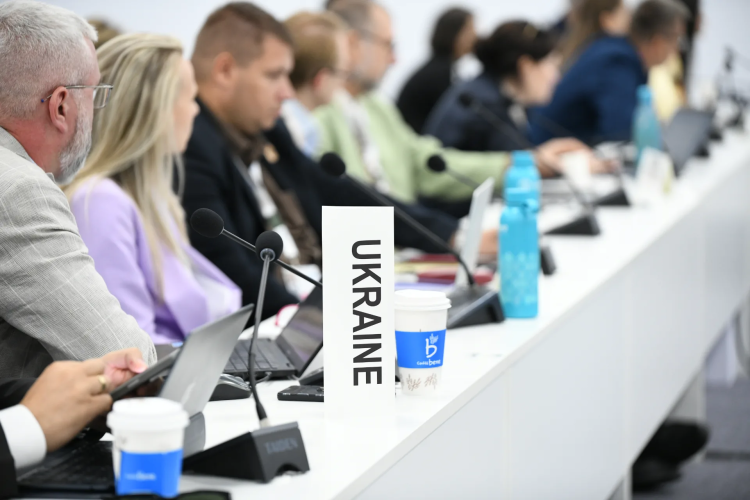
In August 2026, the 17th session of the Conference of the parties to the UN Convention to combat desertification (UNCCD COP17) was held in Ulaanbaatar. Professor Andriy MARTYN, scientific and technical correspondent of Ukraine under the UN Convention to combat desertification, head of the department of land management design of the faculty of land management of NUBiP of Ukraine, corresponding member of the National Academy of Agricultural Sciences of Ukraine, took part in the conference as part of the Ukrainian delegation formed by the Ministry of Economy and the Ministry of Foreign Affairs. His participation included regional consultations on Central and Eastern Europe, meetings of COP17, the Committee on science and technology (CST17) and the Convention Implementation Review Committee (CRIC24).
COP17 was held on August 17-28 under an eloquent theme «Restoring Land. Restoring Hope» – «Restoring the Earth. Restoring Hope». The conference is attended by representatives of 197 parties to the Convention, scolars, international organizations, civil society, farmers, representatives of indigenous peoples and pastoral communities. The central idea of this year's meeting is much broader than the traditional understanding of combating desertification: healthy land is now seen as the foundation of food and water security, community sustainability, biodiversity conservation, and the ability of societies to adapt to climate change. According to UNCCD, degradation already affects up to 40% of the world's land.
Today, UNCCD is a much broader platform than its name suggests. Along with combating desertification, it forms global approaches to restoring degraded land, drought tolerance, preserving soil productivity, monitoring land resources, scientific support for land policy, and raising funding for ecosystem restoration. It is these issues that have become key for COP17. During the regional consultations, the UNCCD Executive Secretary separately identified funding architecture, drought tolerance, private sector involvement and pasture issues among the conference's priorities, highlighting the transition from declarations to practical implementation of solutions.
For the scientific community, the discussion about the future of the Strategic framework of the Convention after 2030,was of particular importance. The final report of the Intergovernmental working group on the future strategic framework presented at COP17 is not seen as a completed document, but as a basis for further negotiations. Among the proposed areas are droughts, sand and dust storms, strengthening the link between science and policy, as well as improving the system of indicators and financial mechanisms.
A significant block of COP17's work was devoted specifically to scientific and technical issues. Within the framework of CST17, the results of the UNCCD Scientific and policy interface, issues of technology transfer and innovation, improvement of reporting procedures, methodological approaches to land degradation assessment and drought adaptation planning were considered. For Ukraine, these issues are of immediate practical importance, as the future land management system will increasingly depend on a combination of satellite monitoring, national cadastral and statistical data, modern indicators of the state of land and scientifically based solutions.
Improving national reporting through the PRAIS platform was discussed separately. The Secretariat reported that seven regional training events were held for representatives of 155 countries in 2026, and reporting on SDG 15.3.1 should be completed by 30 November 2026. For Ukraine, this means the need to ensure high-quality integration of data on land cover, land productivity and organic carbon reserves in soils with national monitoring systems.
Professor Andriy MARTYN also took an active part in regional consultations of Central and Eastern European countries. An important topic was the institutional capacity of the region and ensuring its proper representation in the convention bodies. The Ukrainian side paid special attention to the need to comply with the rules of procedure of the UNCCD, the principle of continuity of work of governing bodies and transparent formation of regional candidates. The relevant positions of Ukraine were officially recorded in the minutes of regional meetings.
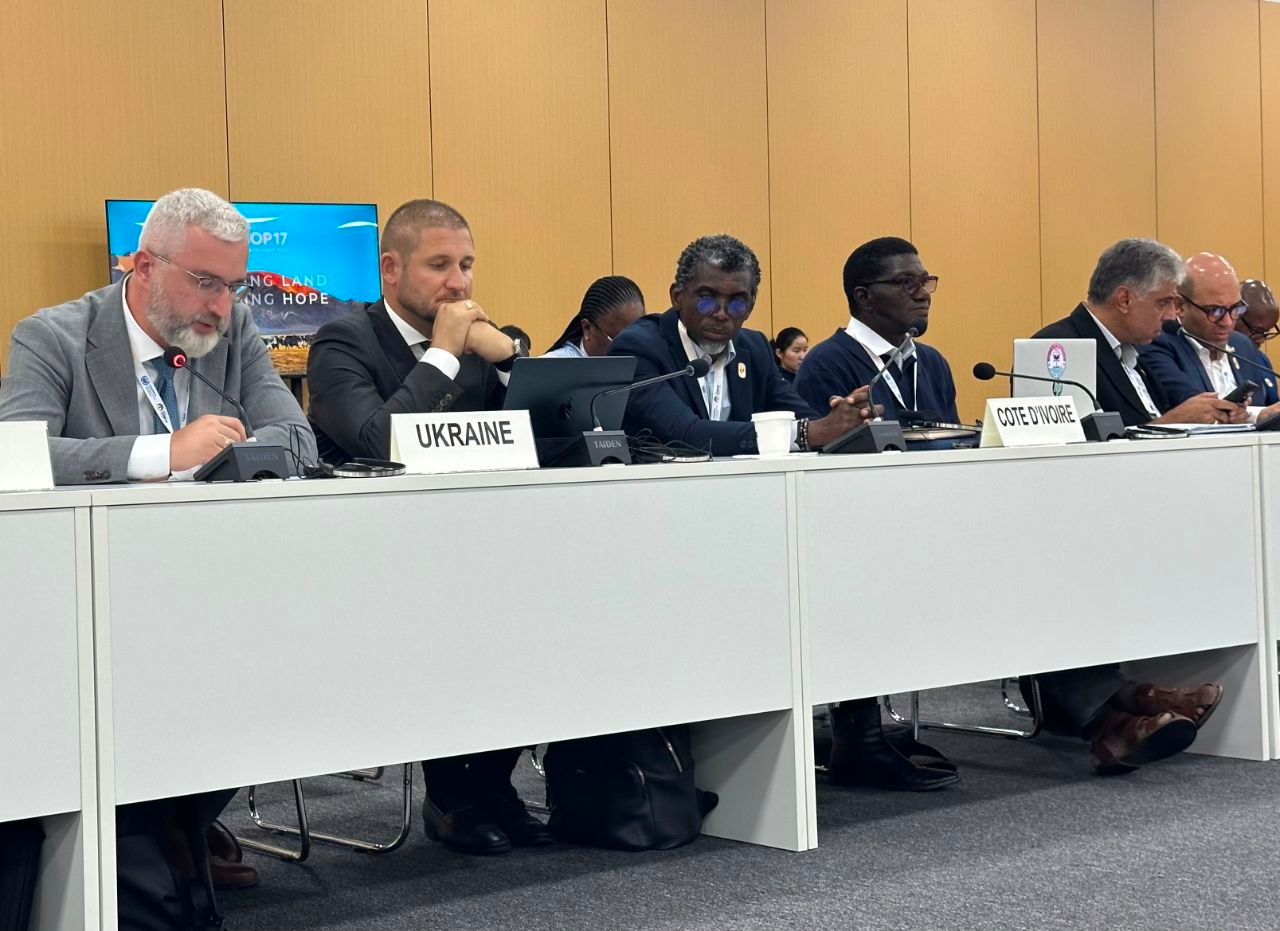
Another practical area of work of the Ukrainian delegation was interaction with international financial mechanisms. During COP17, consultations were held with representatives of the Global Environment Facility regarding the possibilities of taking into account the needs of Ukraine in the next financing cycle. For Ukrainian science and land management practice, this is important primarily in the context of restoring degraded land, increasing the resilience of agricultural landscapes to droughts, and developing modern land resource monitoring systems.
«For Ukraine, participation in UNCCD is important not only as the fulfillment of international obligations. This is an opportunity to participate in a professional discussion that is currently shaping future global land policy. Issues that ten years ago were perceived mainly as environmental — soil degradation, droughts, land monitoring, sustainability of agricultural landscapes — are now directly related to food security, economic sustainability and the quality of spatial development. It is important for universities not only to monitor these processes, but also to be involved in the formation of the scientific basis for such decisions», — Andriy MARTYN noted.
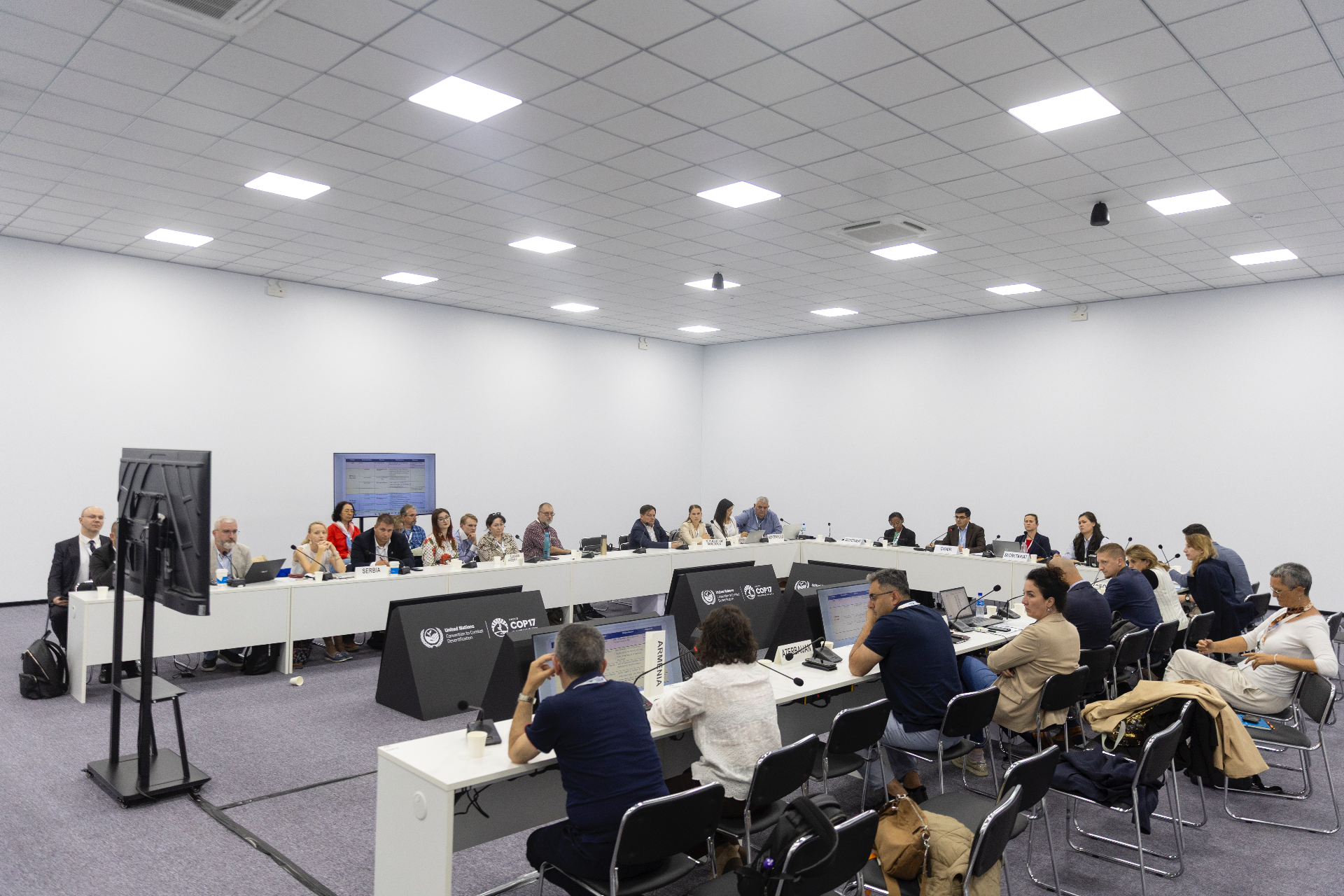
For NUBiP of Ukraine, the constant participation of the scolar in the work of COP17 has a separate academic significance. Modern land management is less and less reduced only to the formation of land plots or the preparation of documentation. It becomes a tool for managing territories, restoring land, adapting to climate change, protecting soils, and working with spatial data. That is why the inclusion of university science in international UNCCD processes allows to directly transfer the global agenda to the content of research, educational programs and training of future specialists.
COP17 once again showed that future land policy would be shaped at the intersection of science, digital technologies, ecology, economics and spatial planning. For Ukraine, participation in such work is an opportunity not only to adapt international approaches, but also to offer its own experience and solutions. And it is university science that should play one of the key roles in this process.