

Sowing the Seeds of Reconstruction: How BridgeUSA UPRR is Cultivating a Resilient Future for Ukraine
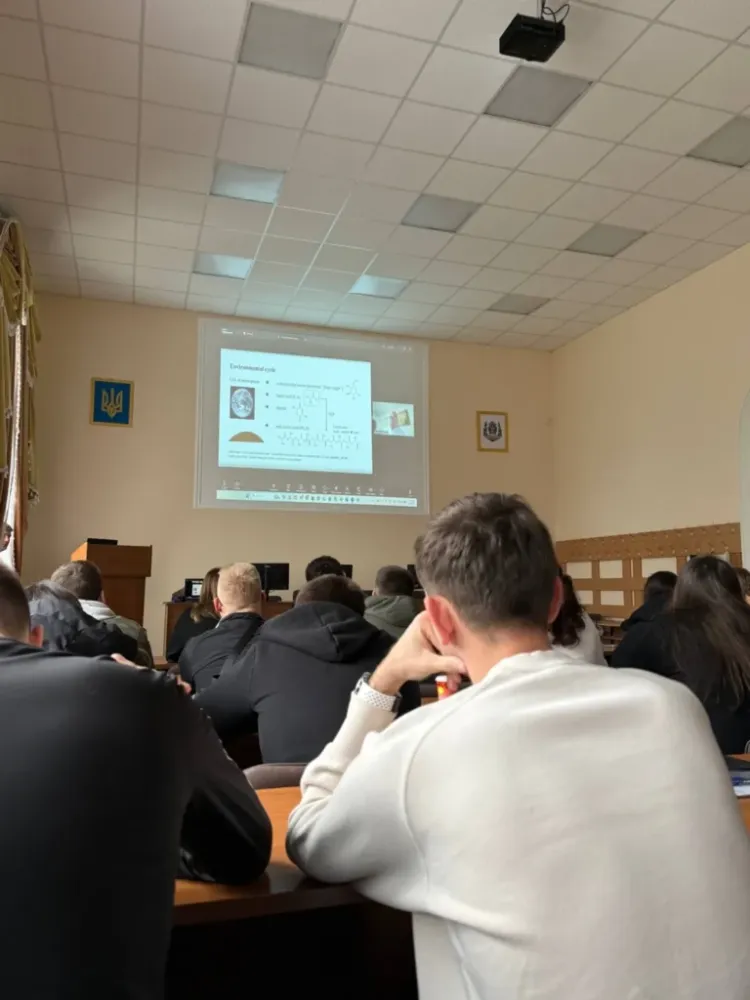
At a time when Ukraine’s resilience is tested daily, the country’s future is being shaped not only on the front lines, but also in its universities and research labs. The 2025 cohort of Ukrainian fellows in the BridgeUSA UPRR program prove that recovery depends just as much on building strong expertise as it does on rebuilding infrastructure — developing the skills and knowledge needed to support sustainable industries for the future.
In Fall 2025, Dr. Kravchenko, Associate Professor at the National University of Life and Environmental Sciences of Ukraine (NUBiP of Ukraine), was selected as a BridgeUSA UPRR Fellow and completed a one-month fellowship at the University at Buffalo. She was among 1.4% of applicants chosen that year, reflecting both her expertise and her commitment to advancing collaborative teaching and research essential to Ukraine’s long-term recovery.
Beyond the Fellowship: A Living Partnership
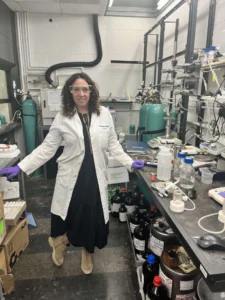
Dr. Kravchenko collaborated with the Department of Biological and Chemical Engineering at the University at Buffalo under the mentorship of Professor Haiqing Lin. During her fellowship, she contributed to research on membrane-based water treatment technologies and completed Laboratory Safety certification, enabling her to work in the university’s advanced research facilities.
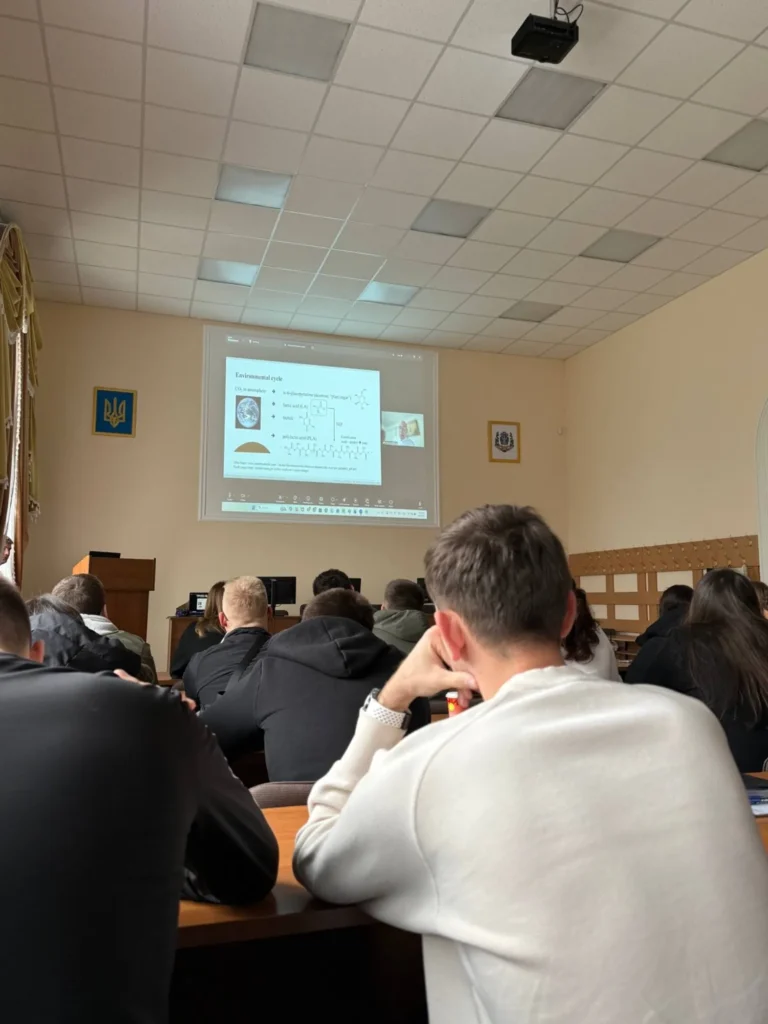
Upon returning to Ukraine, Dr. Kravchenko successfully integrated Professor Johannes M. Nitsche, a world-renowned expert in chemical engineering and molecular modeling from the University at Buffalo, into the curriculum at NULES. Today, first-year Ukrainian students studying Agroecology find themselves in an internationalized classroom, learning directly from a global leader in biotechnology.
Through a series of lectures, students are introduced to approaches for turning laboratory research into scalable, environmentally sustainable industrial solutions. This collaboration broadens their understanding of how modern chemical engineering can be applied to challenges in agriculture and related sectors.
Cultivating National Excellence
The aftermath of Dr. Kravchenko’s fellowship has quickly gained high-profile national recognition. In its Spring 2026 assessment of Ukraine’s higher education landscape, Forbes Ukraine ranked the Agrobiological Faculty of NUBiP among the top agricultural faculties in the country. The evaluation highlighted the faculty’s emphasis on international collaboration, including its partnership with the University at Buffalo, as a contributing factor to its academic development.
The Agrobiological Faculty currently enrolls 1,713 students and includes 10 academic departments, as well as a research institute focused on crop production and soil science. Student intake has grown in recent years, increasing from 332 to 576 places in the 2025 admission cycle, with particularly high demand for agronomy programs.
Forbes Ukraine outlined the faculty’s commitment to internationalization, spotlighting the ongoing collaboration with University at Buffalo as a primary driver of its academic prestige and success.
With support from the U.S. Embassy Kyiv and University at Buffalo, Dr. Olha Kravchenko’s work illustrates how the BridgeUSA UPRR program contributes to strengthening academic capacity in Ukraine. By connecting Ukrainian scholars with international expertise, the program helps fellows bring new knowledge and approaches back to their institutions, supporting education, research, and gradual progress in key sectors.