
Exchange of experience between agroforesters of Ukraine and Sweden
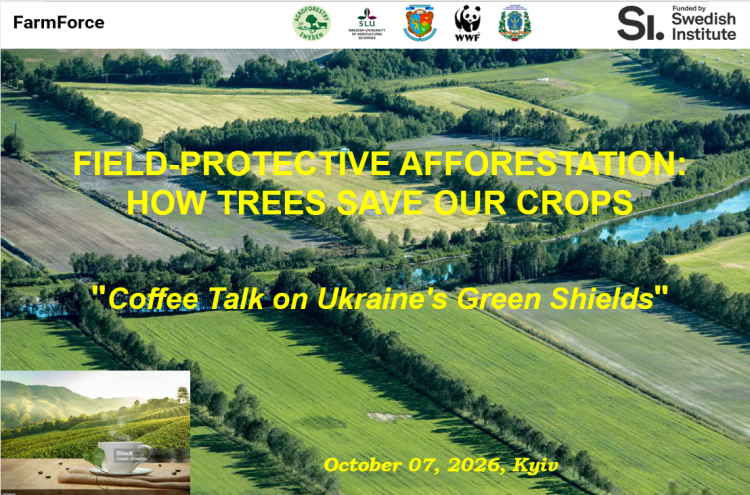
As part of the Ukraine-Sweden FarmForce project, a «Coffee Talk» seminar was held on October 7th, bringing together researchers and farmers from Sweden and Ukraine to discuss field shelterbelts in agroforestry systems.
FarmForce is funded by the Swedish Institute and brings together Swedish and Ukrainian universities and civil society organizations to exchange knowledge and improve value chains in agroforestry and sustainable local and regional food systems.
«The main goal of the event was to study Swedish and Ukrainian agroforestry implementation experience, analyze crop production innovations, research local food systems, and develop solutions for the recovery and increased resilience of small and medium-sized agroforestry farms.» Participants also discussed soil health, energy supply, and the restoration of shelterbelts and agricultural landscapes damaged as a result of the war.
On the Ukrainian side, presentations were delivered by Vasyl YUKHNOVSKYI and Oleksandr SOVAKOV — researchers from the department of forest regeneration and forest amelioration at the National University of Life and Environmental Sciences of Ukraine (NUBiP) — as well as by Mykhailo VOITOVYK, a prominent agriculturalist who employs advanced ecological and energy-saving farming technologies.
In Vasyl YUKHNOVSKYI's presentation, Ukraine's extensive experience in the development of field protection afforestation, creation, maintenance, care, and management of field protection forest belts is highlighted. It has been shown that forest belts increase the ecological and economic potential of agricultural landscapes, reduce erosion processes, conserve soil moisture, and create favorable microclimatic conditions for crop cultivation.
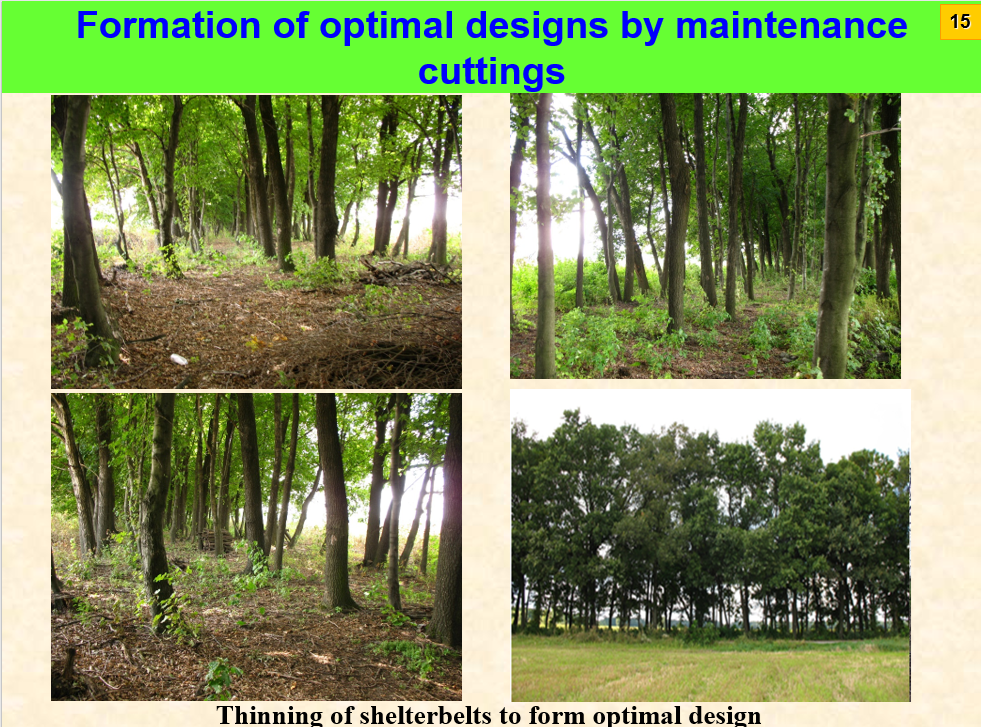
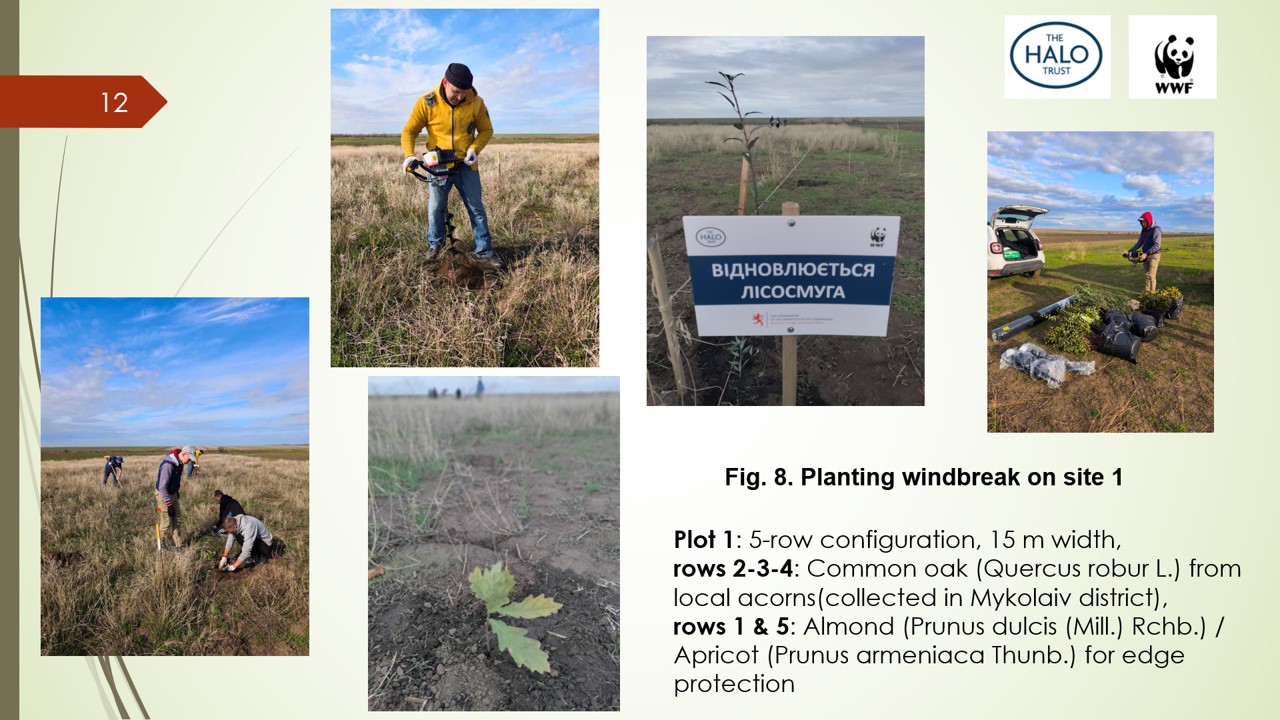
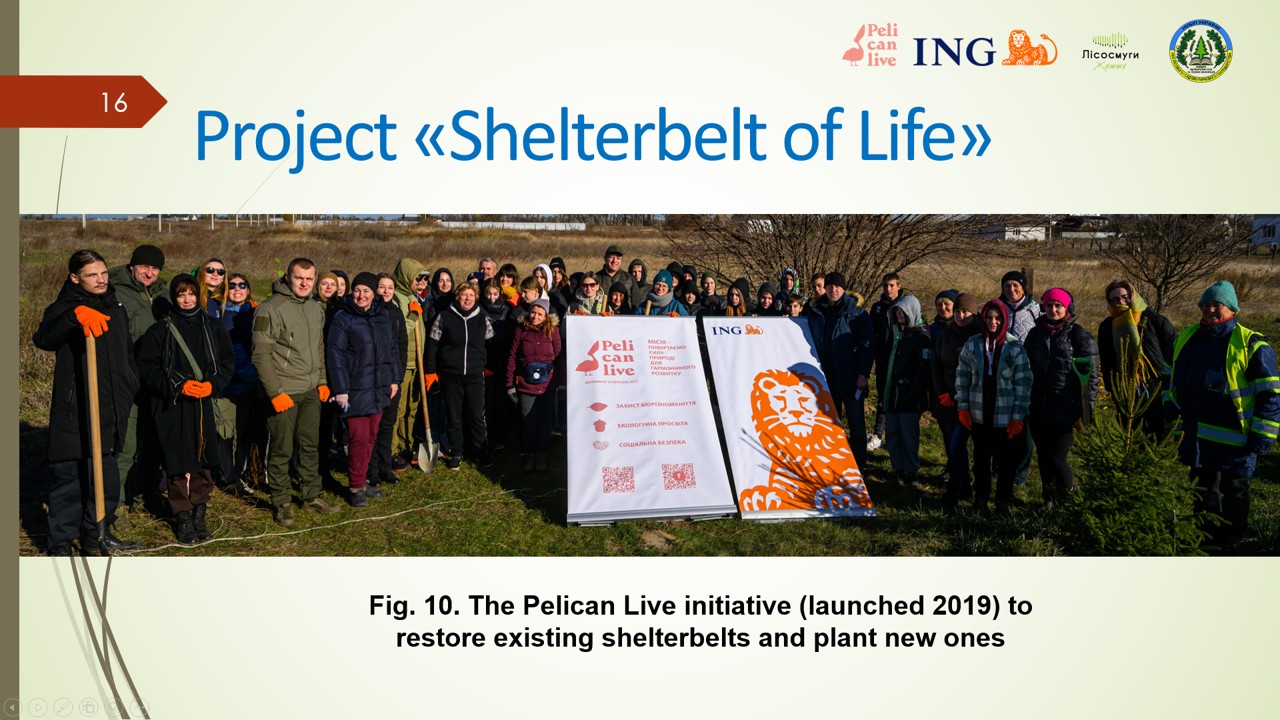
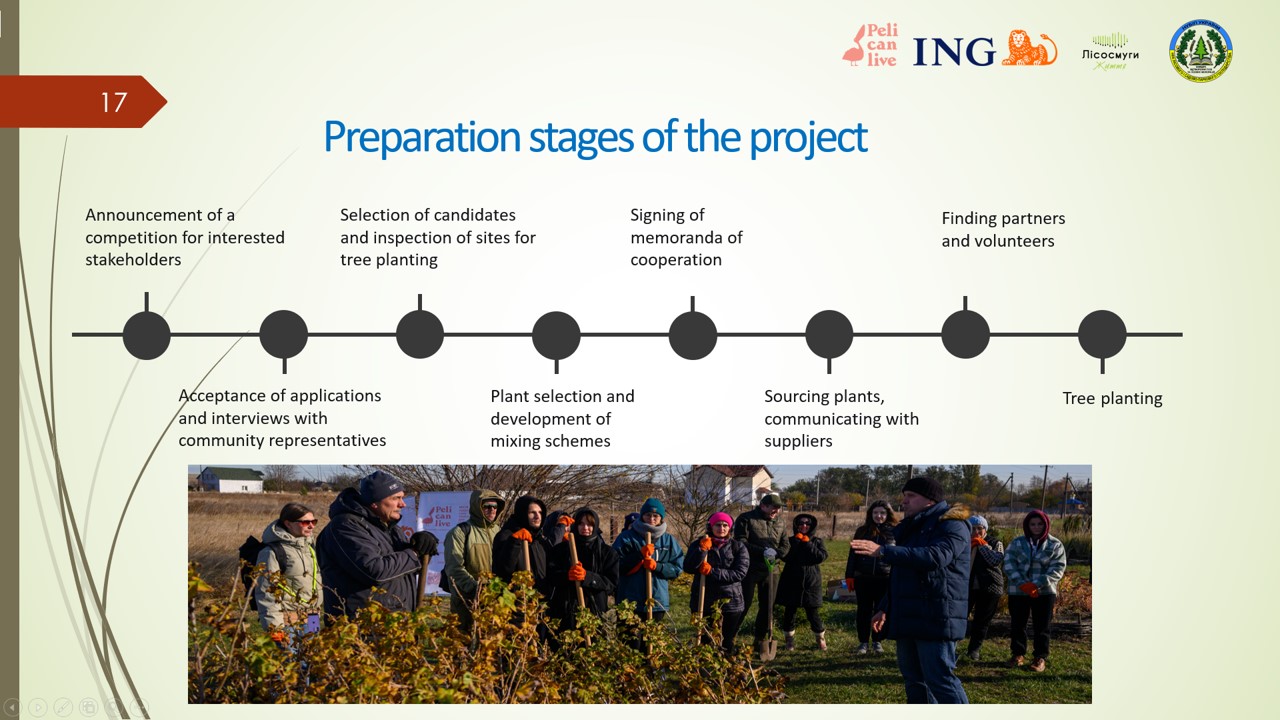
In the report by Oleksandr SOVAKOV, the focus is on the current state of forest belts and the restoration of field-protecting plantations in war-affected territories of Ukraine. The speaker presented the stages of restoring forest belts damaged by military actions, using the Snihurivska community in the Mykolaiv region as an example. The mandatory conditions for starting the work included demining the area, assessing soil conditions, selecting planting material adapted to local conditions, and monitoring tree survival rates. The participation of local communities was identified as an important component of this long-term work. The effective cooperation between scientists, organizations, and residents has been emphasized, which contributes not only to the creation of new forest belts but also to the formation of a responsible attitude towards their further care.
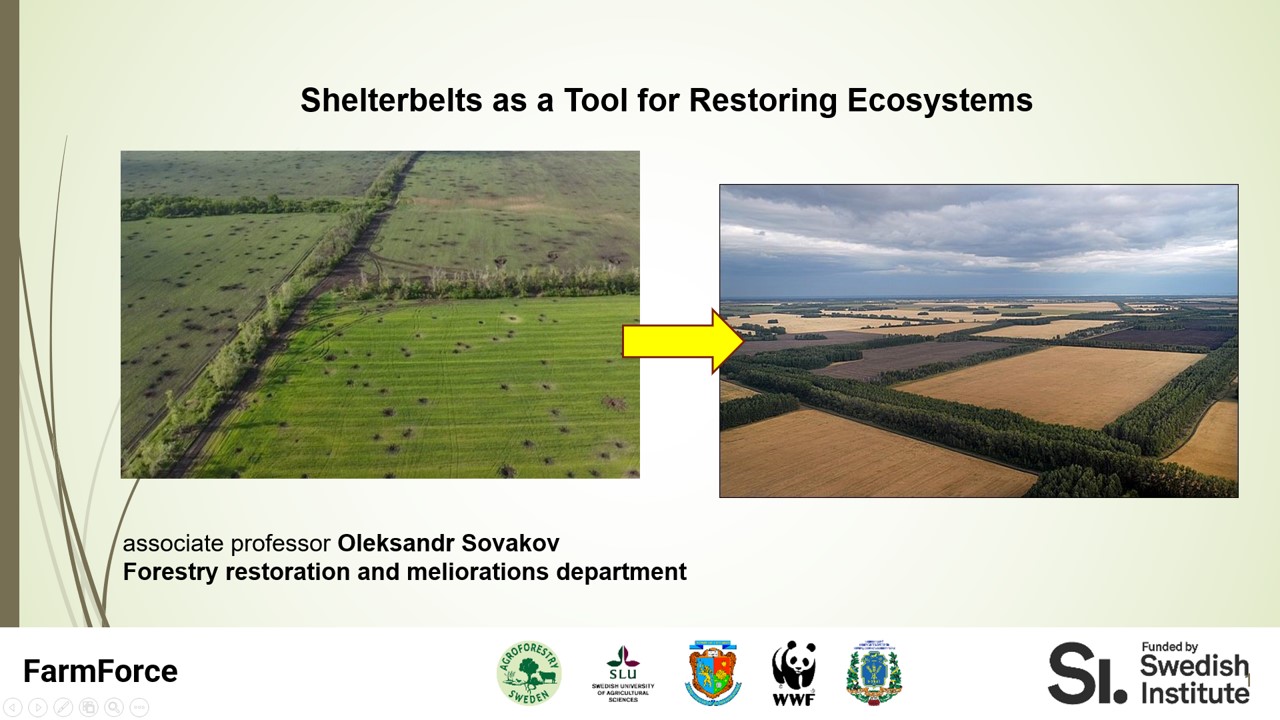
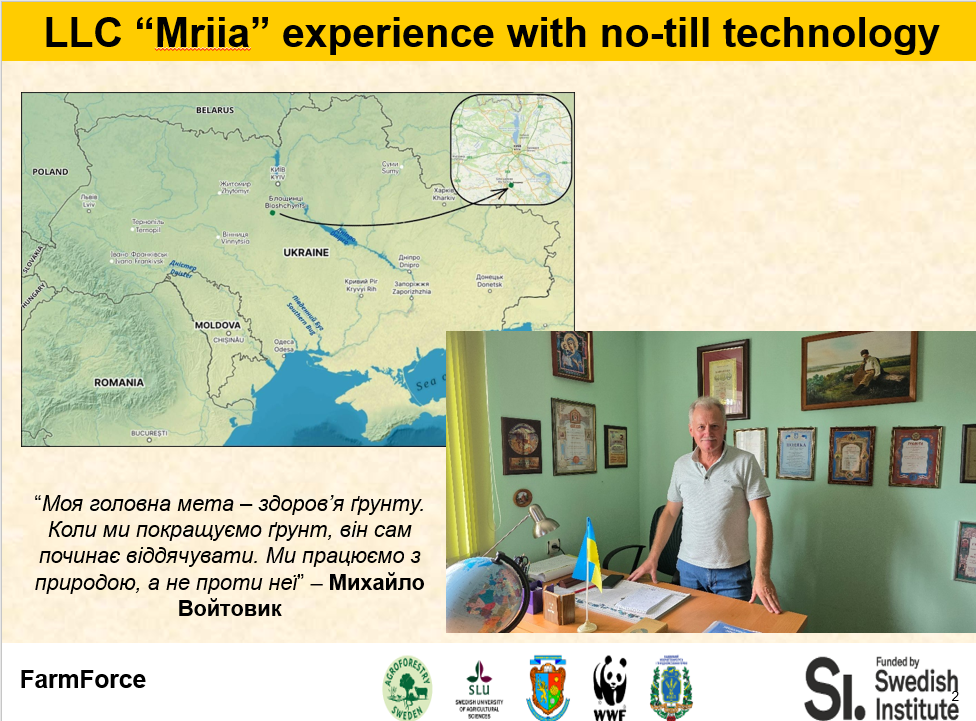
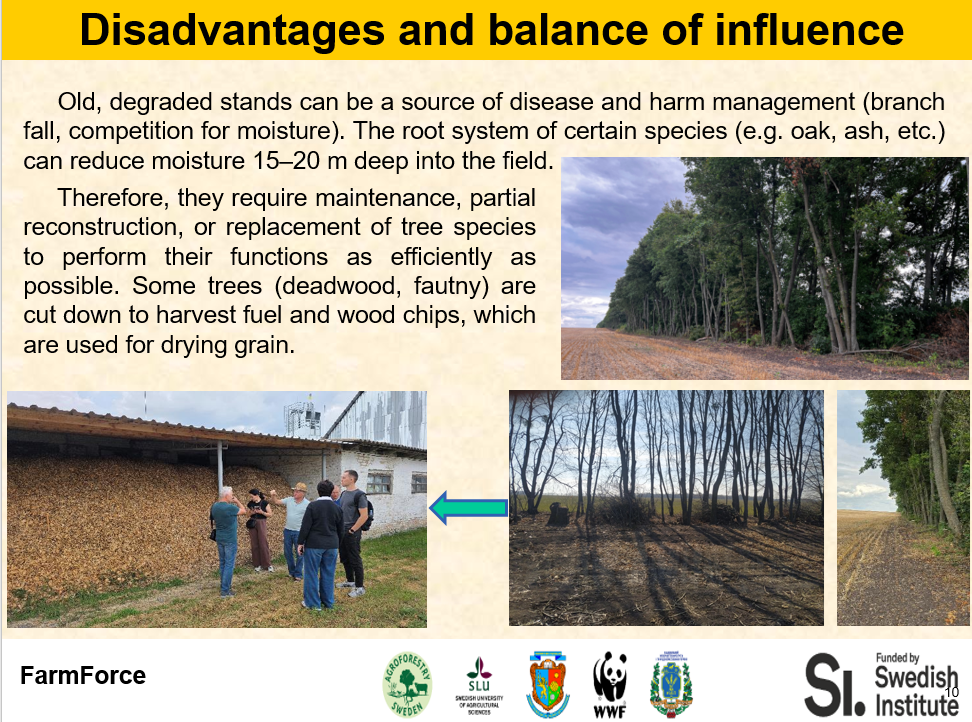
Mykhailo VOITOVYK shared the practical experience of the «Dream» farm (Kyiv region), demonstrating the interrelationship between soil health, farming methods, and resource efficiency. A leading farmer shared insights on the application of no-till farming technology combined with the use of cover crops and crop rotation diversification. He emphasized that soil structure and its biological activity are the foundation of production. He also presented the experience of switching to using wood from forest care thinnings as fuel for grain drying, which allows for reduced dependence on diesel fuel amidst serious energy challenges.
Swedish farmers Rune and Irene Karlsson shared their experience from the Swedish agricultural plains, where hedgerows of trees and shrubs gradually merge with ponds and flowering fields. They characterized the positive impact of hedgerows for protection against wind erosion, improved growing conditions, and enriched fauna biodiversity. This yielded its ecological and economic management effect.
The seminar was very useful for the farmers who participated in the event, as evidenced by the numerous questions. Students majoring in «Forestry» also became interested in agroforestry.
Overall, the exchange illustrated how field shelterbelts can be appropriately integrated into agriculture according to local conditions. The Swedish and Ukrainian examples highlighted their relevance for both climate change adaptation and food security preparedness in both countries. By protecting the topsoil and improving growing conditions, well-designed field shelterbelts can help sustain production during droughts, strong winds, and other natural and anthropogenic stresses. In Ukraine, the restoration of shelterbelts can also be part of the recovery of agricultural landscapes damaged by the war.