

NUBiP University representatives take part in a close-to-nature forestry summer school in Switzerland
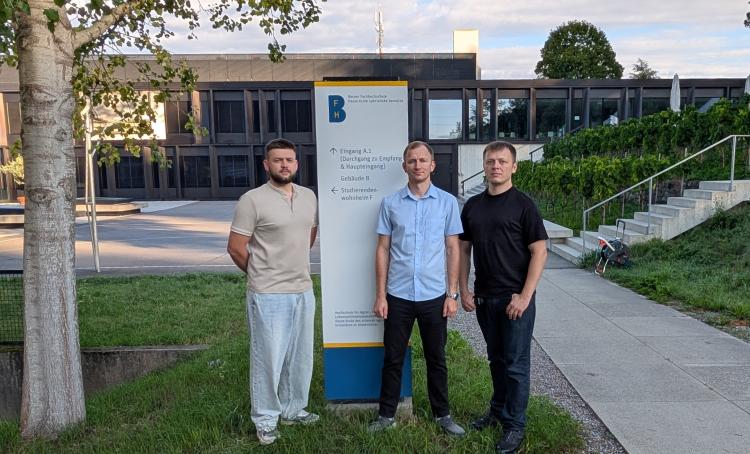
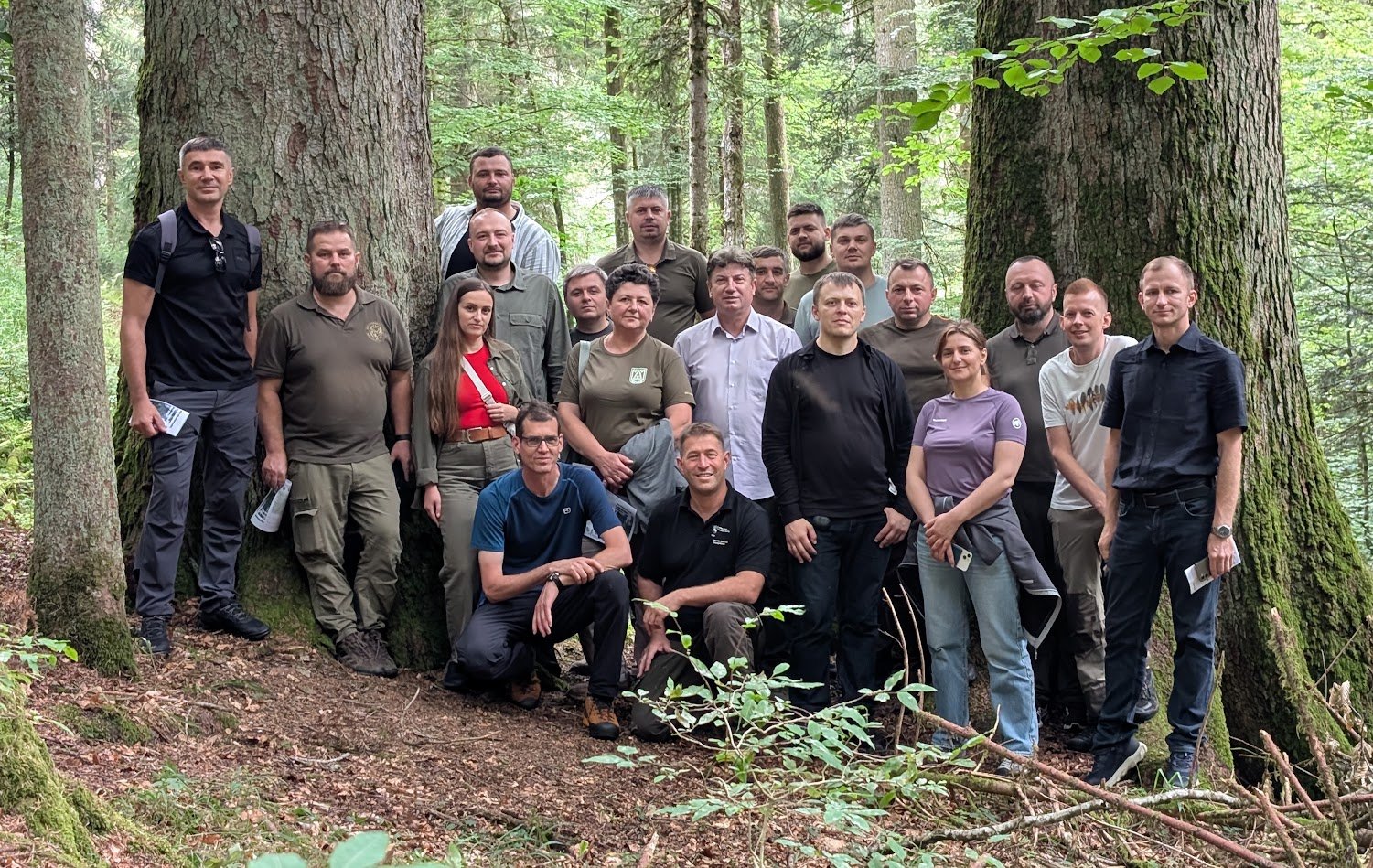
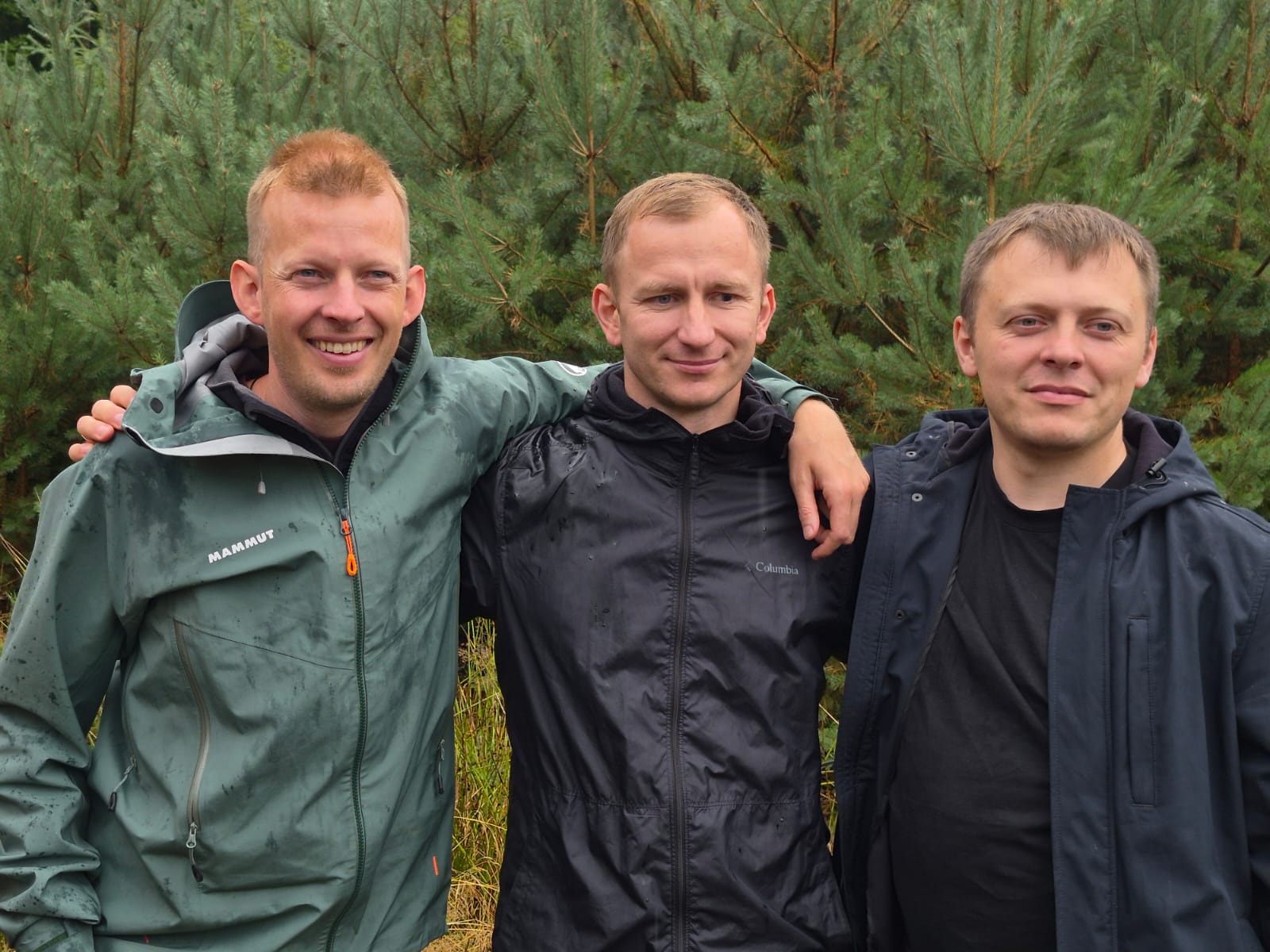
From 24 to 29 August 2026, senior lecturer of the Department of Forest Taxation and Forest Management Yevhenii Khan, associate professor of the Department of Silviculture Oleksandr Soshenskyi, and postgraduate student of the same department Yevhen Kalchuk took part in the summer school "Close to Nature Forestry — Closer to People: Training through Marteloscopes and Tree Marking." The week-long field programme was held at the School of Agricultural, Forest and Food Sciences (BFH-HAFL) of Bern University of Applied Sciences in Zollikofen, as well as in forests across three Swiss cantons.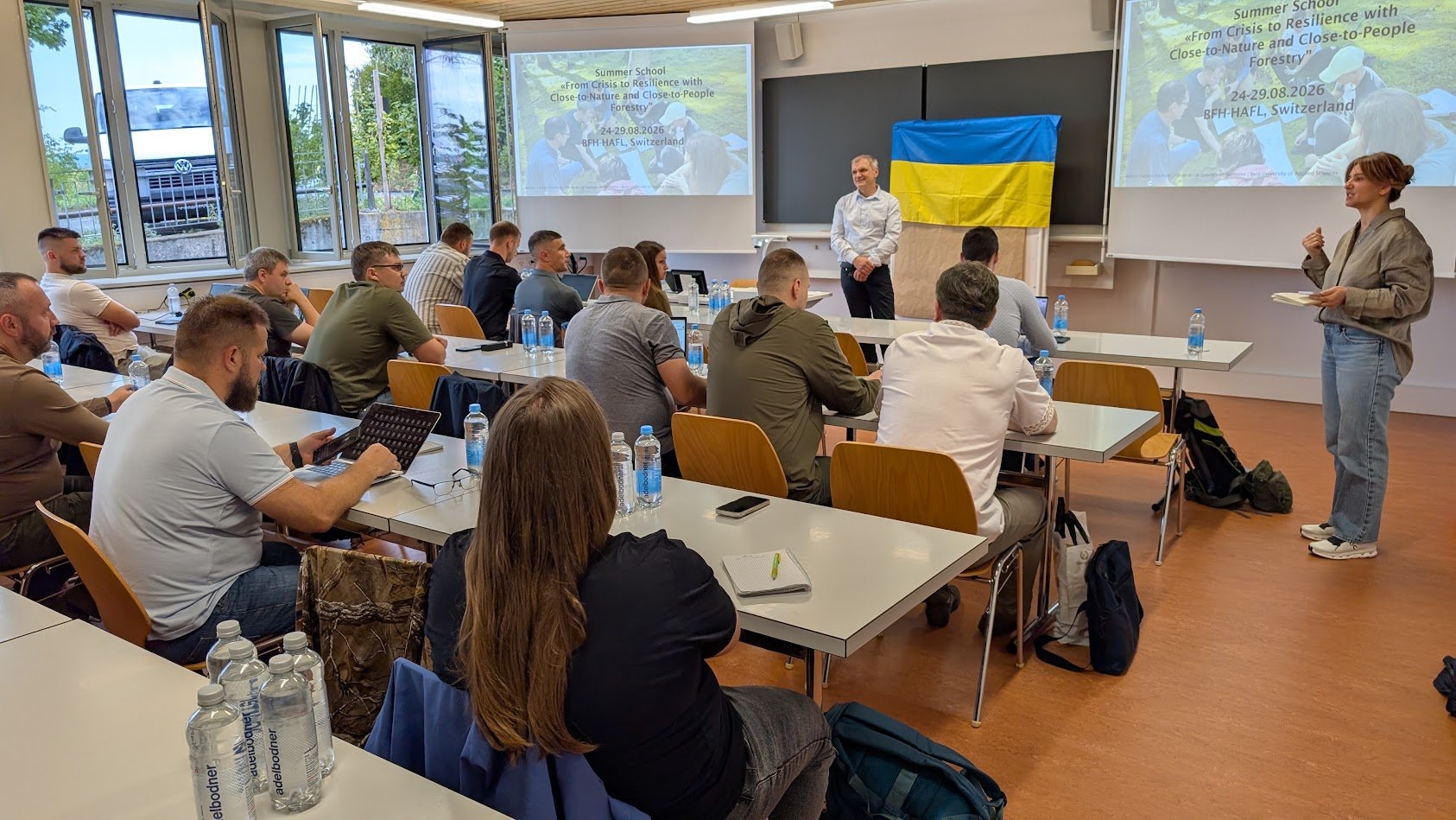
The summer school was organised within the project "From Crisis to Resilience with Close-to-Nature Forest Management in Ukraine" (2025–2029), funded by the Swiss Velux Stiftung and coordinated by BFH-HAFL (project leads: Prof. Christian ROSSET and Dr. Mariana MELNYKOVYCH). Project partners include the National University of Life and Environmental Sciences of Ukraine, the Ukrainian National Forestry University, Polissia National University, WWF-Ukraine, and the FORZA Agency for Sustainable Development of the Carpathian Region. The project aims to strengthen the capacity of Ukraine's forest sector to respond to the combined challenges of climate change and the consequences of the war, drawing on Swiss experience. Its expected outcomes include a practical guide to close-to-nature forestry adapted to Ukrainian conditions, an open online course, a Ukrainian-language version of the martelage.sylvotheque.ch virtual tree-marking platform, and a network of 36 new marteloscopes in Polissia and the Carpathians, in addition to the 14 already operating in Ukraine, including in the forests of the Boyarka Forest Research Station.
The school follows a "train-the-trainers" principle: 16 participants from Ukraine — lecturers from partner universities, researchers, specialists from the State Enterprise "Forests of Ukraine," forest managers, and representatives of conservation organisations — will pass on their newly acquired knowledge to students, colleagues, and practising foresters. The field week was preceded by an introductory webinar and a series of preparatory online sessions in July and August. The school's key training tool was the marteloscope — a training plot where every tree is numbered, measured, and mapped. This allows participants to practise tree marking for harvest and immediately analyse its silvicultural, economic, and ecological consequences using a mobile app. Switzerland has established over 200 such plots, linked through the martelage.sylvotheque.ch platform developed by Prof. Christian ROSSET's team.
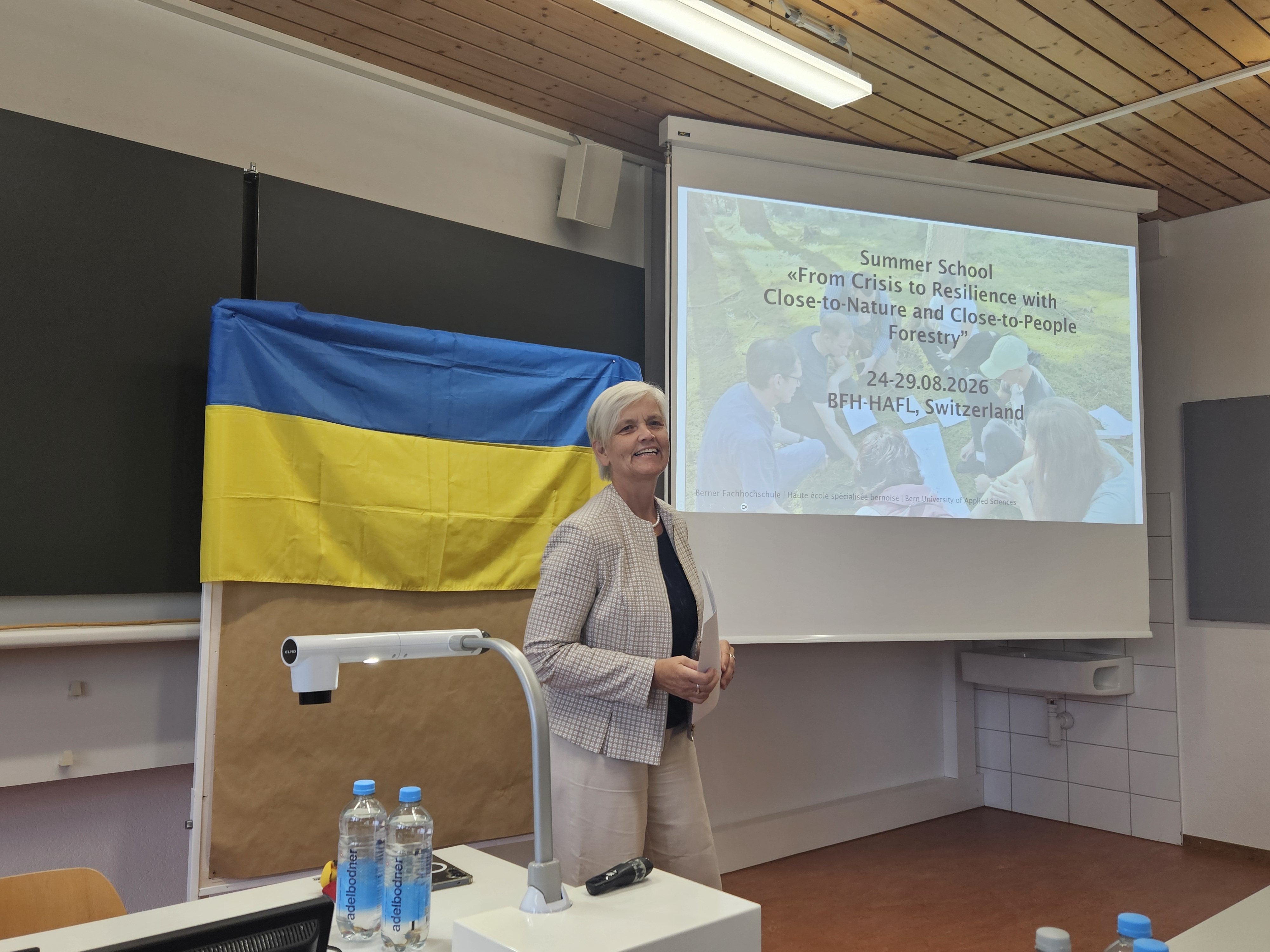
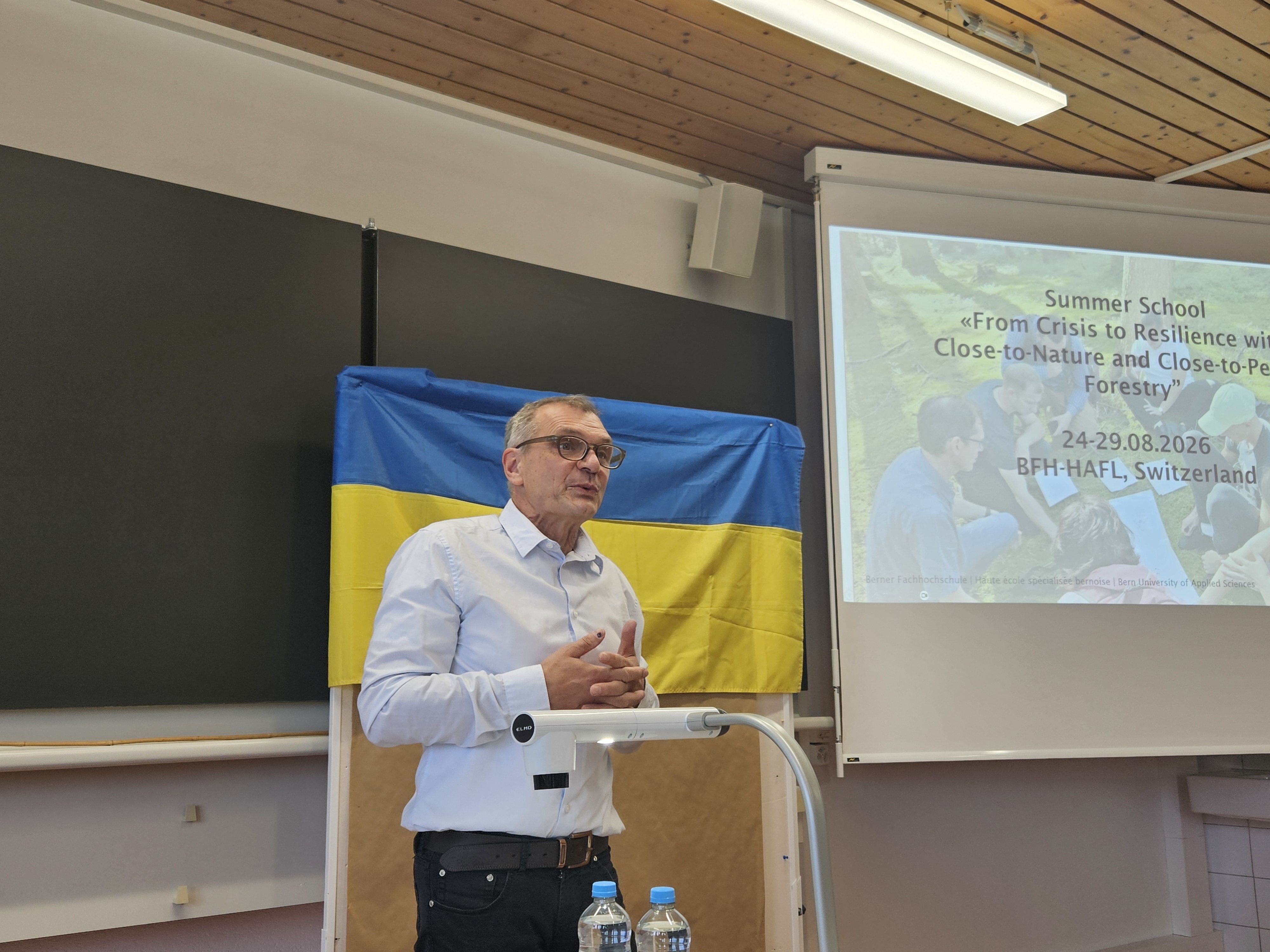
The school's opening coincided with Ukraine's Independence Day, and participants were congratulated by their Swiss and Ukrainian colleagues. BFH-HAFL director Prof. Ute SEELING praised the resolve of the Ukrainian partners, who continue their educational and research work despite the war and are already thinking about the recovery and resilience of Ukraine's forests, stressing that the university's goal is not one-off events but a lasting institutional partnership. Prof. Bernhard PAULI, Head of the Forest Sciences Department at BFH-HAFL, recalled that cooperation with the Ukrainian forest sector has a long history: it began with a joint Swiss-Ukrainian forest development programme in Transcarpathia. Since then, the parties have signed a memorandum of cooperation with NUBiP University, and the first joint summer school gave rise to the current project.
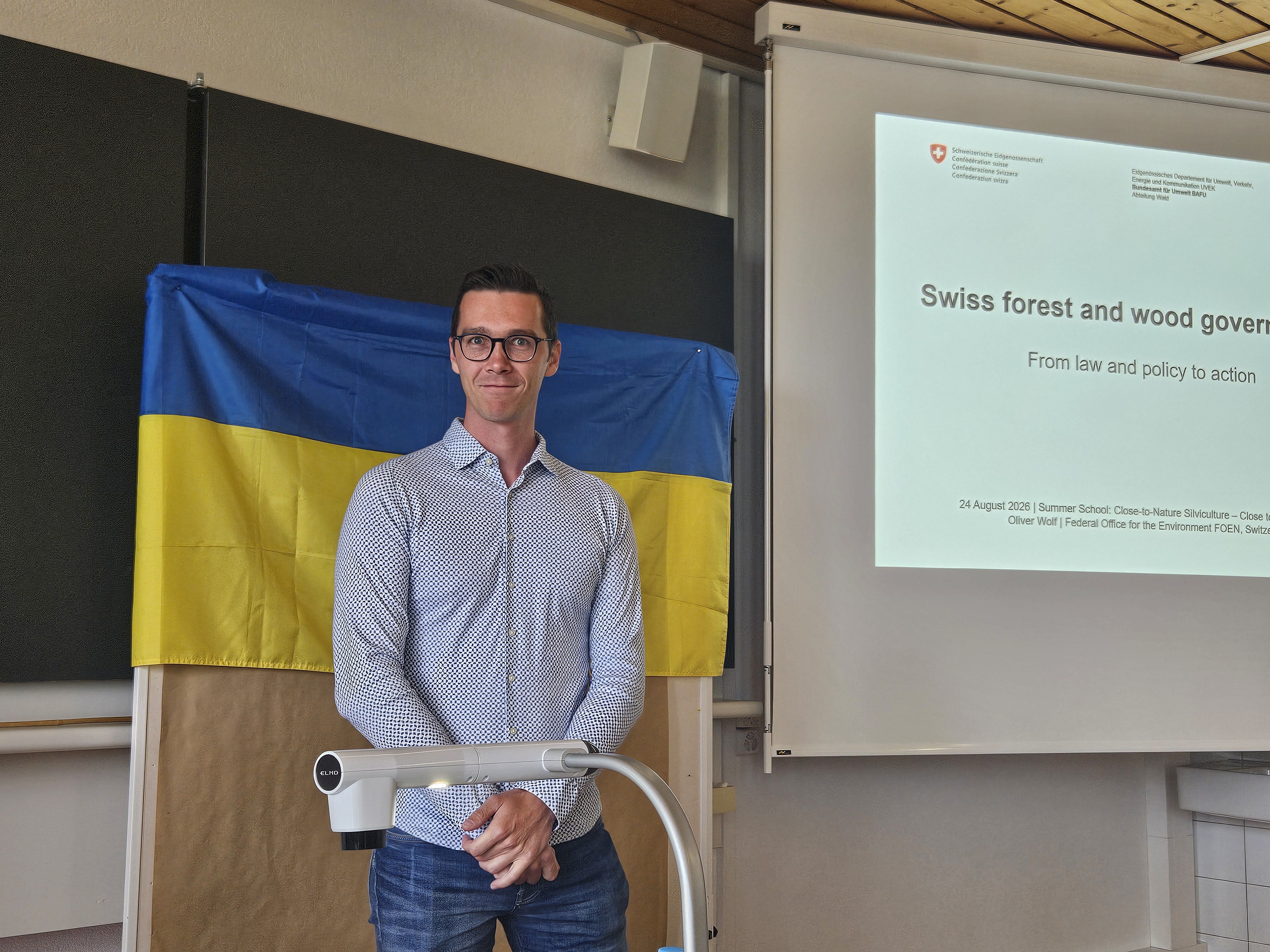
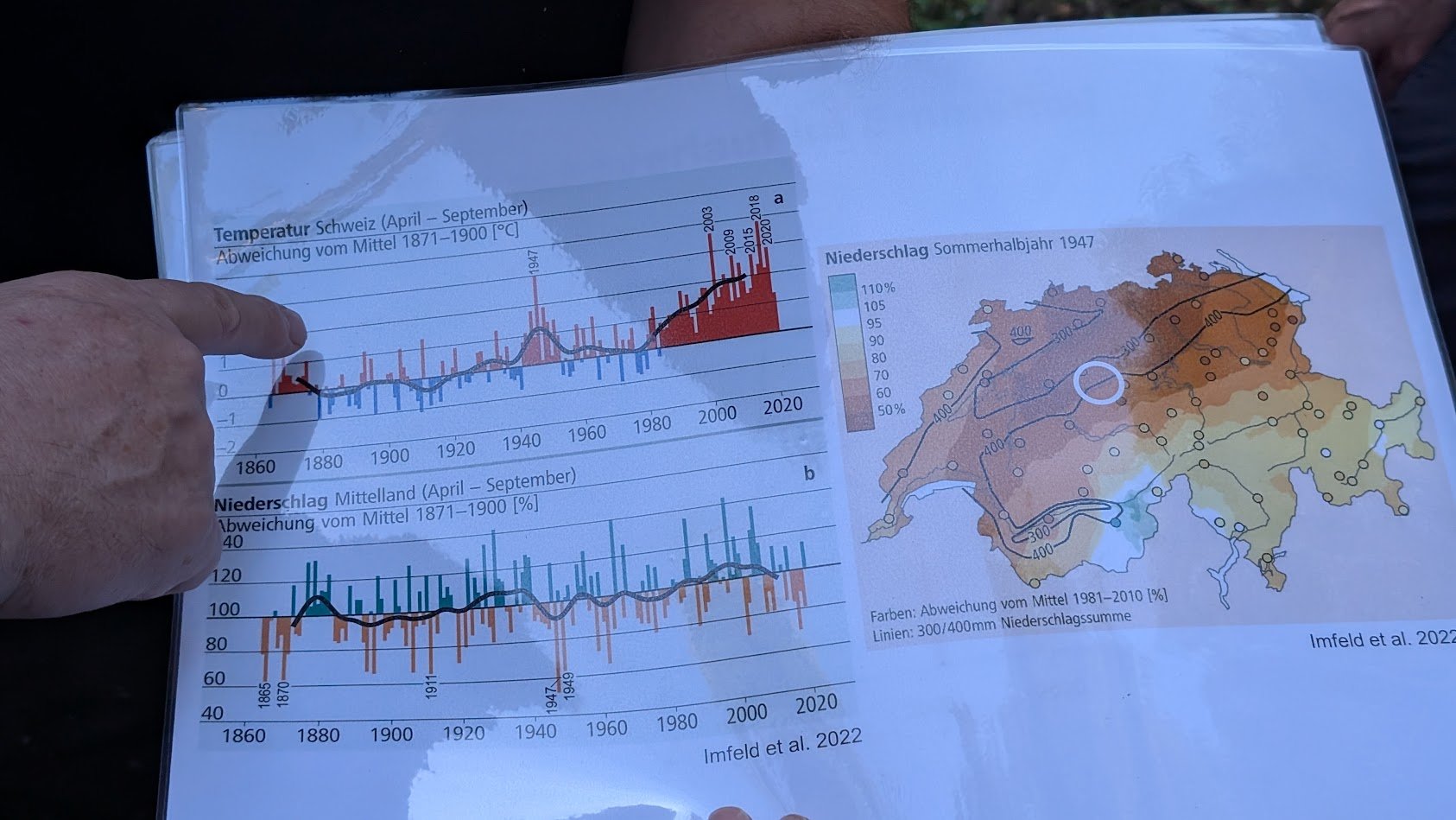
Oliver WOLF, forest policy advisor at the Swiss Federal Office for the Environment (FOEN/BAFU), spoke about Switzerland's forests. They cover about a third of the country's territory, almost 1.3 million hectares, with a total timber stock of over 400 million m³. Most forests (71%) belong to cantons and municipalities, while the rest are owned by roughly 250,000 private owners. Each year the country harvests about 5 million m³ of timber, less than the forest grows annually, and in mountain regions the increment is only partially used. Over 40% of forests perform a protective function, shielding settlements and roads from avalanches and rockfalls. At the same time, over 90% of young trees grow on their own, without artificial planting. Switzerland's federal forest legislation marks its 150th anniversary this year: the first law of 1876 halted the loss of forest area, while the current law of 1991 bans clear-cutting and enshrines close-to-nature management methods. The speaker also presented data from the fifth national forest inventory: due to recent droughts, one in every eight trees in Swiss forests is damaged or has died. As a result, adapting forests to climate change has become one of the country's top forest policy priorities.
Prof. Bernhard PAULI outlined the economic dimension of close-to-nature forestry: in an uneven-aged forest, the target diameter replaces the traditional rotation age, and a tree is harvested once its continued growth no longer covers capital costs and risks. According to calculations for the Swiss Plateau, converting even-aged stands into uneven-aged ones is economically unattainable for an owner without state support, which is why tending fellings in young stands are subsidised as "insurance investments" in the future stand.
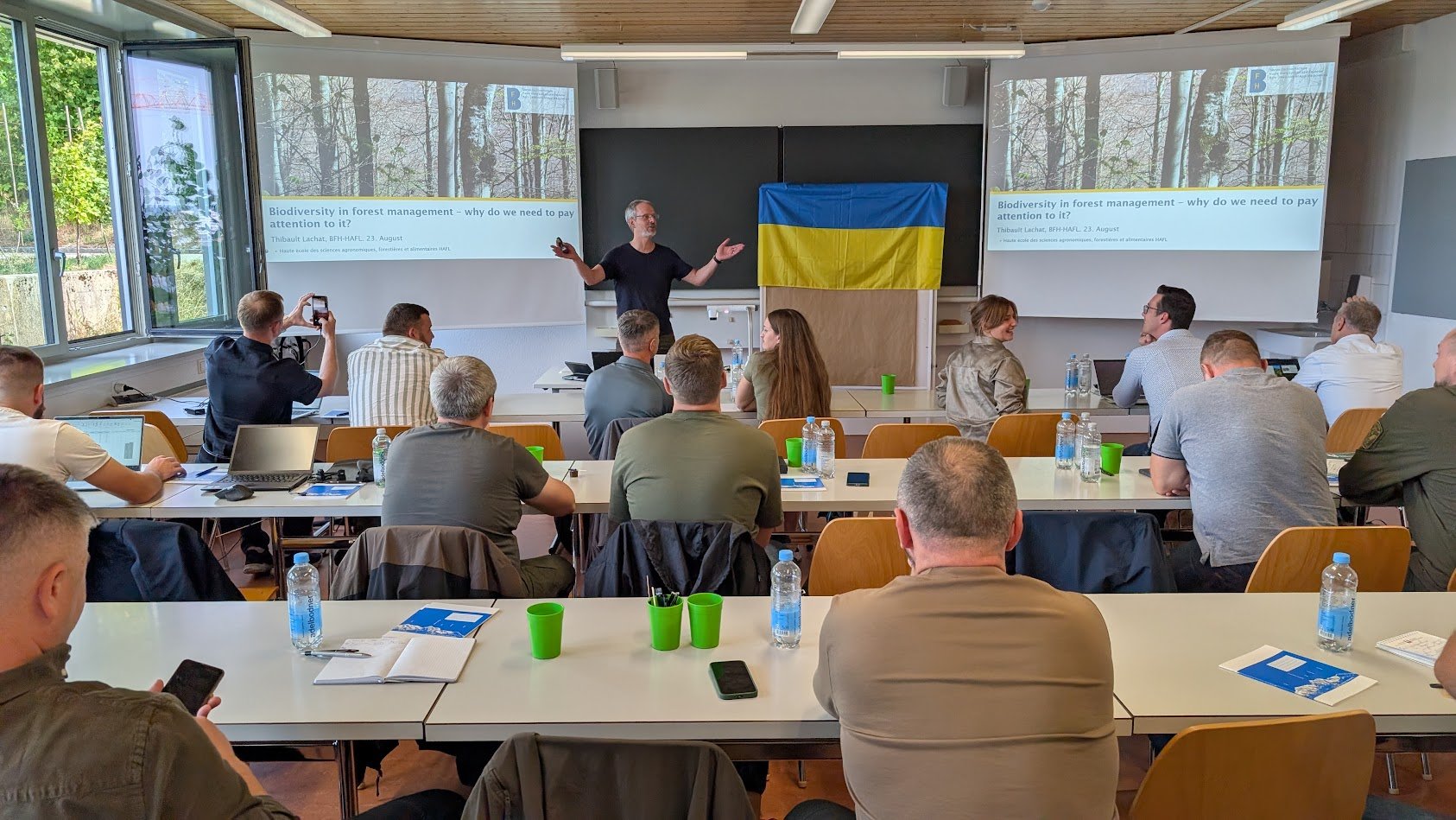
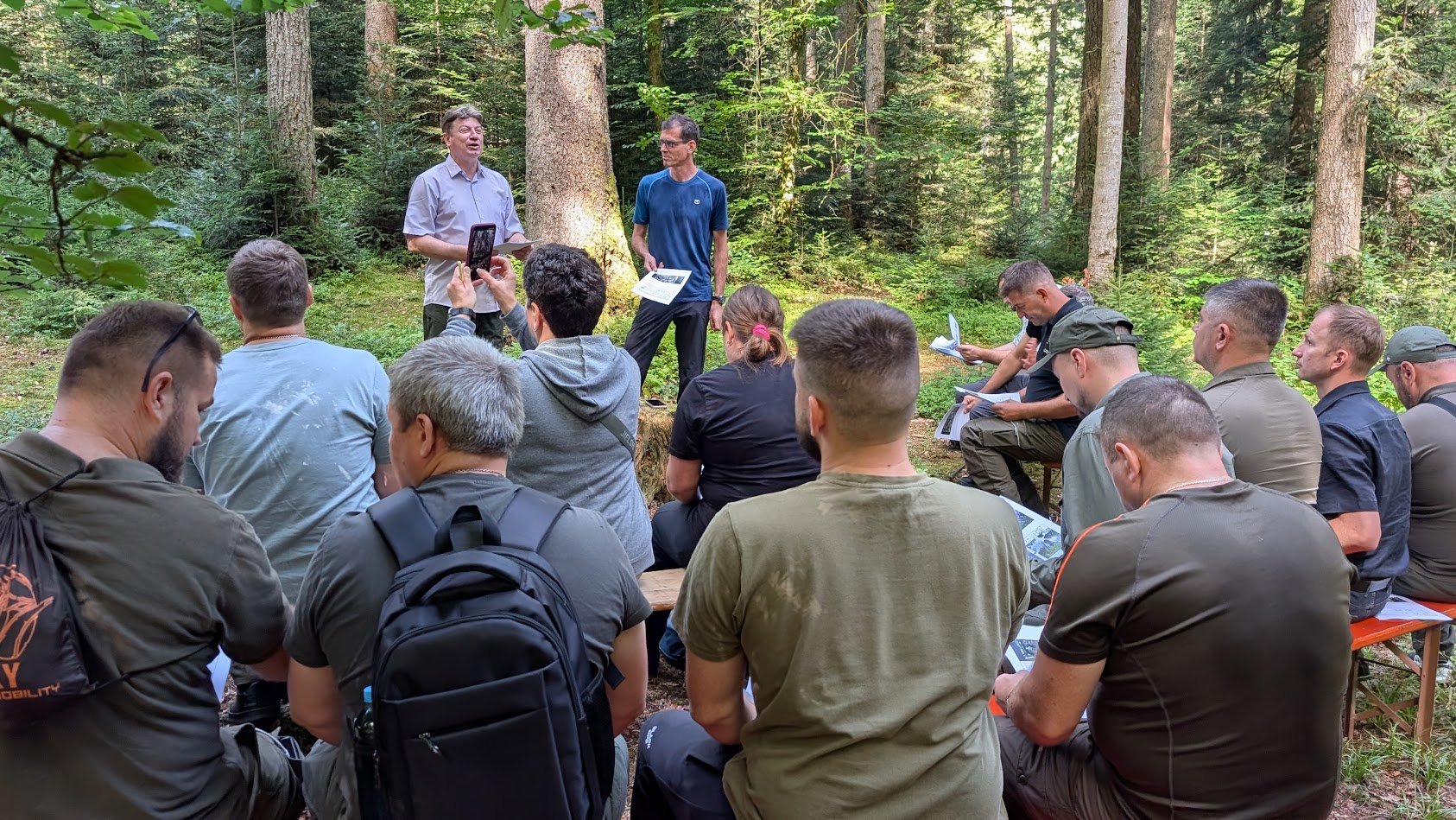
Prof. Thibault LACHAT, professor of forest ecology, devoted his lecture to biodiversity: managed forests are recommended to retain 20–50 m³/ha of deadwood and to preserve habitat trees bearing tree-related microhabitats, a field guide to which lists 47 types and has already been translated into Ukrainian. Among his examples, the lecturer repeatedly referred to the Carpathian primeval forest of Uholka, where the deadwood stock reaches 160 m³/ha, and where a single root-collar hollow in an old tree in Ukraine was found to host four relict primeval-forest beetle species at once.
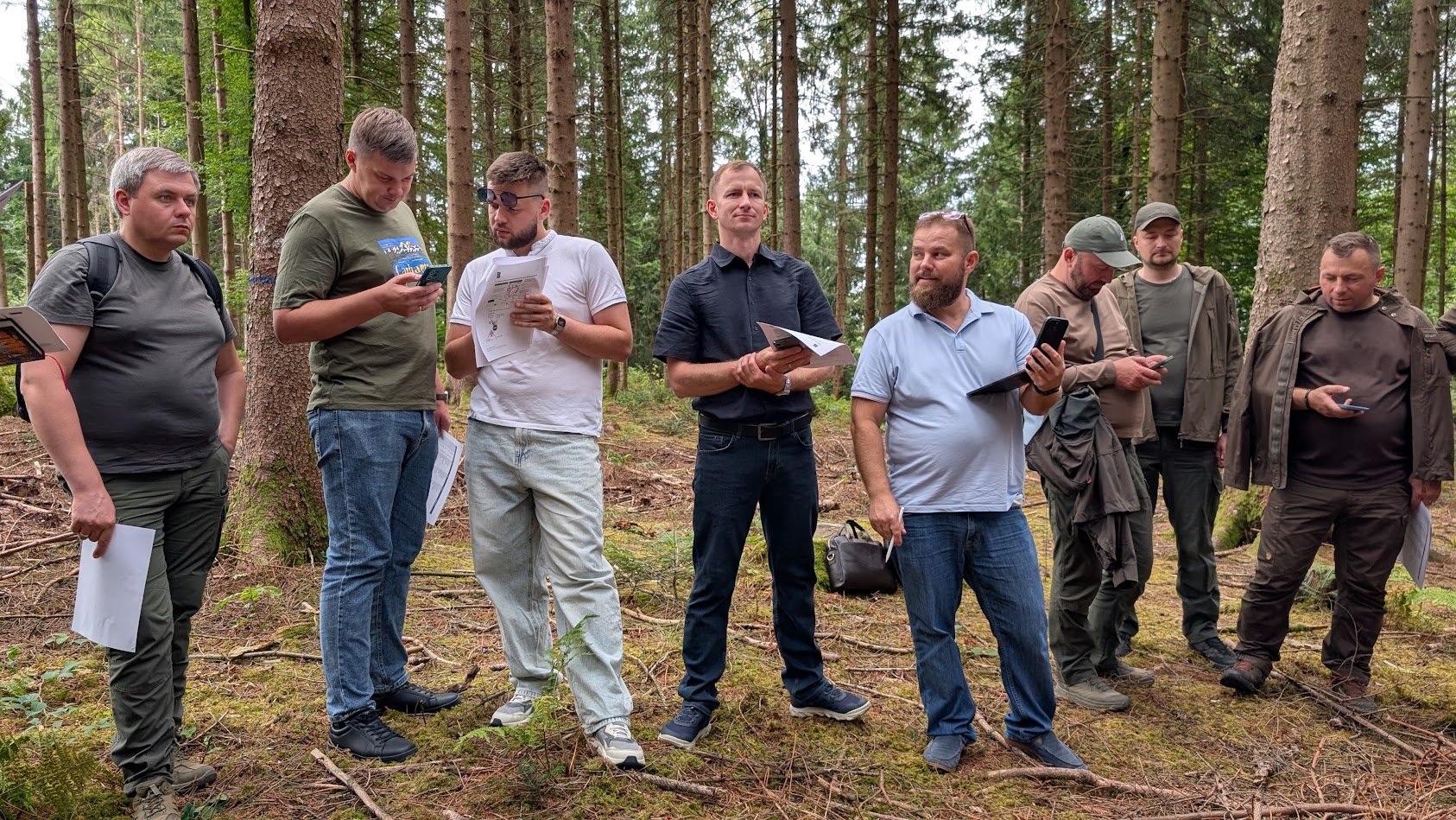
Participants moved from theory to practice in the forest of the Bern Burgher Community (Burgergemeinde Bern), one of Switzerland's largest forest owners. On the marteloscope, using worksheets adapted into Ukrainian, they practised the sequence of silvicultural analysis: first describing and assessing the stand, then formulating objectives, and only at the end deciding on measures and marking specific trees.
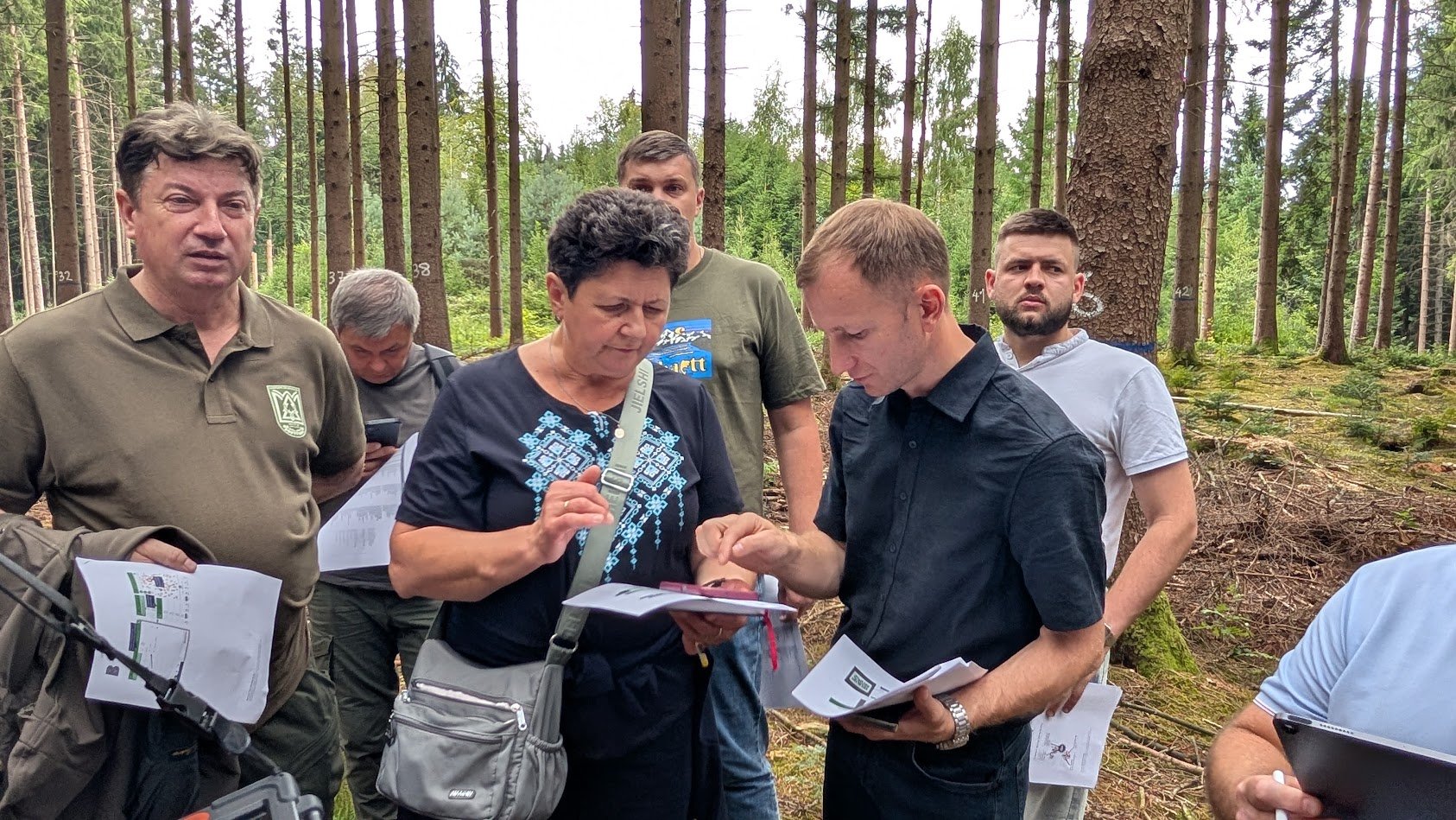
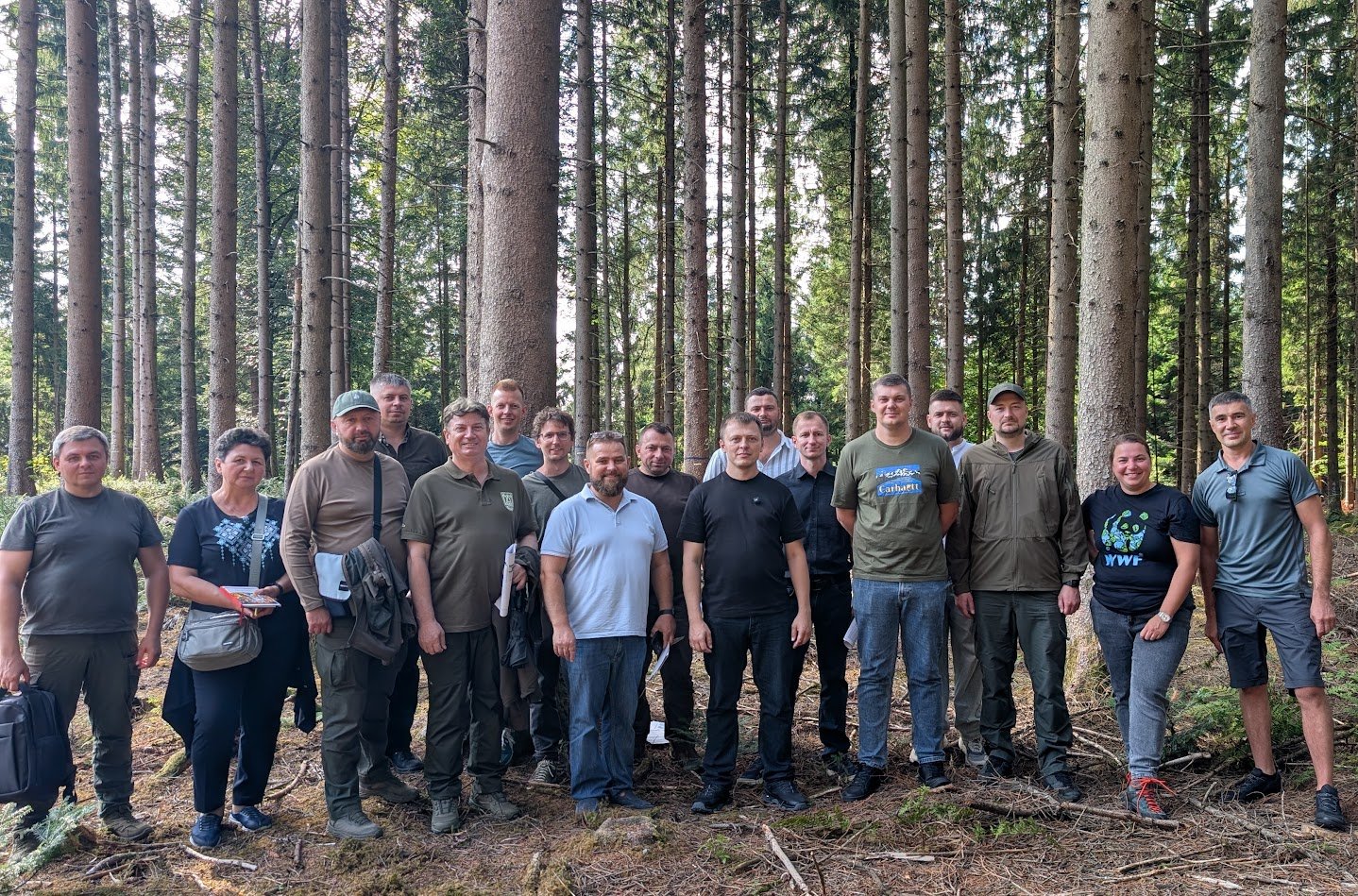
In the communal forest of the village of Couvet, Canton of Neuchâtel, summer school participants saw how the control method developed by Henri Biolley has been applied for over a hundred years in an uneven-aged, selection-managed forest (Plenterwald). A forest engineer explained the specifics of the management regime, including the fact that tree marking and winter harvesting take place here once every eight years. According to control inventory data for one of the plots, 65 m³ of timber per hectare was harvested between 2013 and 2021, while the growing stock rose from 446 to 481 m³ over the same period. Participants practised independent tree marking using this approach on a marteloscope plot. A silver fir growing here, standing almost 60 metres tall, is considered by local foresters to be the tallest fir in Switzerland.
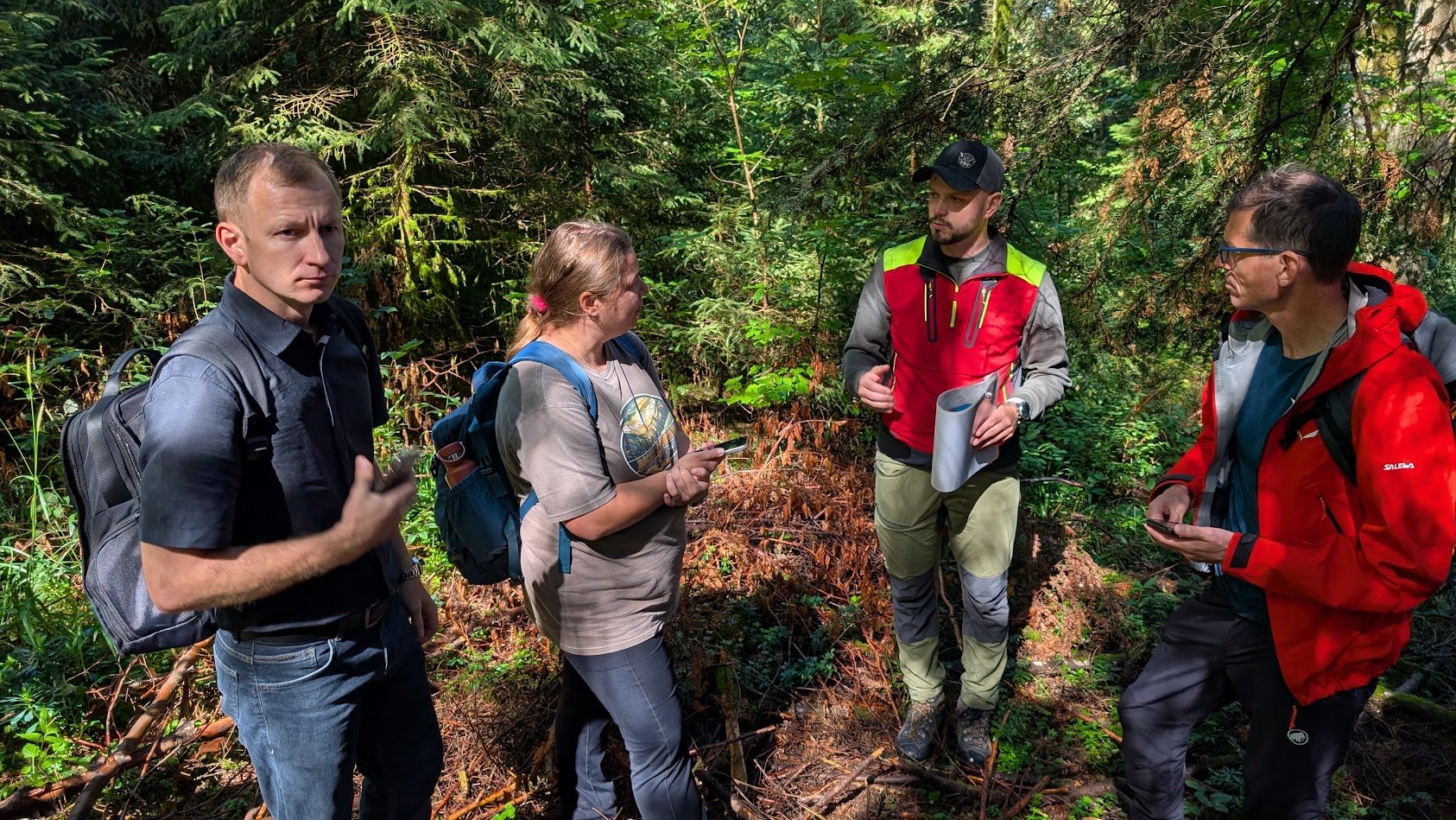
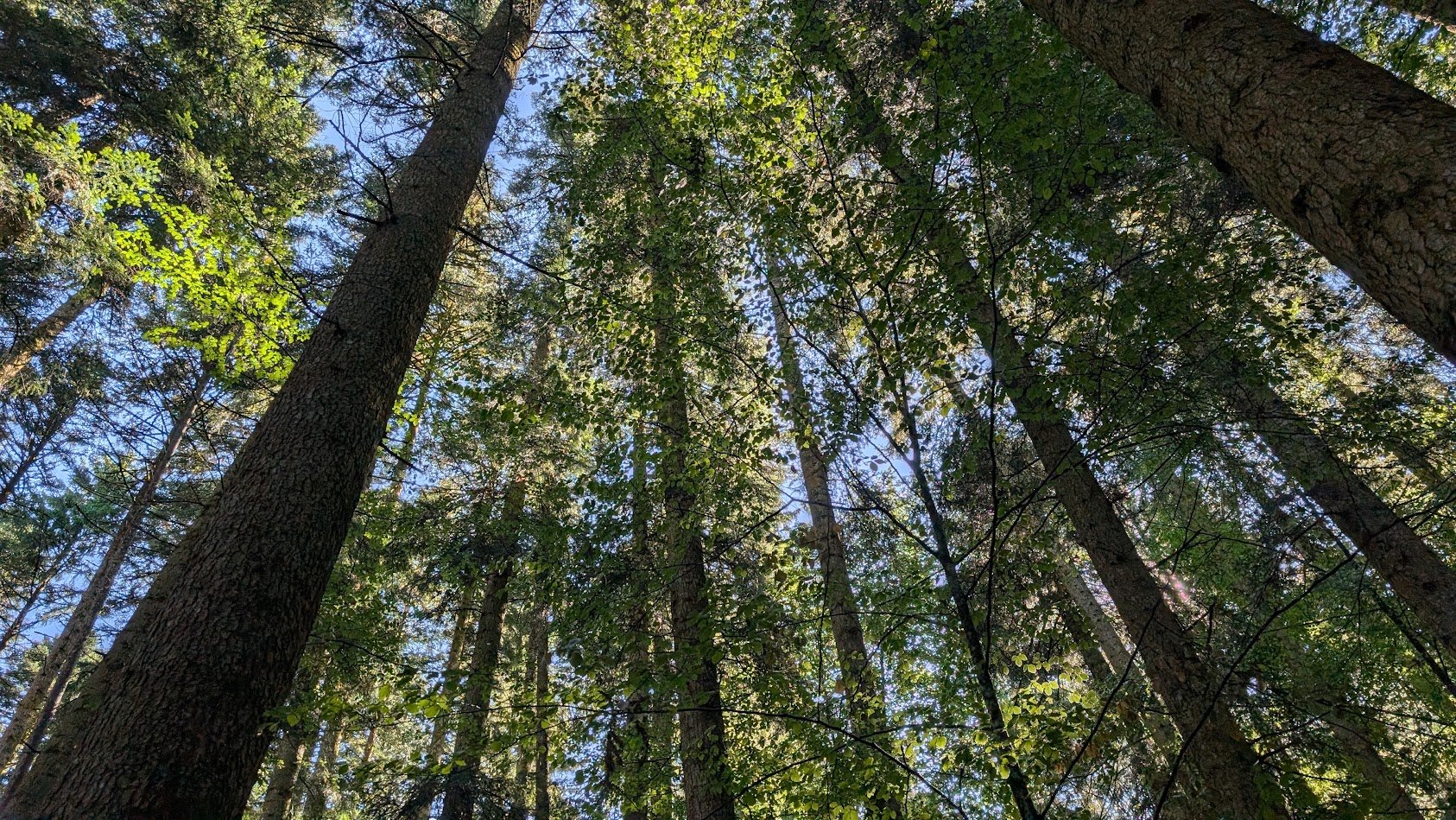
Summer school participants also became acquainted with the selection management system (Plenterwald) in the Toppwald forest of Canton Bern's state forestry enterprise, home to the oldest permanent sample plots of the Swiss Federal Institute for Forest, Snow and Landscape Research (WSL), with continuous measurements dating back to 1906. According to the data presented, over 104 years of observation, 1,700 m³ of timber per hectare has been harvested here, while the stand's growing stock has consistently remained at around 500 m³/ha, and mean annual increment has even risen from 11.5 to 14.5 m³/ha. On a neighbouring plot, participants studied the four phases of converting even-aged stands into uneven-aged ones according to the methodology of Prof. Jean-Philippe Schütz (a process designed to take 70–80 years and span several generations of foresters), and carried out another tree-marking and stand-shaping exercise. Participants were also reminded of the principle once formulated by ETH Zürich professor Hans LEIBUNDGUT: a forester should be "lazy and wise" — leaving as much as possible to nature and guiding processes rather than fighting them.
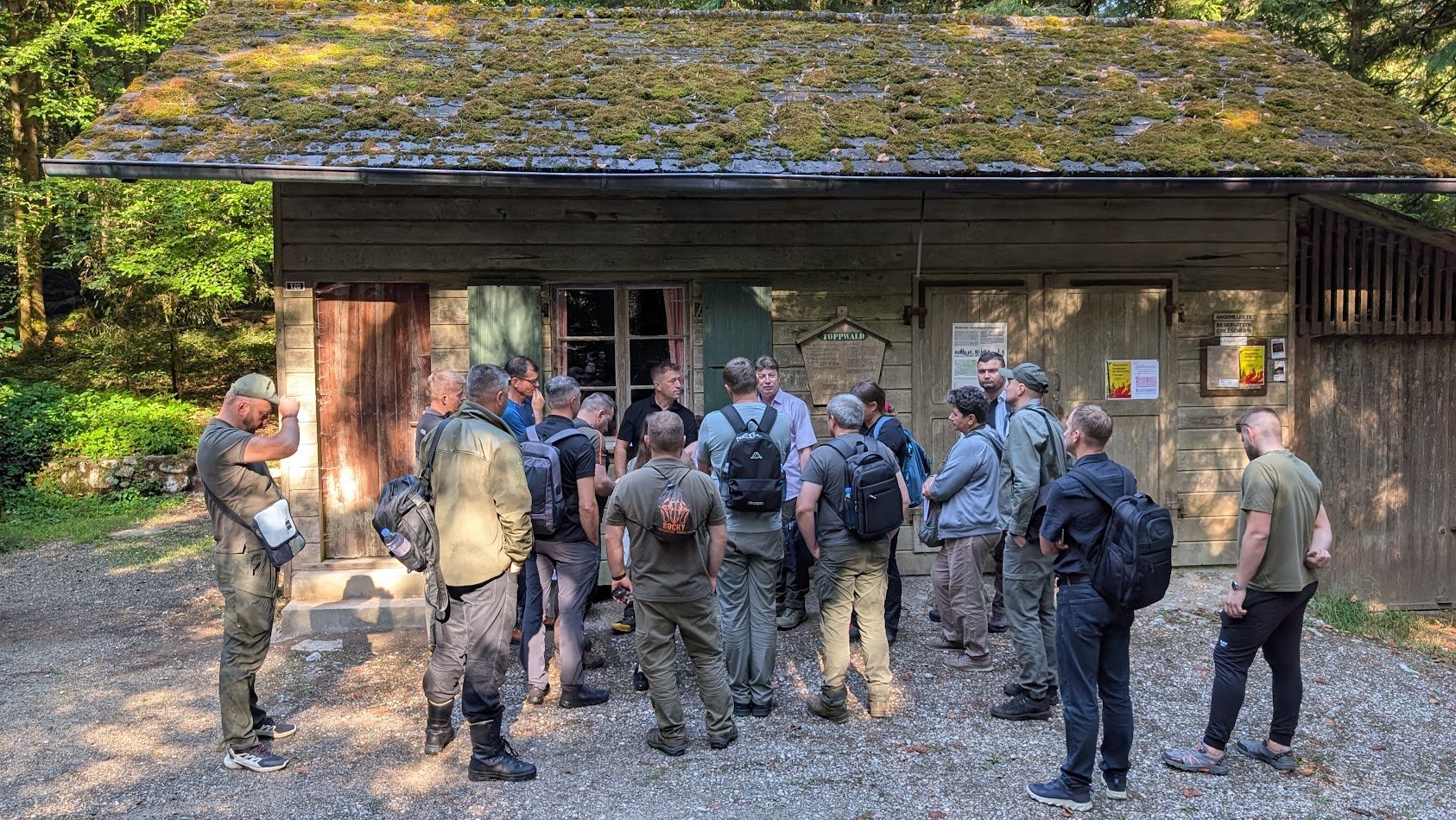
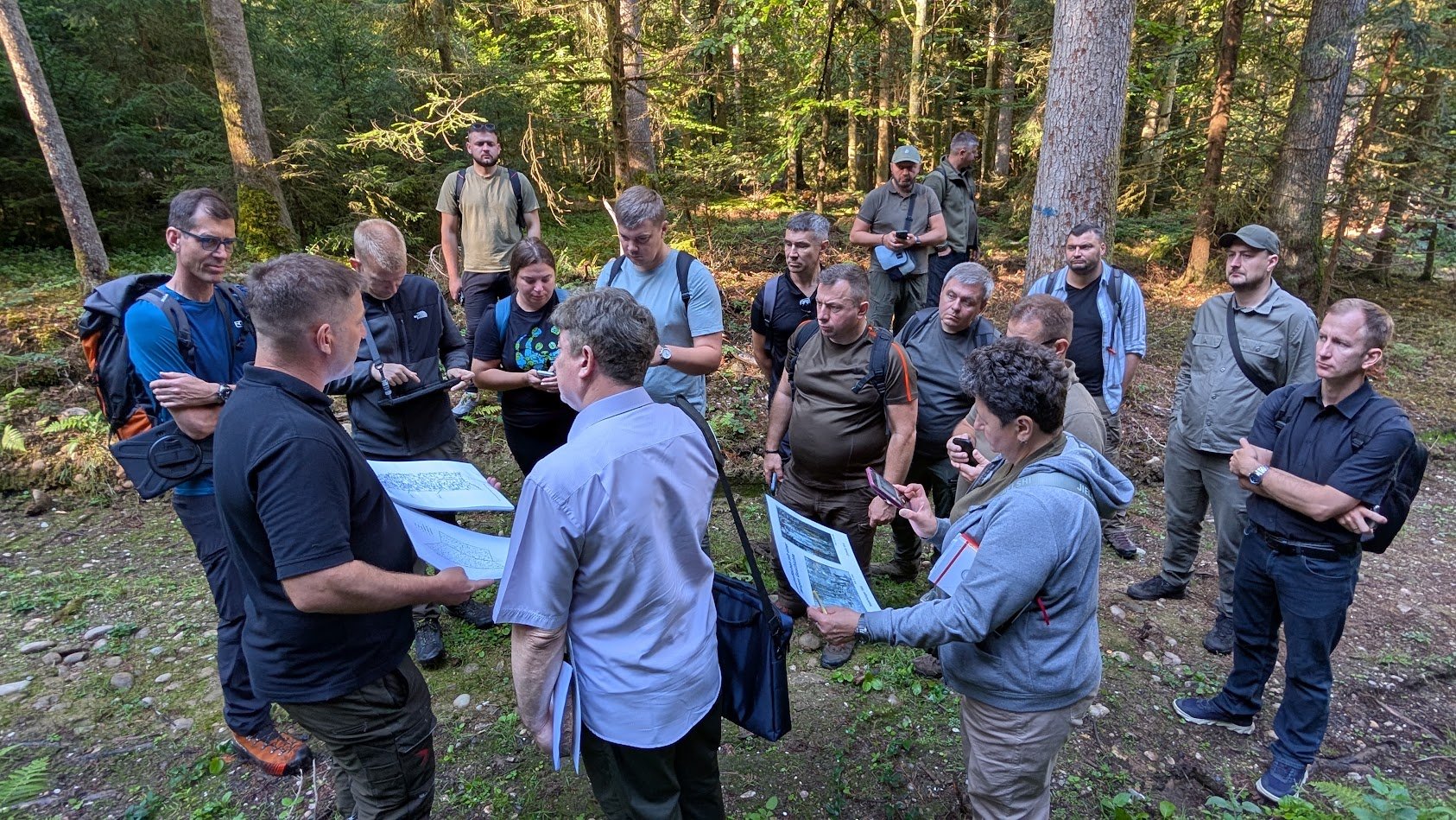
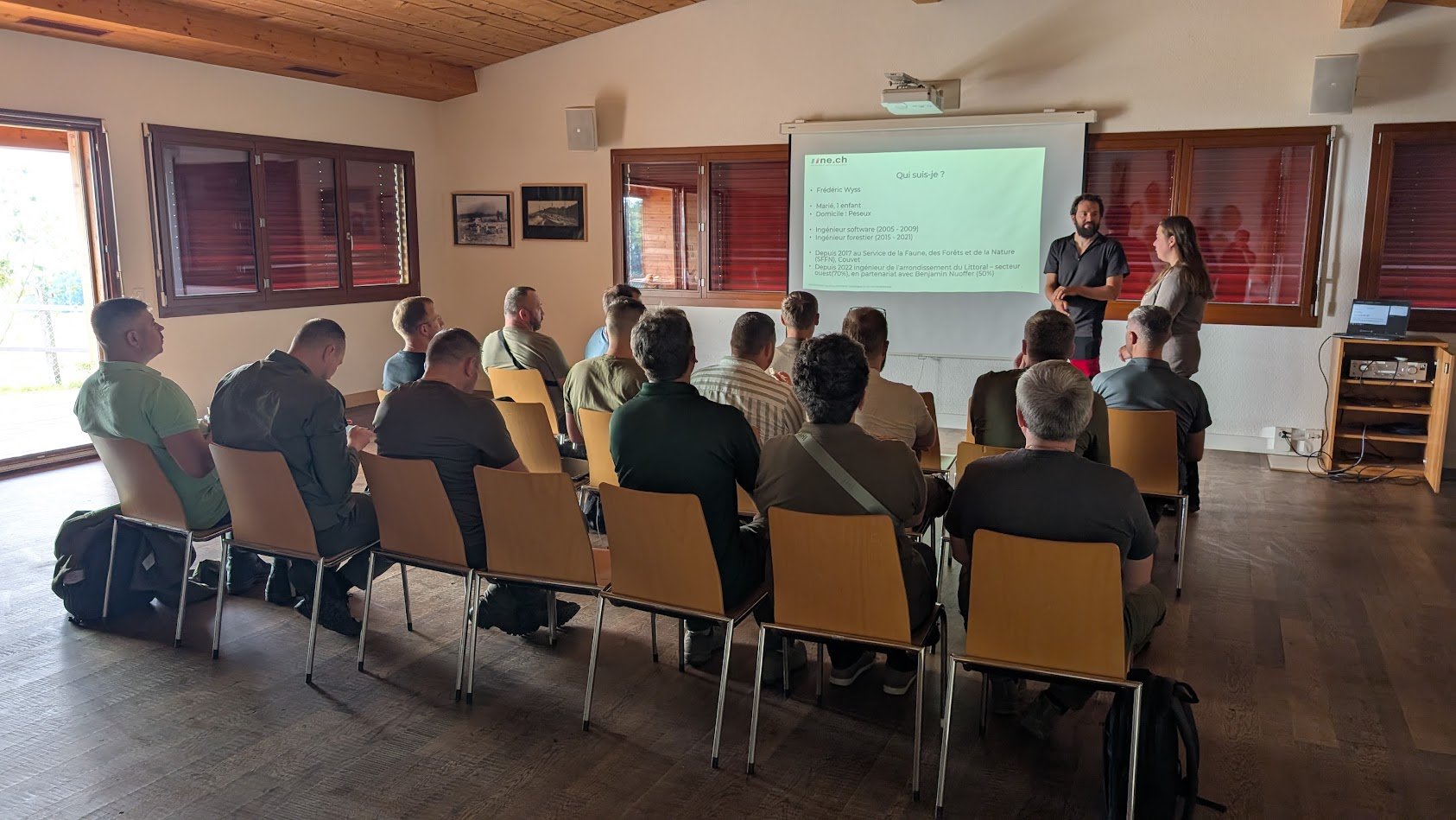
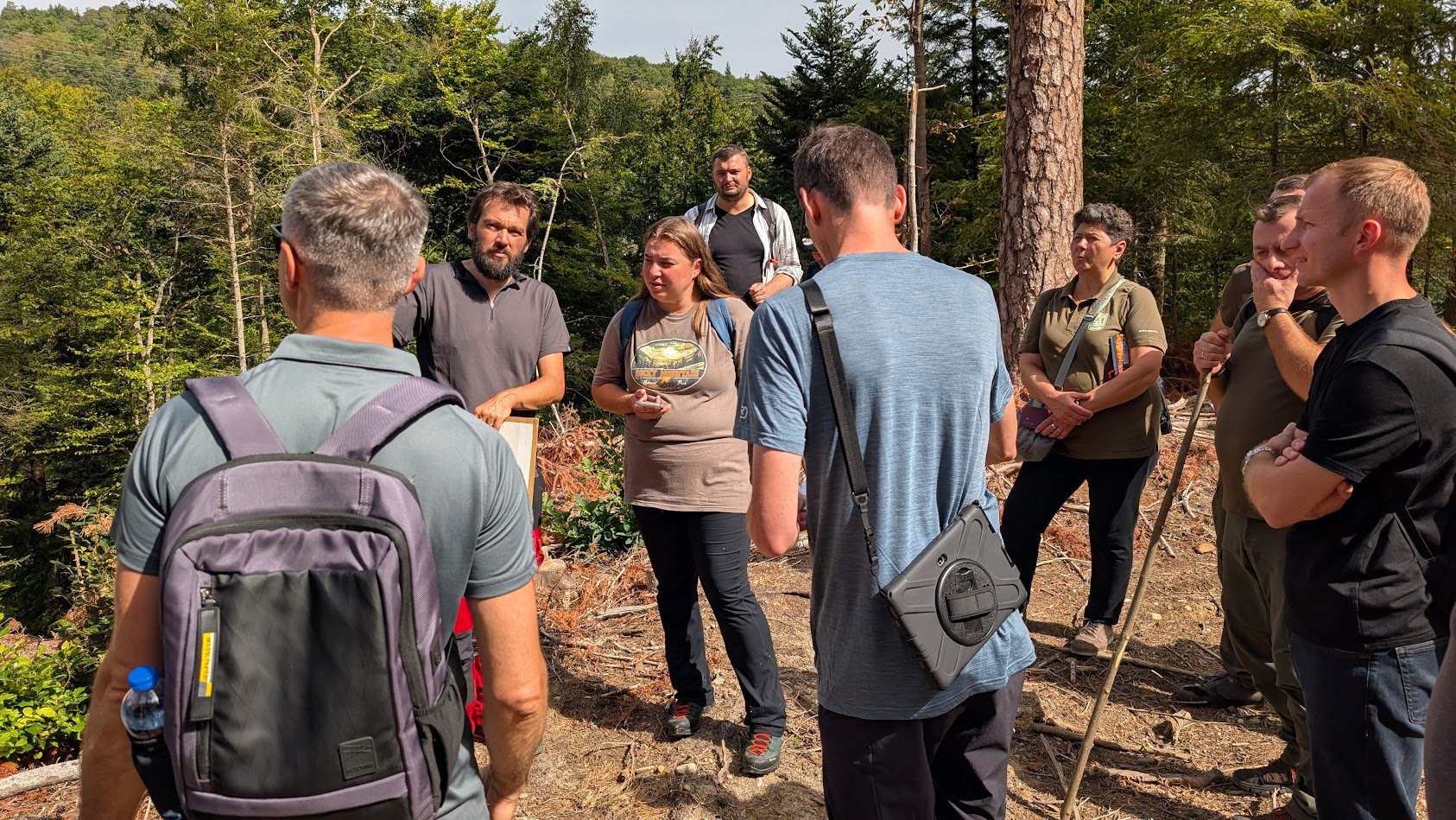
On one of the days, the group visited the Littoral district of Canton Neuchâtel, where forests are managed by district engineer Frédéric Wyss. In a 250-year-old oak stand, where the cantonal forest service and WSL researchers have been running tending-felling experiments for decades, participants saw how a secondary layer of silver fir "works" to improve oak quality, and why removing it too early permanently reduces timber value by triggering epicormic shoots. The economic rationale behind these experiments lies in timber value: a butt log of high-quality oak at target diameter is worth around 4,000 francs, so the goal of the new experiment is to grow an oak of 100 cm diameter not in 250 years, but in 100. Participants also carried out a training tree-marking exercise on a marteloscope in a mixed stand that included a hundred-year-old Douglas fir with a growing stock of about 560 m³/ha. Already next week, Swiss colleagues will carry out an actual tree marking here, followed by harvesting in winter, which will make it possible to compare participants' training decisions with the real outcomes.
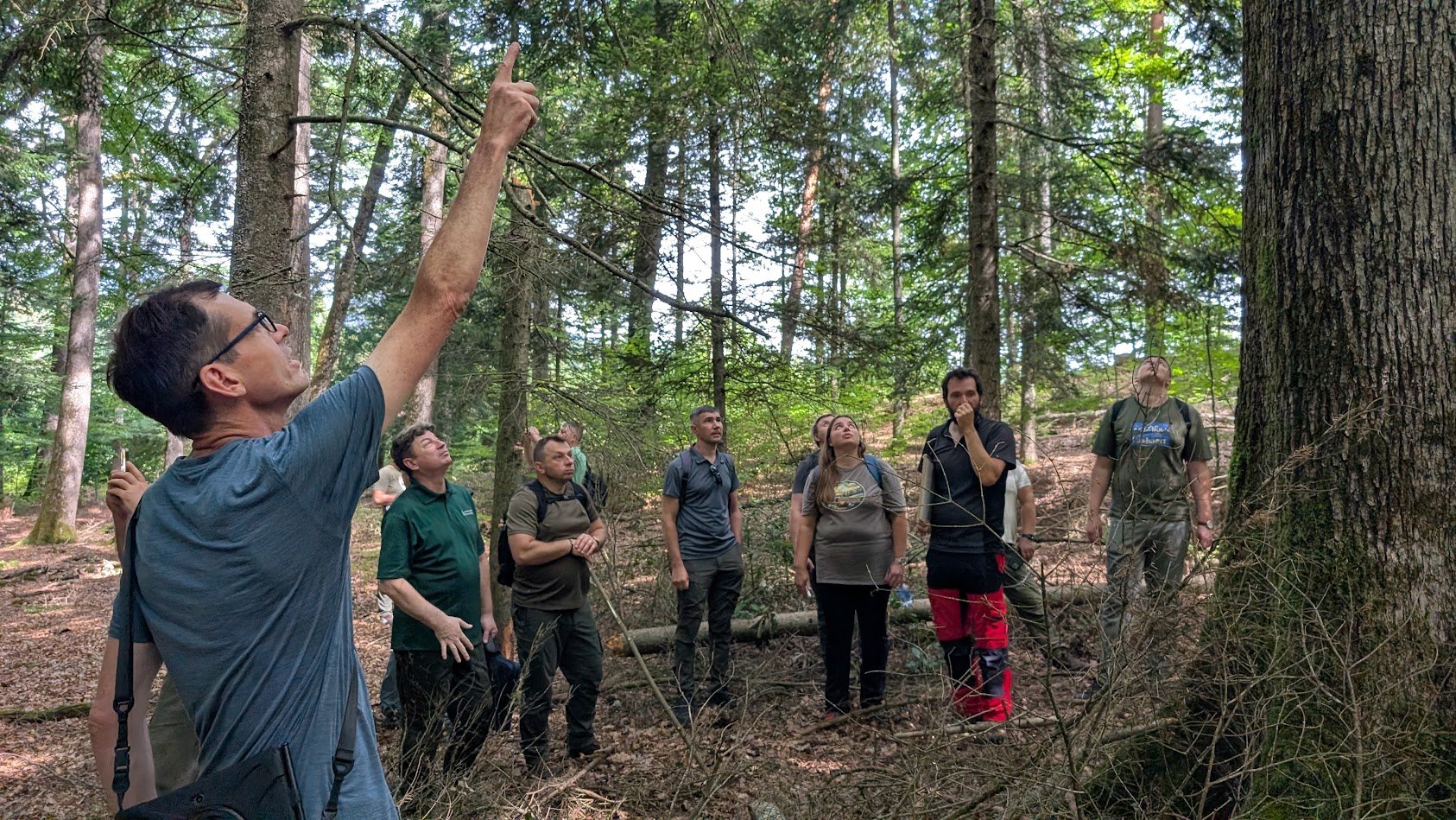
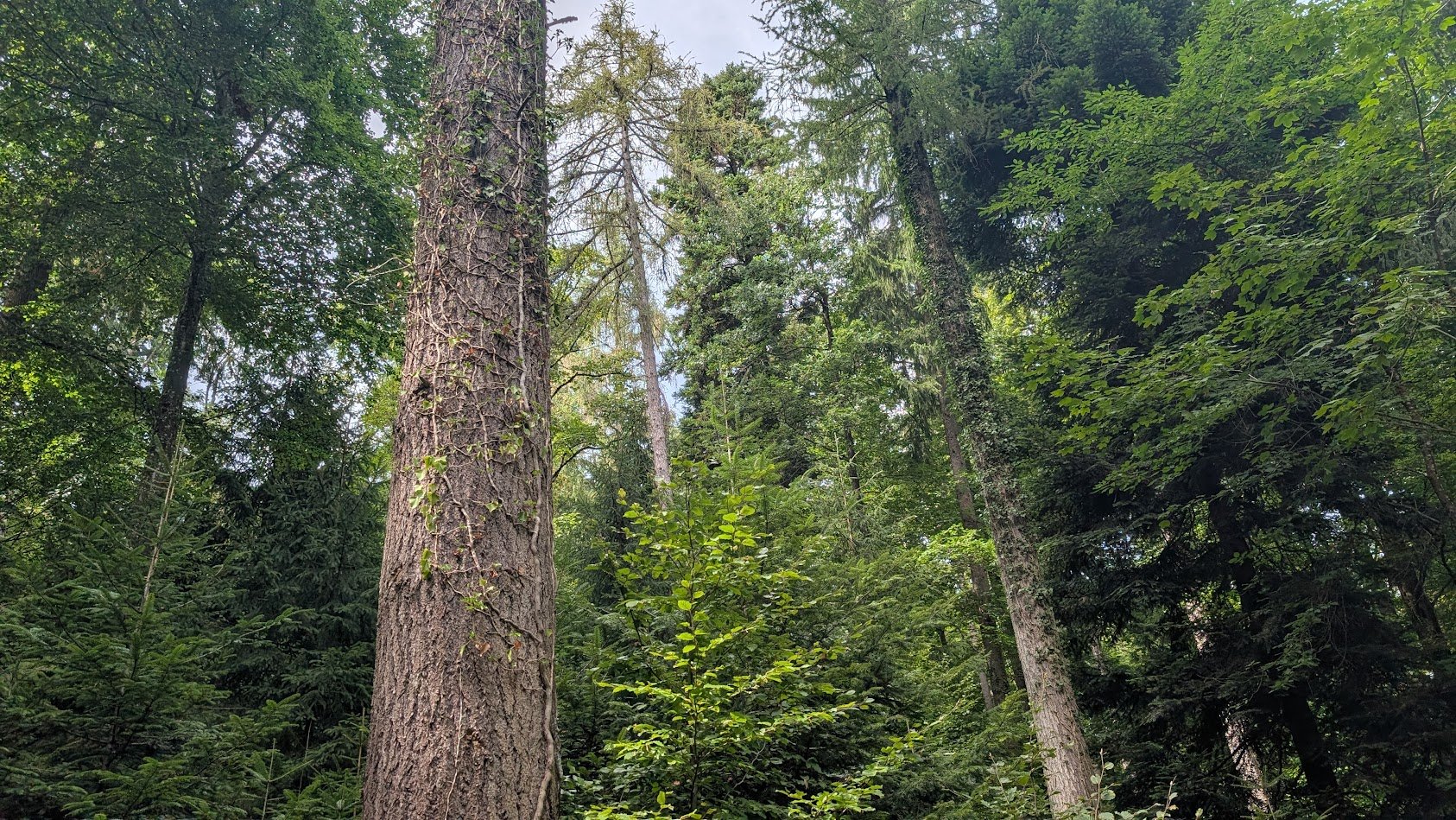
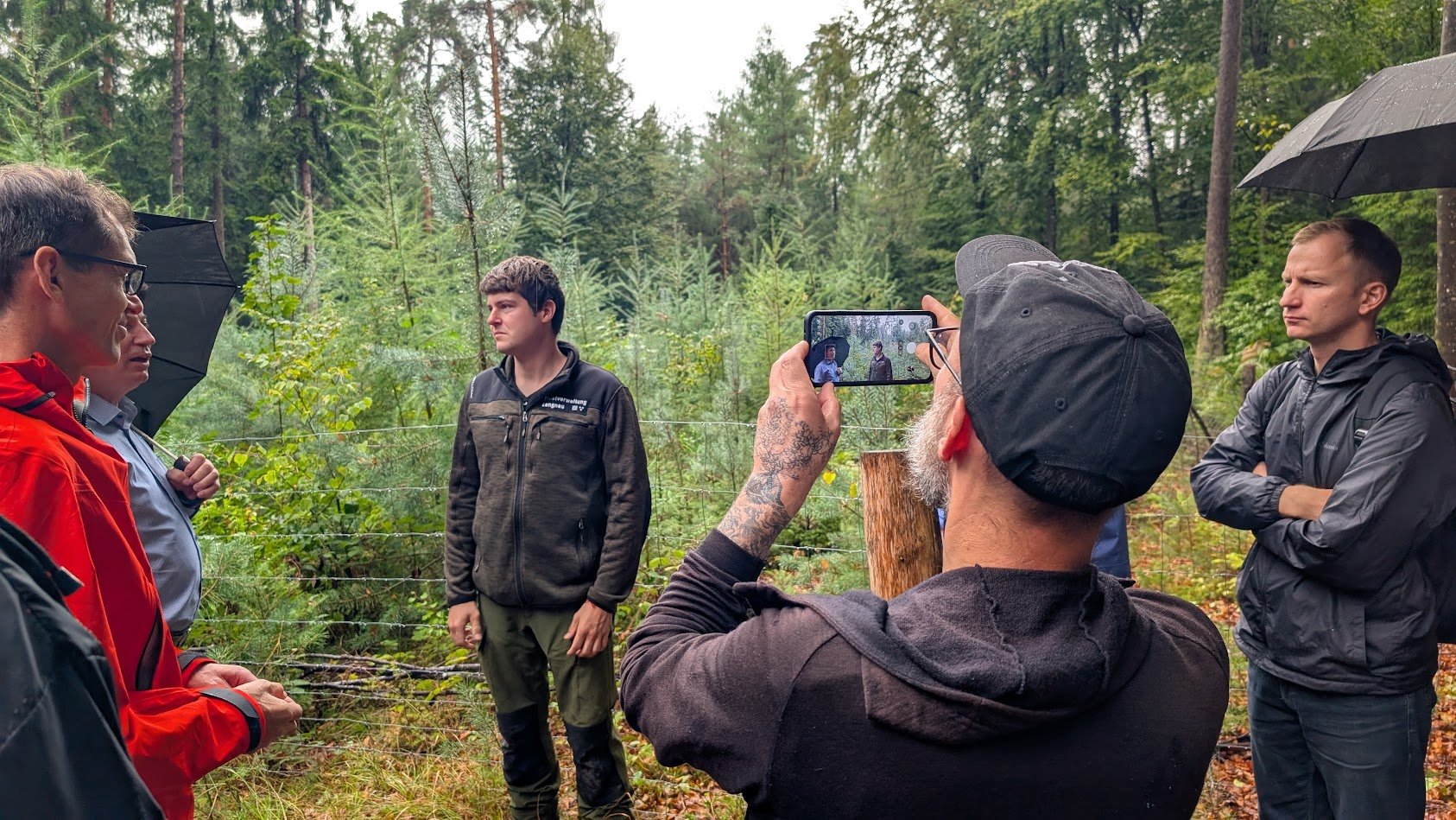
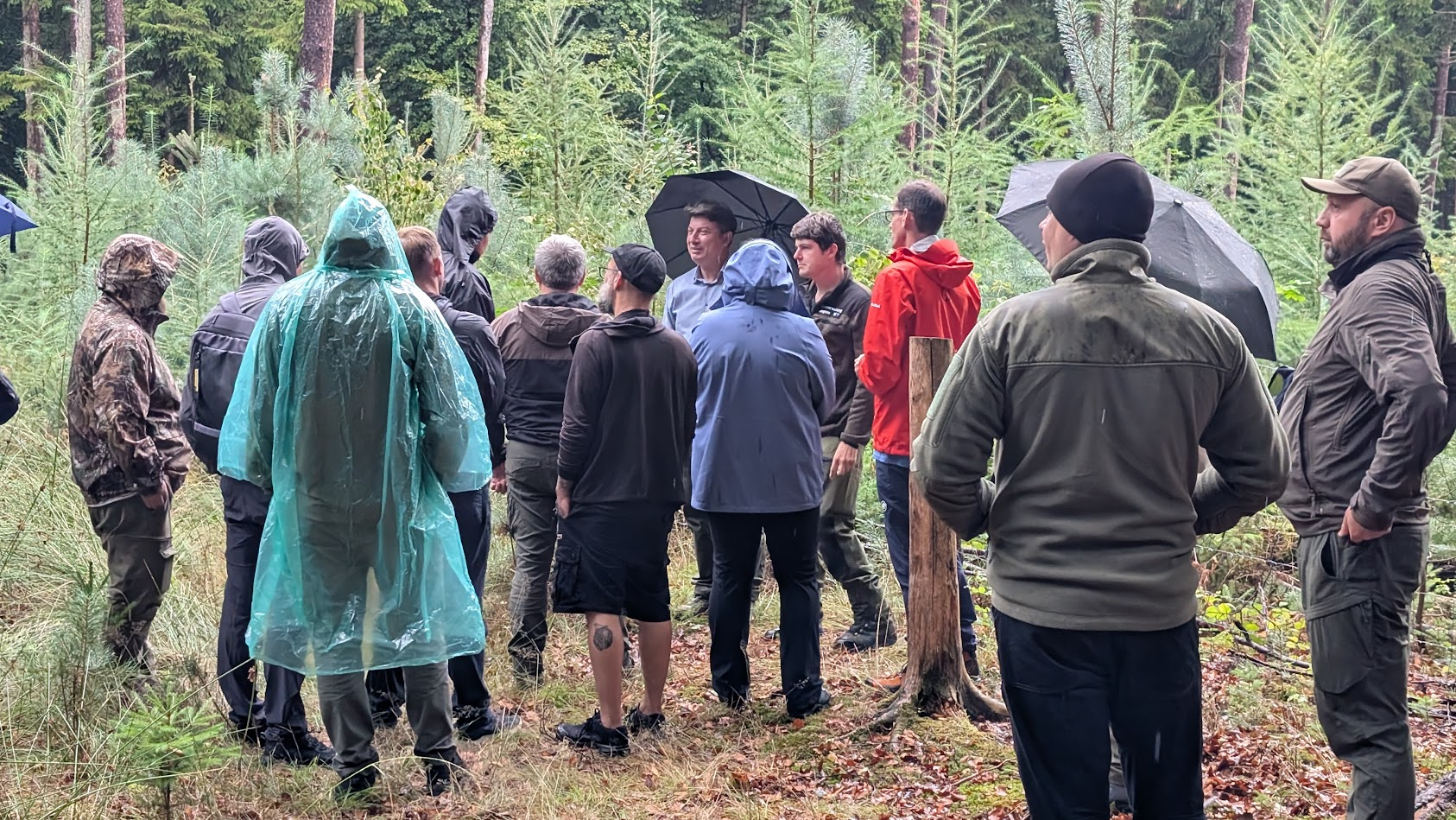
The final field day took place in the pine forests of the Lengnau communal forestry enterprise in Canton Aargau. The local forester demonstrated group and strip shelterwood cuttings, which allow Scots pine to regenerate successfully by natural means: according to him, young forest on the site of former canopy gaps regenerated at no cost, thanks to nature and carefully managed ungulate populations. The enterprise's financial model reflects the owner's priorities: rather than profit, the municipality directs its forester toward a balanced annual outcome, since recreation, drinking water quality, and stand resilience are considered the forest's main values here, with timber harvesting serving as a tool for maintaining the desired structure. On a former windthrow gap, participants compared planted forest crops with natural regeneration; in terms of condition and growth, natural regeneration came out ahead.
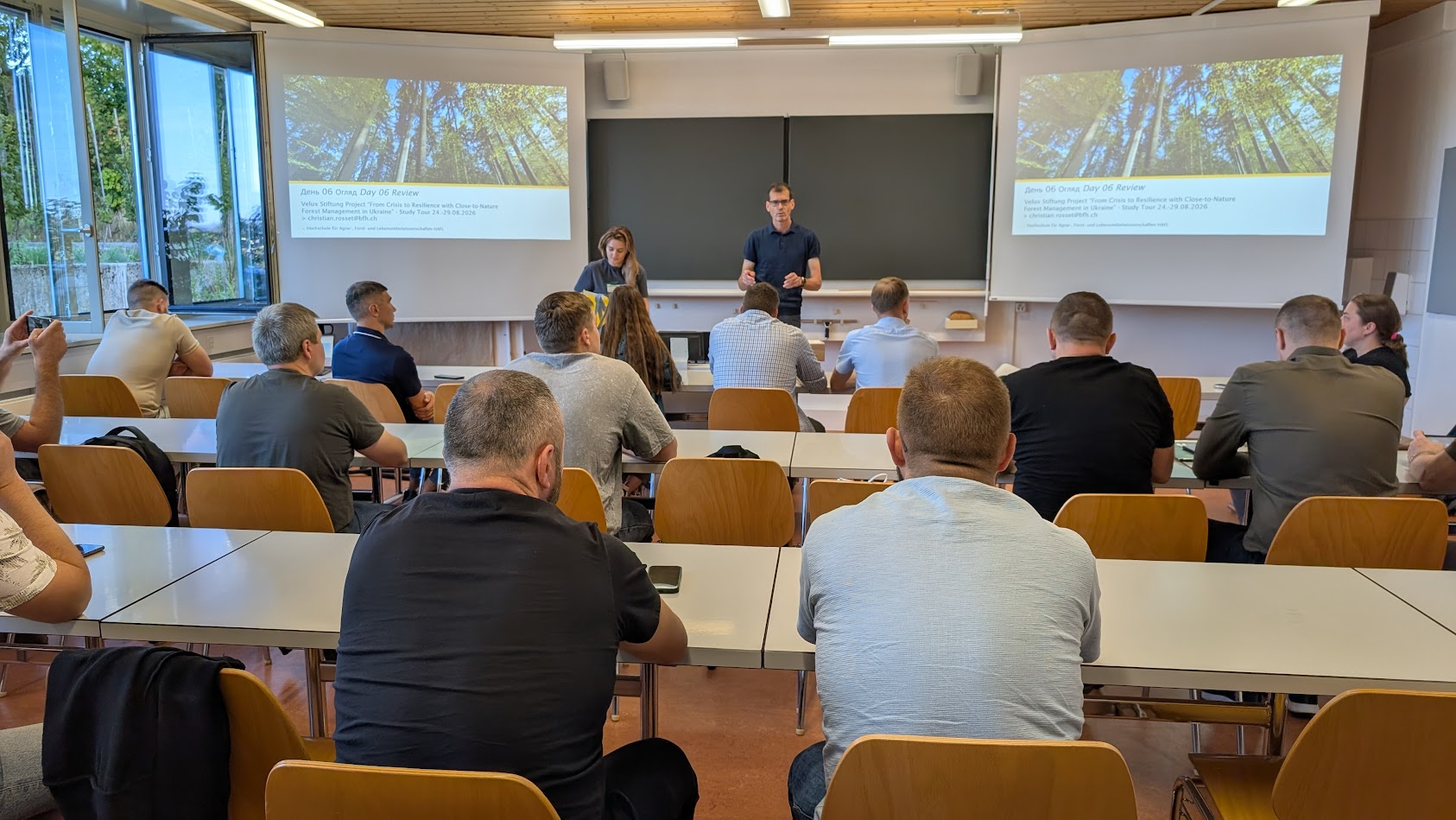
The final day opened with a wrap-up meeting at which Swiss colleagues brought together everything seen during the week: examples of converting even-aged stands into uneven-aged ones, uniform and group shelterwood cuttings, and work with crop trees combined into a coherent picture of close-to-nature forestry, an approach that requires time and patience. It was emphasised that silvicultural techniques form a "toolbox" from which a specialist chooses the solution that fits a given situation, that biodiversity underpins ecosystem function, and that approaches must also be adapted to forest accessibility: where the road network is poorly developed, interventions are repeated not every 5 years, but once every 20. Particular attention was paid to the value of combining marteloscope data with long-term monitoring: repeated measurements and 360° photospheres of the same plot taken several years apart clearly show how a specific tree-marking decision affected stand structure, light conditions, and natural regeneration, while a network of neighbouring marteloscopes makes it possible to compare different silvicultural interventions and conversion stages rather than analysing a single plot in isolation. It was also stressed that practice should focus on what matters most: following the logic of systems thinking, lower-level details often have little effect on the system as a whole, so tools for practitioners should remain simple yet informative enough to support decision-making, and forestry should be integrated with inventory, planning, and forest monitoring.
The closing discussion focused on what from the Swiss experience could be adapted in Ukraine. Among the priority steps, participants named the rollout of a marteloscope network across all regions to train foresters, harvesting-site allocation specialists and enterprise managers, systematic training of forest workers, planned development of forest road infrastructure, and a shift toward framework-based regulation that leaves specialists the right to make decisions and take responsibility for them. The sites visited lie at elevations of 600–900 m above sea level and, in terms of forest site conditions, are closest to the beech-fir forests of the Carpathians and the Precarpathian region, meaning the material gathered will be directly useful for training programmes and demonstration sites in that region. The results of the week's work will feed into a practical guide to close-to-nature forestry for Ukraine, currently being developed by the project consortium.
Participation in the summer school marked a continuation of the cooperation between the Educational and Scientific Institute of Forestry and Landscape-Park Management and BFH-HAFL, and an important step in preparing training materials and demonstration sites for close-to-nature forestry for Ukrainian students and practitioners. We thank the project team and our colleagues at BFH-HAFL for their hospitality and rich programme, and Swiss foresters for their openness and willingness to share experience. The summer school was organised within the international project "From Crisis to Resilience with Close-to-Nature Forest Management in Ukraine," funded by the Swiss Velux Stiftung and coordinated by BFH-HAFL.
More about the project: https://www.bfh.ch/en/research/reference-projects/from-crisis-to-resili…